Monday, March 26, 2007

Why aren't there more women directors?

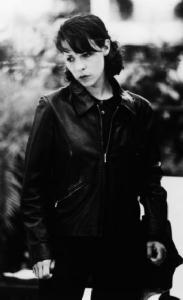
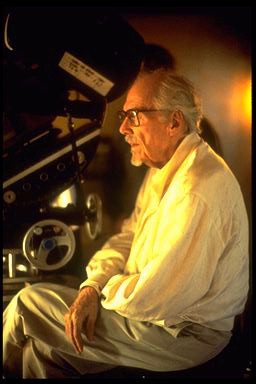
If anyone has any theories, I would love to hear them. There's no doubt the film industry is every bit as sexist as any other major or minor institution, but there has to be something more insidious and culturally devastating than your run-of-the-mill good ol' boy network to explain the scarcity of films directed by women, possibly an evil inherent in the medium (maybe "Inland Empire" addresses this in some way). The music business and the publishing world are equally slimy, but many, many female writers and musicians have managed to create lasting bodies of work. In highly opinionated fact, current women writers seem to have a much easier time getting their books reviewed than men. Some of my favorite films have been directed by women, but virtually none of these women have been able to make more than a handful of films. Quality is more important than quantity, but why do women directors generally get fewer chances to make films? Looking at this comprehensive list of prominent women directors online, I wished I was surprised at my disappointment. Most of these women haven't been able to make as many movies as their male counterparts, most of them have had more trouble finding distribution (though this is a problem that seems to plague everyone except Hollywood hacks), many of them are unknown even to rabid film buffs (I watch every goddamn thing, and I'd either never heard of, or hadn't seen any films by, probably one-third of these women), and though the list is twelve years old, hardly any new names jump out as likely additions. European women directors seem to have better luck sustaining film careers than their colleagues in other continents, but only slightly. Female filmmakers can't catch a break. Why? (Keep in mind, I'm not talking about Nora Ephron or any other worthless void like her.) My two favorite American female filmmakers, Elaine May and Barbara Loden, are perfect examples of film industry marginalization of women's art.

It is a mathematical fact (or my highly biased opinion) that Elaine May's films are ten times better than her old comedy partner Mike Nichols', but she has directed only four films, while he has made (so far) 18 features, a concert film, a short, and two made-for-cable films. Is he more willing to play nice with Dr. Hollywood and Capt. Business? If he stands up for himself, is he in no danger of being called an uppity cunt by an old man with bags of money? Yes, these answers are obvious, but there's got to be more to it than this. Why has one of the greatest directors in the history of the medium had such a truncated career? I say this having seen only three of her four films, and the fourth may hold part of the answer to my question, but I'm getting ahead of myself. Elaine May was born in Philadelphia in 1932 and was in a stand-up comedy duo with Mike Nichols in the 1950s and 1960s that I know very little about, except that they were highly regarded and were closely tied to another great comic, Shelley Berman. They had an acrimonious split, and later got involved in theater, acting, and film, making amends in the mid-1990s. Nichols directed "The Graduate," among many famous films. May's debut feature, 1971's "A New Leaf," is a great comedy, despite studio interference so severe that May wanted her name taken off the film. She stars in it herself, with Walter Matthau. He's an aging playboy who's just spent most of his fortune. She's a shy, klutzy spinster who happens to be the heiress to a fortune of her own. A marriage of convenience ensues, with Matthau plotting May's "accidental" death. Despite the well-worn plot, the film is awkward, weird, hilarious, and wonderful. The studio cut over an hour of the running time, including two murders committed by Matthau, turning him into a repentant, fuzzy, redemption-worthy heart-warmer. He wasn't meant to be, and is not that way during the bulk of the film. One of the two murders excised was of May's character, at the end of the film. This brutally dark ending to a light comedy would have been a perfect example of May's ability to fuck with tone in a confident, relaxed way, but even in the filmmaker-friendly early 1970s, the studio flipped out. Would a man have been allowed freer rein? Probably. May had better creative and financial luck with her next film, the only one she didn't write, an adaptation of Neil Simon's "The Heartbreak Kid," starring Charles Grodin, Cybill Sheperd, and May's daughter Jeannie Berlin. The first of her two masterpieces, 1972's "The Heartbreak Kid" perfects the mixture of light-hearted comedy and the queasy brutalities and disappointments of living that is her unique specialty. A beautifully tough film that is much more her creation than Neil Simon's, "The Heartbreak Kid" has one of the greatest endings I've ever seen. Unfortunately, nearly every review I've read of the film mentions how great it is until the ending, usually described as an anti-climactic abandonment. This indicates to me how little even people who love movies pay attention to quiet detail and body language, especially douchebag critics. In my drunken opinion, this is one of maybe only a handful of films in existence with a perfect ending. I've just ruined this film for you with that sentence, probably, but I stand by it. May's next film, 1976's "Mikey and Nicky," (note the possible reference to Mike Nichols in the title) is the smartest and most emotionally intense film I've ever seen about male friendship. It stars John Cassavetes and Peter Falk as lifelong best friends who've gotten mixed up with local gangsters. Cassavetes has apparently ripped some of them off, and he is on the run. The movie takes place over one very long night in Philadelphia, and is May's best film. It is also one of my ten favorite films ever. Take that with a grain of salt, if you will, (especially if you think "Star Wars" is as good as it gets) but it means a lot to me. It shows how hard it is for men to be friends over a long period of time, how they can become awkward and brutal to each other, how they care about each other, how they could allow certain things to happen. It's a masterpiece of shifting tone, body language, empathy, and brutality. It's the most perceptive piece of art by a woman about men I've watched/heard/read so far. The studio, irritated with how long May was spending editing it, released it unfinished. It was unfairly but understandably compared to Cassavetes' films and declared a minor knockoff, though, despite some affinities, May's style as a writer and filmmaker is very different from Cassavetes'. May's cut of the film was finally released in the mid-1980s, and is the version available on video and DVD. Bitter about the studio interference, May never directed another film until 1987, and it killed her directorial career. Given the chance to direct a massively expensive Hollywood blockbuster, May delivered one of the most critically reviled and financially destructive box office failures in movie history, "Ishtar." It's the only film of hers I haven't seen yet, but I haven't been avoiding it because of its reputation. I've been saving it, like a precious illegal firework, for the right moment. Despite audience indifference and critical hatred, "Ishtar" enjoys an excellent reputation among the handful of my favorite movie critics, and a whole bunch of smart, interesting people I'm friends or friendly acquaintances with who aren't film buffs. This intrigues me. May is one of the best, and I'm going to be sad when there are no more films of hers to see. I'm sad that I have exhausted Cassavetes' filmography. I'm saving some Mike Leighs, some Fassbinders, some George Romeros, and I'm saving "Ishtar." But I digress. The colossal failure of "Ishtar" was almost solely blamed on co-star and producer Warren Beatty. May was even marginalized during her biggest career disaster. A woman does not have a strong enough personality to create either a masterpiece or a major flopola, the media seemed to say. It was that goddamn Warren Beatty and his hubris. Never mind that May wrote and directed the fucking movie, and that the negative critical reaction was largely due to the film's expensive budget, hype, and subsequent financial splat (when it comes down to the wire, the mainstream media will always side with businessmen over artists). As a female filmmaker, and a damn good one, she was constantly marginalized and finally gave up. Why does this continue to happen?

Coming tomorrow: Barbara Loden and "Wanda."

Sunday, March 25, 2007

Favorite Actor Monday


I know a handful of people who react with distaste as soon as Chloe Sevigny's name is mentioned, but I don't really understand why. Sure, from the late nineties to the early 2000s she was a ubiquitous party/club girl, her brother's terrible band got a lot of media attention for a very brief period thanks to nepotism, her fashion sense can be unfortunate (I even notice this and I don't know anything about clothes), and some people have a problem with that Vincent Gallo blowjob (me, I'm undecided). These things have nothing to do with her worth as an actor, though, and from the moment I saw her onscreen for the first time in 1995, I was an ardent admirer. Her performances have never disappointed me, and goddamn she takes some risks. I wish she'd get more leading roles. (I blame the blowjob for that.)

Recommended:
Kids (Larry Clark, 1995)
Trees Lounge (Steve Buscemi, 1996)
Gummo (Harmony Korine, 1997)
The Last Days of Disco (Whit Stillman, 1998) (This is probably not a good film, but she's great in it.)
Boys Don't Cry (Kimberly Peirce, 1999)
Julien Donkey-Boy (Harmony Korine, 1999)
American Psycho (Mary Harron, 2000)
Demonlover (Olivier Assayas, 2002)
Dogville (Lars Von Trier, 2003)
The Brown Bunny (Vincent Gallo, 2003) (She does more than give a blowjob in this, you know.)
Manderlay (Lars Von Trier, 2005)
Broken Flowers (Jim Jarmusch, 2005)
Zodiac (David Fincher, 2007) (A thankless, cliched role that she still manages to do something with.)

Wednesday, March 21, 2007

Nice job

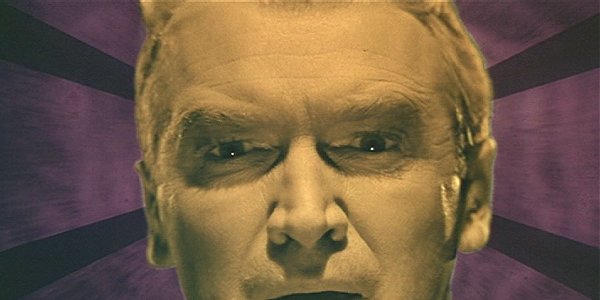
Dave Kehr's latest New York Times DVD column contains a couple of unusual yet wildly sensible observations. The first is a surprisingly apt comparison between W.C. Fields and Yasujiro Ozu. The second is a reevaluation (a "flip-flop," if you will) of "Re-Animator," a movie Kehr trashed in the Chicago Reader when it came out in 1985. He thinks it looks much better now, particularly because of the resemblance between the disembodied reanimated head of actor David Gale and a certain presidential candidate. (I should also mention imdb's new plot keywords feature. "Re-Animator"'s plot keywords: Brain/Naked Woman/Syringe/Panties/Loss of Control.)


Sunday, March 18, 2007

Favorite Actor Monday


This is my first crossover post with Spacebeer's Secret Boyfriend Wednesday. I like Willem Dafoe quite a bit. It's getting harder and harder to find novel reasons to love each actor each week (which is why I will be retiring this weekly feature after the one-year anniversary), but I mostly love watching him because he seems to take the craft of acting seriously without taking himself seriously. He loves and respects what he does without being fucking ponderous about it (which separates him from an actor I used to love, but now find unbearable, Sean Penn). He also usually picks either great characters, great movies, or both.
Recommended:
To Live and Die in L.A. (William Friedkin, 1985)
Platoon (Oliver Stone, 1986) (excellent performance, terrible movie, also great in Stone's "Born on the Fourth of July," a movie I find otherwise unwatchable)
The Last Temptation of Christ (Martin Scorsese, 1988)
Cry-Baby (John Waters, 1990)
Wild at Heart (David Lynch, 1990)
"Fishing with John" (John Lurie, ice-fishing episode, 1991)
Light Sleeper (Paul Schrader, 1992)
Basquiat (Julian Schnabel, 1996)
Affliction (Paul Schrader, 1997)
New Rose Hotel (Abel Ferrara, 1998)
eXistenZ (David Cronenberg, 1999)
American Psycho (Mary Harron, 2000)
Animal Factory (Steve Buscemi, 2000)
Shadow of the Vampire (E. Elias Merhige, 2000)
Spider-Man (Sam Raimi, 2002)
Auto Focus (Paul Schrader, 2002)
Spider-Man 2 (Sam Raimi, 2004)
The Life Aquatic with Steve Zissou (Wes Anderson, 2004)
The Aviator (Martin Scorsese, 2004)
Manderlay (Lars Von Trier, 2005)


Monday, March 12, 2007

Favorite Actor Monday


Isabelle Huppert can play any role, and more. She scares the hell out of me sometimes (particularly in "La Ceremonie"). I like that.

Recommended:
Passion (Jean-Luc Godard, 1982)
Entre Nous (Diane Kurys, 1983)
Story of Women (Claude Chabrol, 1988)
Amateur (Hal Hartley, 1994)
La Ceremonie (Claude Chabrol, 1994)
The Piano Teacher (Michael Haneke, 2001)
I Heart Huckabees (David O. Russell, 2004) (I'm not a big fan of this movie. It's an interesting mess, with some frustratingly hollow acting, but Huppert and Mark Wahlberg are great in it.)

Sunday, March 04, 2007

Favorite Actor Monday: Late Sunday Edition


Sy Richardson delivers one of my favorite movie monologues to a bewildered Emilio Estevez in "Repo Man." Though the monologue is pretty funny on its own (as you will see below), Richardson delivers it with such straight-faced matter-of-factness that he brings it to an even higher plane of hilarity. He's also done some very fine character work, bit parts, and cameos in many good and bad movies for many years.

"Repo Man" monologue:
"Born in Chicago, raised in the city streets. My mama gave me the basic facts of life. Get in the car, boy. Put your seatbelt on. I never ride with anyone unless they wear their seatbelt. That’s one of the rules. You look like you’ve been in a few scrapes. I mean you’re skinny and weak-looking, but you’re kinda wiry, too. I bet you can handle yourself alright if you have to. (laughs) If I get into a fight, man, I’m serious. If someone crosses me, straight off I’ll nut ‘em in the face and bring my heel down on their foot and break the bone. I’m a fighter and a winner. I’m a bad man. You know, everyone can tell the way I am. I walk into a bar or someone’s place of work, they’re shit-scared. They know I ain’t no cop. They think that I’m a killer (pause) and a wounder. I’ll kill anyone that crosses me, or put ‘em in the hospital. I don’t mess around. Know what I mean? I’m a bad man. Like music? Listen to this. (turns on car stereo) I was into these dudes before anybody. They asked me to be their manager. I called bullshit on that. Managing a pop group’s no job for a man. Hey. Guess how many suits I got. Guess how many pair of shoes. Guess how many ties. Shit. I don’t know. Shut up. Must be twenty-five at least. And you better believe they’re all silk. Every one. Think your girlfriend loves you? Guess again. One way to tell if a woman really loves you. If she’ll have your dog. I’m a bad man."

Recommended:
Repo Man (Alex Cox, 1984)
Sid and Nancy (Alex Cox, 1986)
Straight to Hell (Alex Cox, 1987)
Tapeheads (Bill Fishman, 1988)
They Live (John Carpenter, 1988)
Mystery Train (Jim Jarmusch, 1989)
To Sleep with Anger (Charles Burnett, 1990)
The Glass Shield (Charles Burnett, 1994)
Human Nature (Michel Gondry, 2001)


He's also in Charles Burnett's "My Brother's Wedding," which is probably great, but unavailable on DVD or video. Burnett should be more widely known, but the media overlords have decided that only one prominent independent black filmmaker is all the world can handle, and that's going to continue to be Spike Lee in perpetuity. Lee has done some very good work, but is far too often a media huckster and snake oil salesman. Burnett deserves Lee's exposure, much like Albert Brooks deserves Woody Allen's. But I digress from Sy Richardson, who is great.

Tuesday, February 27, 2007

Favorite Actor Monday: Day Late and Dollar Short Edition


Shelley Duvall looks like a real person, and happened to start working in Hollywood the first year of the last decade in which that was possible: 1970. She's so damned interesting to watch. People always mention Kubrick and Nicholson when they talk about "The Shining" but what about Shelley Duvall?

Recommended:
McCabe & Mrs. Miller (Robert Altman, 1971)
Nashville (Robert Altman, 1975)
Buffalo Bill and the Indians, or Sitting Bull's History Lesson (Robert Altman, 1976)
3 Women (Robert Altman, 1977)
Annie Hall (Woody Allen, 1977)
The Shining (Stanley Kubrick, 1980)
Popeye (Robert Altman, 1980)
Time Bandits (Terry Gilliam, 1981)
Frankenweenie (Tim Burton, 1984)
Roxanne (Fred Schepisi, 1987)
The Underneath (Steven Soderbergh, 1995)

I haven't seen "Brewster McCloud," "Thieves Like Us," "The Portrait of a Lady," and "Twilight of the Ice Nymphs" yet, which explains their absence.

Monday, February 26, 2007

Bloscars


The Oscars don't really have much of anything to do with movies, but here are my brief reactions anyway.

The filmblog-nerdniverse is in consensus that Ellen DeGeneres was not very good. I don't agree. I thought she was really funny. They are also in consensus about it being one of the most boring Oscars ever. Have they forgotten the year the final "Lord of the Rings" movie won every goddamn category? That was a boring show. While I agree that most of the speeches this year were on the dull side, at least one movie didn't dominate the evening. I liked the lack of obvious frontrunners, and the variety of winners.

Ennio Morricone is a musical genius and deserved his recognition. However, who in the sweet merciful christ thought it was a good idea for Celine Dion to sing over one of his old instrumental pieces? That's sort of like having Dane Cook perform a Bill Hicks routine.

What the f. was Quincy Jones wearing? It appeared to be some sort of muu-muu/Slip N' Slide hybrid.

Al Gore's dick is bruised, swollen, and raw from the constant sucking it received last night. (That last sentence is neither a conservative nor liberal joke, but a moral one.)

Tom Hanks may never again be in a good film, but his reply to Chris Connelly's inane Access Hollywood-style question backstage after presenting an award was almost enough to make me forget "Forrest Gump." I'll try to find it on YouTube and put it up here later.

I'm glad Martin Scorsese won, even though "The Departed" is probably my least favorite of his movies (though "Gangs of New York" might be worse). I don't know why I care. The guy gets to do what he wants for a living, he's made some fantastic movies, why the hell does any successful person need even more validation when someone like me is collapsing under the weight of my own colossally mundane failures? I need a goddamn award for having a shit job and somehow dragging myself there most days. But I do care. I'm glad he has finally received his shiny naked gold man. I guess I'm as prone to collective celebrity hoopla as the next guy.

Finally, a quote from one of my favorite critics (and current New York Times DVD reviewer) Dave Kehr about last night's Celebrity Backslappapalooza 2007:
"No argument with Helen Mirren — but why is it suddenly the accepted attitude to treat the Queen of England as a saintly, quietly suffering underdog? But that, too, is the Academy: a bunch of proud liberals right up to the moment they’re allowed to kowtow to the British aristocracy."

Favorite Actor Monday to come later tonight, or maybe tomorrow.


UPDATE: I couldn't find the Tom Hanks thing on YouTube, but I did find this.

Monday, February 19, 2007

Favorite Actor Monday: Nearly Tuesday Edition


Let's hear it for Gene Hackman. That's all I got today, people. Sorry. It's been a lousy day.


Recommended:
Lilith (Robert Rossen, 1964)
Bonnie and Clyde (Arthur Penn, 1967)
Downhill Racer (Michael Ritchie, 1969)
The French Connection (William Friedkin, 1971)
Cisco Pike (Bill L. Norton, 1972)
Scarecrow (Jerry Schatzberg, 1973)
The Conversation (Francis Ford Coppola, 1974)
Young Frankenstein (Mel Brooks, 1974)
Night Moves (Arthur Penn, 1975)
Superman (Richard Donner, 1978)
Reds (Warren Beatty, 1981)
Unforgiven (Clint Eastwood, 1992)
Crimson Tide (Tony Scott, 1995)
Get Shorty (Barry Sonnenfeld, 1995)
The Royal Tenenbaums (Wes Anderson, 2001)

He, and Frances McDormand, are great in "Mississippi Burning," but it's not such a great movie. Same goes for "Hoosiers." Except replace Frances McDormand's name with Dennis Hopper's.

Monday, February 12, 2007

Favorite Actor Monday


Laura Dern was so good in "Inland Empire" that she reminded me again how much I like watching her act. For whatever reason, I tend to overlook her, until the next time I see her in something and she bowls me over. I need to stop doing that.

Recommended:
Blue Velvet (David Lynch, 1986)
Wild At Heart (David Lynch, 1990)
Citizen Ruth (Alexander Payne, 1996)
two episodes of "King of the Hill" (2002, 2003)
Inland Empire (David Lynch, 2006)

Dern is in Clint Eastwood's "A Perfect World," a movie I like a lot, but her character is unfortunately terribly written, so I can't recommend her in it. Her characters are also pretty forgettable or silly in "Jurassic Park" and "Mask." She plays Girl Eating Ice Cream Cone in Scorsese's "Alice Doesn't Live Here Anymore." I like that movie, and I like ice cream, but I don't remember her acting or eating ice cream in it.

Monday, February 05, 2007

Favorite Actor Monday: Monday Bloody Monday Edition


Tom Savini is primarily a special effects technician and makeup artist for a lot of really great horror movies (and some incredibly shitty ones), but he also does a lot of acting. Though he mostly plays small roles, he's always memorable. He's a very funny, naturalistic actor, though he's also adept at playing batshit nutzoids. Tom Savini, I like the cut of your jib.

Recommended performances:
Martin (George Romero, 1977)
Dawn of the Dead (George Romero, 1978)
Knightriders (George Romero, 1981)
Creepshow (George Romero, 1982)
Innocent Blood (John Landis, 1992)
From Dusk Till Dawn (Robert Rodriguez, 1996)
Land of the Dead (George Romero, 2005)
"Worst Episode Ever" episode of The Simpsons (2001)

Recommended special effects/makeup work:
Deathdream (Bob Clark, 1974)
Martin (George Romero, 1977)
Dawn of the Dead (George Romero, 1978)
Friday the 13th (Sean S. Cunningham, 1980)
Alone in the Dark (Jack Sholder, 1982)
Creepshow (George Romero, 1982)
Day of the Dead (George Romero, 1985)
The Texas Chainsaw Massacre 2 (Tobe Hooper, 1986)
Monkey Shines (George Romero, 1988)

Monday, January 29, 2007

Favorite Actor Monday

Katrin Cartlidge died too young, at 41, from complications of pneumonia and septicaemia, but she left behind some incredible performances. She was free of fluff and "love me, please, love me." Onscreen, she was fearless, intense, scary, lovely, and funny. I miss seeing her act.

Recommended:
Naked (Mike Leigh, 1993)
Breaking the Waves (Lars Von Trier, 1996)
Career Girls (Mike Leigh, 1997)
Claire Dolan (Lodge Kerrigan, 1998)
Topsy-Turvy (Mike Leigh, 1999)

Sunday, January 28, 2007

Inland Empire (David Lynch)


"Writing about Wild at Heart in 1990, I suggested that Lynch's career seemed to dispute William Butler Yeats's memorable formulation 'In dreams begin responsibilities.' He seemed to be in determined denial about the implications of the violence he trafficked in, with a child's view of good and evil, a formalist attitude toward images and sounds, a solipsistic desire to remain politically disengaged, and a lack of interest in understanding or addressing how the grown-up world works....In Inland Empire, after 30 years of struggling with studios, he goes further, recording some of his own visceral recoil from Hollywood in general and its meat market in particular -- which makes me wonder if his art has been permanently changed for the better....Lynch also seems to have realized that in Hollywood remaining disengaged and innocent ultimately compromises his freedom as an artist, and like it or not, he's had to take a political stance...." -- Jonathan Rosenbaum

"Cheap DV technology has opened Lynch's mental floodgates. Inland Empire is suffused with dread of . . . what? Sex, in Lynch, is a priori nightmarish. But there's a sense here that film itself is evil. Movies are all about editing and acting—which is to say, visual lies and verbal ones—and Inland Empire makes sure you think about both." -- J. Hoberman

"A work of art has no importance whatever to society. It is only important to the individual, and only the individual reader is important to me." -- Vladimir Nabokov

"Suh-weet." -- final word spoken in Inland Empire

I see a lot of films I like, both in theaters and at home, and even some I love, but very rarely do I have the kind of intense, submerged, transcendent, and visceral experience I felt while watching (and hearing and feeling and floating in) David Lynch's new film. I've realized that I don't know or care what words like "masterpiece," "best," or even "good" or "bad" mean, what relevance these words have, even if I still use them too much. I am more interested in my own experiences as an individual, and others' experiences as individuals, than I am in any conventional wisdom, consensus, or consumer guide. I want to know what other people think, not because I'm looking for instruction or direction or advice on how to spend my money, but because I'm interested in their thoughts and ideas as separate entities from my own. I want to enlarge my own experiences by considering theirs. I'm baffled by mainstream criticism's function as a sort of Consumer Reports of art, a test-driving of entertainments as a way to winnow the vastness of human expression down to a narrow list of palatable, suggested consensus favorites rather than an expansion of ideas and experiences. So, I include these four quotes above as possible, valid entry points into the film or four possible avenues of thought after seeing it.

I've long felt a strong, personal connection to Lynch's work, probably because many of his dreamily subconscious dream and nightmare obsessions are also mine: vivid dark-reds and blues, woods and highways at night, match flames, unexplainable feelings of dread, curtains, long hallways, staircases, lightbulbs, lamps, light and shadow, time loops, the shock of self-recognition, voyeurism, beautiful women, menacing dangerous men, time, the strangeness of ordinary objects, aw-shucks folksiness, brutality, humorous non-sequitur. As Jim Emerson suggested in his review, Lynch has been making one long film his entire career, and Inland Empire strikes me as both a mindfuck summation of everything he's ever done and the beginning of an entirely new way of working. Shot on outdated, cheap digital video, Inland Empire's look takes some getting used to, especially considering the richly beautiful colors of Lynch's previous shot-on-film work. There are some incredibly ugly visual textures in this film, but also moments of vibrant beauty. Lynch uses the camera like a paintbrush, and the variety and impact of image is astonishing.

Lynch's latest resonated with me in much the same way as two other films I experienced much more intensely than I'm wont to do: John Cassavetes' Love Streams and Jacques Rivette's Celine and Julie Go Boating. I'll refrain from slobbering and ejaculating all over my descriptions of these emotionally intense experiences (to see how embarrassing that can be, read Austin Chronicle editor Louis Black's unfortunate gushing pantswetting for Pan's Labyrinth). What these very different films have in common, and why I think I feel so strongly about them, is their uncompromising and single-minded devotion to a sustained, dreamlike trip into their authors' subconsious minds and obsessions (that Cassavetes' film is based on a play by Ted Allan does not contradict my statement--Cassavetes rewrote almost every line in the play, keeping only the characters' names, jobs, and relations to each other and kept his friend Allan's name on the film so the playwright could benefit financially). These three films were also written as they were shot, in collaboration with, and functioning as love letters to, the actors appearing in them. The three films also almost completely eschew plot in favor of character, mood, ellipses, and emotion while never sacrificing narrative drive or motivation, and contain many visual references to the directors' other works.


Lynch's film is in many ways his darkest. I don't remember ever being so frightened by a movie as I was by two of the images here. A friend of mine said she was close to having panic attacks a few times during her viewing of the film (she meant this as a compliment, by the way). But as Dennis Lim astutely points out in his review, "Mulholland Drive may be a more palatable film, but its reality is harsher: a dream overlaid on a nightmare. Inland Empire is almost all nightmare, and yet, through considerable exertions, it eventually blinks itself awake, or into a state of grace." The closing credits sequence is one of the most joyful scenes I've encountered, and pushed me out of the theater with a real sense of wonder and happiness toward the "wild at heart, and weird on top" world we're temporarily inhabiting.

Perhaps the most impressive aspect of the film is Lynch's sound design. The soundtrack (by which I mean every sound in the movie) could be listened to sans visuals and the experience would be just as intense. Lynch deftly layers low hums, whooshings, breaths, screams, extreme volume fluctuations, echos, chatter, finger snaps, and dissonance with music by Penderecki, Little Eva, Etta James, Beck, Nina Simone, and Lynch himself.

There are a million other things to say about this film, but I'll save them for the next time I watch it.

Reviews:
J. Hoberman
Jim Emerson
Jonathan Rosenbaum
Dennis Lim

Monday, January 22, 2007

Favorite Actor Monday


Joseph Cotten could play menacing, charming, kind, foolish, evil, powerful, or despondent with almost-minute changes in facial expression. He wasn't obvious or flashy, but his best performances have such a powerful immediacy that they seem to be happening right now, at this moment. He was one of the very best.

Recommended:
Citizen Kane (Orson Welles, 1941)
The Magnificent Ambersons (Orson Welles, 1942)
Shadow of a Doubt (Alfred Hitchcock, 1943)
The Third Man (Carol Reed, 1949)
Touch of Evil (Orson Welles, 1958)

Thursday, January 18, 2007

2006 in Review Part 2: Havana Nights

To follow up my list of favorite films of the year, here is more pointless drivel.

Runners-Up, or Movies I Liked a Lot but Did Not Love and the Reasons Why I Did Not Love Them
The New World (Terrence Malick) Malick's fourth feature in 35 years was beautiful, intelligent, and full of enough mystery to withstand repeat viewings, but I really, really hate Colin Farrell. Even looking at him causes me great pain. I can give even my least favorite actors the benefit of the doubt, but I am honestly repulsed by Farrell. This is not fair to Malick's film, and I know that, but he was the only reason I don't rate "The New World" higher.
Lonesome Jim (Steve Buscemi) I love Buscemi's direction and I love the cast, but I'm tired of generic indie scripts about vibrant, interesting women who feel the need to save childish, self-pitying sadsacks (though I was one of these guys in college, and sometimes still am). This one is better than most, however, and Buscemi finds likable actors who play these parts just right, and thank god for the film's sense of humor.
The Puffy Chair (Jay Duplass) Another goddamn twentysomething apathetic infantile hipster relationship movie with an invasive "indie-rock hits" score (Spoon, etc.) combined with a flat and uninteresting visual presentation. On the plus side, it's very funny and Kathryn Aselton is my new favorite actress.
The Proposition (John Hillcoat) If I was picking my favorites today, I would probably swap this one for "A Prairie Home Companion." I'm not really sure why I didn't rate it higher, except that the theater had projection trouble when I saw it, causing the image to shake wildly about once every five minutes for the first 30 minutes of the movie. That, and I'm not sure how much a film about excessively violent revenge helps anybody, even though I tend to respond favorably to that kind of thing.
The Bridesmaid (Claude Chabrol) To be honest, Chabrol's confidence as a filmmaker, his mastery of tone and structure, and his direction of actors probably beat the pants off any movie on my best list, but this is a minor work for him compared to the truly great movies he's made over the past 50 years. If you'll forgive the lapse into Harry "I've met no buffet I haven't conquered" Knowles-isms for a second, Chabrol's a badass.

My favorite film society, revival, and re-release screenings of the year
Love Streams (John Cassavetes)

and the rest
Wheel of Time (Werner Herzog)
Richard Pryor: Live in Concert (Jeff Margolis)
In a Lonely Place (Nicholas Ray)
Sans Soleil (Chris Marker)
Park Row (Samuel Fuller)
The Trouble with Harry, Shadow of a Doubt, and North by Northwest (Alfred Hitchcock)
Songs from the Second Floor (Roy Andersson)
Baby Doll and A Streetcar Named Desire (Elia Kazan)
Guys and Dolls (Joseph L. Mankiewicz)
Hail the Conquering Hero and The Miracle of Morgan's Creek (Preston Sturges)
The Shop Around the Corner and Heaven Can Wait (Ernst Lubitsch)
The Party (Blake Edwards)
Adam's Rib (George Cukor)
The Mirror (Andrei Tarkovsky)
Quai des Orfevres (Henri-Georges Clouzot)
These Are the Damned and The Romantic Englishwoman (Joseph Losey)
Army of Shadows (Jean-Pierre Melville)

A much richer list than my 2006 choices, but that doesn't worry me too much.

Unfettered vision of the year
Terry Gilliam's "The Brothers Grimm" was loud, oppressive, and dull, and it made me happy to read that Gilliam walked off the set mid-film in protestation of the Weinstein brothers' meddling in the production. He left to make his own film, exactly the way he wanted to make it. Tideland is the result, and I have no idea what to make of it. The film is dark, depressing, funny, disgusting, stupid, ugly, beautiful, annoying, tiresome, and thrilling, depending on which scene you're watching, and is not easy to sit through. Jeff Bridges spends most of the running time as a decomposing corpse, overacting is in abundance, a retarded character would make Forrest Gump blush, and the last few minutes are pure visual poetry. After leaving the theater, I had no idea whether I loved or hated the movie, and I still don't know. But I'm glad I saw it, and I'm glad Gilliam got to make it.

The most underrated movie of the year
Terry Zwigoff and Daniel Clowes'
Art School Confidential was pretty much universally hated, especially by fans of Zwigoff and Clowes. While I agree that it is the worst thing either of these men have done, and is a complete mess besides, I have a strong affection for this three-legged toothless dog. Until it devolves into complete misanthropy, obvious jokes, and plot-heavy murder mystery in its final third, the first two-thirds, though riddled with structural and tonal blunders and an unsure approach, are a daring combination of broad '80s-style teen comedy, slasher film, and pointed, intelligent satire. The points this movie makes about the teaching, presentation, sale, and consumption of art are important ones. John Malkovich, Jack Ong, Anjelica Huston, and Jim Broadbent are very strong in it. And I like how a movie about what's wrong with art is so goddamn artless in its approach. There's something almost perfect about that.

The most overrated movie of the year
A lot of people seem to have their Martin Scorsese rubber stamps out, hailing The Departed as a return to form, a modern classic. At last, Scorsese has made another gangster film. All hail King Marty, our finest filmmaker. I'm baffled by the overwhelmingly positive response to this movie. Obviously, I have no special insight into the mind of Scorsese, so what I'm about to say could be complete bullshit, but this seems to me like Scorsese's least personal film, an unintentional Three Stooges-style gangster parody. "Ahh, wiseguy, eh?" Nicholson says as some knucklehead gets blood all over him. "Why, I oughta." Zoink! Broken hand! Bonk! Eat a cockroach! Zango! Throw a pile of coke all over a hooker! Wave a dildo in a movie theater! "Fuck you, you chowderhead," Mark Walhberg says to Matt Damon, or Dicaprio, or somebody else. Boom! Shot in the head! Bang! Another shot in the head! The only thing missing is a pie fight. This movie is mildly entertaining, Alec Baldwin is fantastic in it, and Scorsese still has a knack for using classic-rock chestnuts in surprisingly fresh ways, but I couldn't help feeling a big So What. This movie would look great the last night of finals week 1997 on a small screen in an easy chair with a bowl of weed and a plate of chips and queso on your lap, but this is the least successful movie he's ever made.
On a related note, why is Scorsese being praised for returning to the gangster film, as if this genre made up the bulk of his career? Excluding "The Departed," Scorsese's only made two overt gangster films, "Goodfellas" and "Casino," and a third that is only peripherally a gangster film, "Mean Streets." A handful of his other movies have crime as a part of the plot, but he's not given enough credit for his richly varied career, one that encompasses black comedy ("The King of Comedy," "After Hours") documentaries, period films, "Alice Doesn't Live Here Anymore," "Kundun," etc.

Worst Film of the Year
Neil Labute made "In the Company of Men," a film I rate very highly. He also made The Wicker Man, one of the worst films not just of 2006, but of the entire history of moving images. Still, it is worth seeing. Skip through the drearily dull first half, and you will discover a rich tapestry of unintentional hilarity. See Nicolas Cage in a bear costume, punching women in the face while yelling "You bitches!" and "Ow! My leg!" See him karate kick Leelee Sobieski into a wall. Hear this memorable quote: "Killing me won't bring back your goddamn honey!" God bless this wretched piece of shit.

Wednesday, January 17, 2007

The worst movie ever made?

I finally caught up with last year's Best Picture Oscar winner, Paul Haggis's "Crash," which I'd been avoiding for some time. I generally skip these terribly insincere prestige "message" movies, but "Crash" became such an omnipresent conversation piece and cultural reference, I decided to get all zeitgeisty and rent it. Of course, I'm about a year too late to get in on the zeitgiestiness of it all, so consider this post pointless and dated. I hated this movie, and I need to complain about it, hence this post. Feel free to skip, or take this post with you the next time you travel back to 2005/early 2006:

Right away, I knew I was in for it. Writer/director Paul Haggis explicitly lays out his metaphor in the clunkily awkward opening lines delivered with achingly dumb gravitas by Don Cheadle (why is Don Cheadle, a performer who is either competent or completely out of his league, considered one of our finest actors again?): "It's the sense of touch. In any real city, you walk, you know? You brush past people, people bump into you. In L.A., nobody touches you. We're always behind this metal and glass. I think we miss that touch so much, that we crash into each other, just so we can feel something." I don't know if Haggis expects us to marvel at his profundity or if he actually thinks people talk this way, but these opening lines of dialogue are simply one example in maybe 250 of Screenplay Run Amok Syndrome. This is a film that has no visual reason to exist. Every line is so exceedingly overwritten, so loaded with thematic jism, every scene is so stuffed with patronizing condescension and preposterous coincidence, and every character merely a Teleprompter for Haggis's pompous and idiotic conclusions about racism in L.A. and possibly the world, that a poetry of images has no space to exist. Haggis doesn't trust his audience members enough to let them make connections on their own. The film has been praised for its interweaving of multiple characters and the intersections of plot that connect them to each other. This is bullshit. Haggis could have covered the same subject and themes with a smaller cast, but that would have required him to flesh out his characters, maybe give them more than one characteristic. Instead, he uses the Altmanesque approach to throw a shiny coat of paint over astoundingly lazy writing and remarkably uninspiring conclusions. What do we find out about racism, or life in Los Angeles? Not one fucking thing.
Haggis's background is in television writing ("The Love Boat," "Walker, Texas Ranger") and it shows. The film plays like an anthology of season finales from any number of overwrought television melodramas, right down to its use of an aggressively overbearing musical score, musical montages, and slow motion in place of real tension. This is a film in which we're supposed to share Sandra Bullock's screechy racist character's revelation that Latinas are people, too, after Bullock falls down the stairs (in slow motion, no less) (creaky plot device #496) and sprains her ankle and her Mexican maid (Yomi Perry) is the only one around to help her. Haggis seems completely unaware that his camera ignores Perry in favor of Bullock, and that Bullock's "revelation" is not a revelation at all, but another example of her character's selfishness (i.e., I will learn to respect you as a human being only if you can do something to help me). Other lessons learned: Matt Dillon's cop is a racist prone to sexual assault, but he will save people from flaming cars and he's worried about his Dad not being able to take a piss (what complexity this man possesses), if you run a chop-shop, you will also know exactly what to do with a van full of Asian refugees (a black market's a black market, am I right? huh? huh?), a family man with no prior criminal behavior will attempt premeditated murder even though, with the exception of a hot temper, he has been given no character traits that explain why he would do such a stupid thing except that he needs to do it to further the machinations of the most retarded plot in cinema history, and a little girl survives a shooting because she has been provided a magic invisible cloak. No shit. Deus ex machina, indeed.

Not only did this film win Best Picture, not only did it steal the title of a much better David Cronenberg film from 1996, it is also currently ranked the 108th best film of all time by Internet Movie Database users. Bring on the bird flu.

Monday, January 15, 2007

Favorite Actor Monday


Did you know that Emily Watson's performance in "Breaking the Waves" was her first-ever film role? Holy shit!


Recommended:
Breaking the Waves (Lars von Trier, 1996)
Gosford Park (Robert Altman, 2001)
Punch-Drunk Love (Paul Thomas Anderson, 2002)
The Proposition (John Hillcoat, 2005)


Monday, January 08, 2007

Film-Watching Robot's 2006 Year in Review: Salty Ham Edition

For the preceding three years, I've contributed to online magazine Senses of Cinema's year-end best-of hootenanny. I thought it would goad me into writing and submitting longer pieces, but I'm way too lazy. This year, I've decided to forgo sending them anything and put my comments and lists on my own movie blog. So, here it is:

The First Annual Film-Watching Robot Year in Review
by Dr. Mystery
Grade: A+

My favorite movies of the year (which means movies that screened theatrically in Austin for the first time in 2006):

The World (Jia Zhang Ke)
This Chinese film seemed to offer a new film language, one that had everything to do with life right now and nothing to do with other movies, contrasting nicely with most of modern filmmaking, which seems to consist of nothing but other movies with purpose and genitalia removed. Of course, this is not exactly true, but it's almost true.

Bubble (Steven Soderbergh)
I'm not a huge Soderbergh fan. I thought "Traffic" was a massively overrated preachy screed, and worse. Its expensive cast and budget and huge canvas ultimately boiled down to this (hopefully unintentional) message: Spend more time with your daughter or she'll get addicted to meth and let a black man fuck her. I don't know why the world needs, or more importantly, wants, an "Ocean's 13." "Out of Sight" was fun, but empty. Yet, I'm always interested in what Soderbergh's up to. He's prolific and adventurous, and the further he gets from big money, the more he has to offer. Of the handful of his films I like a lot, this might be my favorite. The beautifully creepy doll factory shots are stunning, the non-professional cast (the leading role is played by a KFC general manager) is far more interesting than any Hollywood ensemble, the story is simple, tight, and compelling, and Robert Pollard composed the score.

The Three Burials of Melquiades Estrada (Tommy Lee Jones)
Tommy Lee Jones starred in a cheerleading comedy that filmed a few scenes near my hellish office job a few years before I was unfortunate enough to be hired there. A woman I work with asked him for his autograph on her lunch break and he was apparently an "asshole." He is also a surprisingly excellent filmmaker.

Neil Young: Heart of Gold (Jonathan Demme)
Demme finally decides to remind people that he is a great director, even though he's been bogged down in remakes and prestige pictures for the past fifteen years. This concert film, in technique and approach, is almost a sequel to another Demme concert film, "Stop Making Sense," and revealed Young's "Prairie Wind" songs to me in a way the album hadn't.

L'Enfant (Luc and Jean-Pierre Dardenne)
The Dardennes are unrelenting filmmakers, and thank God for that. Their films are about action, but not in the Schwarzenegger sense. They are concerned with work, reaction, and redemption, not dead ends. One foot follows the other, and you're always getting somewhere.

I Am a Sex Addict (Caveh Zahedi)
A great comedy about a debilitating addiction that ruined several relationships and a couple of marriages. Self-indulgent? Of course. Look at the title. Also, painful and surprisingly affecting.

Idiocracy (Mike Judge)
Mike Judge gets fucked by the studios again. "Office Space" was given poor distribution and little promotion, even though it is the most accurate film about what office work does to people and is goddamn funny besides. "Idiocracy" was treated even worse. This time, Judge attacks the corporatization of America and our own stupid, apathetic complicity by name and gives us a big, dumb, funny comedy on top. Apparently, Costco, Pepsi, Taco Bell, etc. put pressure on 20th Century Fox and the movie went unreleased for three years before being dumped in only a handful of theaters in a handful of cities without any trailer, poster, or promotion of any kind. Luckily, Austin was one of the cities. Because of this, and because "Office Space" is an inspirational film for me, I'm overrating "Idiocracy" a bit. It runs out of ideas and momentum halfway through and devolves into a wacky action movie, but the first half is fantastic and it deserved a much wider release.

Factotum (Bent Hamer)
My favorite Bukowski adaptation because this one puts the humor and optimism that are an integral but often overlooked part of his work at the forefront, the visual look of the film is an intriguing combination of American and European sensibility (the director is Norwegian), and Lili Taylor and Marisa Tomei are fucking amazing in it.

Half Nelson (Ryan Fleck)
I already wrote about this one, but it is surprisingly excellent and well worth seeing.

Mutual Appreciation (Andrew Bujalski)
I really hope he branches out from the inarticulate and apathetic twentysomething sort-of-hipsters that populate his first two movies, but that's almost beside the point. Structurally, Bujalski is one of the most interesting directors to come along in a while, and he draws incredible performances out of non-actors.

Borat (Larry Charles)
I don't really need to say anything about this one. You all saw it. It's the most talked-about movie of the year. Some of it is problematic and makes me uncomfortable. Some of it is brilliant. I am glad I saw a bear in an ice cream truck frighten some youngsters and a couple of naked men fight each other in a hotel. I am sorry a lot of us are ignorant, prejudiced, and stupid, but I'm glad we're so polite. I laughed pretty much continuously.

A Prairie Home Companion (Robert Altman)
I didn't include this because Altman died. I really did admire this movie. I think it's one of his best late-period films. It all works for me, even the Virginia Madsen scenes that most people don't like. Most people I talked to about this movie focused on the radio show instead of Altman. I wish the radio program the best, but I would rather have lava poured in my ears than listen to five minutes of it. However, I found Garrison Keillor a good match for Altman's style and a surprisingly interesting actor. The movie to me is about an old man saying goodbye to his life, not an advertisement for NPR.

Dave Chappelle's Block Party and The Science of Sleep (Michel Gondry)
I wrote about both of these already. It was a good year for Gondry.

A Scanner Darkly and Fast Food Nation (Richard Linklater)
Another twofer. I like Linklater a lot. I know some people who think he's boring, but I don't find his movies boring at all. He's primarily interested in digressions, detours, and conversations, and he finds a lot of different ways to explore these interests visually. I always look forward to what he's doing. I don't think he's ever made a masterpiece, but I don't think he's ever made a bad film, either. And he consistently gets good performances from actors I don't like. In 2006, this included Winona Ryder and Wilmer Valderrama.

My favorite moving image of 2006 was actually a TV skit from 1989. Bruce McCulloch in a fake gray mustache from a "Kids in the Hall" episode, to Scott Thompson, playing his wife: "A man works all day, he expects a normal ham meal. Not goddamn bastard brine!"

Coming soon: Part II: Runners-up, disappointments, interesting failures, older movies on the big screen, and the worst movie I saw in a theater all year.

Favorite Actor Monday


Despite "K-Pax," this GQ cover, and the fact that he is a privileged child of a Hollywood actor, Jeff Bridges always classes up the joint. He picks not just good roles, but good films. He's an understated actor who doesn't need to go apeshit to prove he's doing a good job. He doesn't try to sell you his character. I always like watching him.

Recommended:
The Last Picture Show (Peter Bogdanovich, 1971)
Fat City (John Huston, 1972)
The Iceman Cometh (John Frankenheimer, 1973)
Rancho Deluxe (Frank Perry, 1975)
Stay Hungry (Bob Rafelson, 1976)
Cutter's Way (Ivan Passer, 1981)
Cold Feet (Robert Dornhelm, 1989)
The Fabulous Baker Boys (Steve Kloves, 1989)
The Fisher King (Terry Gilliam, 1991)
American Heart (Martin Bell, 1992)
The Big Lebowski (Joel & Ethan Coen, 1998)
Masked and Anonymous (Larry Charles, 2003)
Tideland (Terry Gilliam, 2005)

Monday, January 01, 2007

Favorite Actor Monday: New Year's Edition


I spent the last two days driving through snow, ice, and rain, and I've said more than enough about the films of John Cassavetes, so I will forgo my spiel this week and simply say that Gena Rowlands is one of the best actors who ever existed. Happy New Year, jerks.


Recommended:
A Child Is Waiting (John Cassavetes, 1963)
Faces (John Cassavetes, 1968)
Minnie and Moskowitz (John Cassavetes, 1971)
A Woman Under the Influence (John Cassavetes, 1974)
Opening Night (John Cassavetes, 1977)
Gloria (John Cassavetes, 1980)
Love Streams (John Cassavetes, 1984)
Once Around (Lasse Hallstrom, 1991)
Night on Earth (Jim Jarmusch, 1991) (still great even though she's interacting with Winona Ryder in one of Ryder's worst-ever performances)
She's So Lovely (Nick Cassavetes, 1997)

Monday, December 18, 2006

Favorite Actor Monday


"Elvis was a hero to most, but he never meant shit to me. You see, straight-out racist the sucker was, simple and plain, motherfuck him and John Wayne." -- Public Enemy, "Fight the Power"

"When John Wayne, the Duke, died, they found 44 pounds of undigested fecal matter stuck in his intestine." -- Some guy with a creepy mustache on an infomercial for a colon cleansing product, seen by me at 4:30 a.m. a couple of Saturdays ago.

Both of these statements are probably completely false, but the sentiments behind them are true. John Wayne was a macho, right-wing, jingoistic, war hawk and I hated him for it. I also hated him because he seemed to be in every boring movie my grandfather and dad watched on Ted Turner's Superstation WTBS. A few years ago, I had to admit to myself that John Wayne was also in a lot of my favorite movies, and I also had to admit that I really liked watching him act. People are a lot of different things, and John Wayne is no exception.

Recommended:
Red River (Howard Hawks, 1948)
The Searchers (John Ford, 1956)
Rio Bravo (Howard Hawks, 1959)
The Man Who Shot Liberty Valance (John Ford, 1962)
Hatari! (Howard Hawks, 1962)
Donovan's Reef (John Ford, 1963)
True Grit (Henry Hathaway, 1969)
The Shootist (Don Siegel, 1976)

Monday, December 11, 2006

Favorite Actor Monday


Eva Mattes is unselfconscious and not artificial. She never acts like there is a camera pointed at her. I like her.

Recommended:
Stroszek (Werner Herzog, 1977)
In a Year of 13 Moons (Rainer Werner Fassbinder, 1978)
Woyzeck (Werner Herzog, 1979)
Germany Pale Mother (Helma Sanders-Brahms, 1980)
My Best Fiend (Werner Herzog, 1999)


Monday, December 04, 2006

Favorite Actor Monday


I don't feel like writing much. I'm in a lousy mood. Like Bob Geldof, I also don't like Mondays, but unlike motherfucking Bob Geldof, I usually have to work on Mondays. Screw you, Bob Geldof. Seymour Cassel is way better than Bob Geldof. He is a versatile and empathetic actor, mostly picks great roles, and is capable of growing a fantastic mustache. Seymour Cassel, you're alright.

Recommended:
Too Late Blues (John Cassavetes, 1961)
Faces (John Cassavetes, 1968)
Minnie and Moskowitz (John Cassavetes, 1971)
The Killing of a Chinese Bookie (John Cassavetes, 1976)
Love Streams (John Cassavetes, 1984)
Tin Men (Barry Levinson, 1987)
In the Soup (Alexandre Rockwell, 1992)
Trees Lounge (Steve Buscemi, 1996)
Rushmore (Wes Anderson, 1998)
Animal Factory (Steve Buscemi, 2000)
Bartleby (2001, Jonathan Parker)
The Royal Tenenbaums (Wes Anderson, 2001)
The Life Aquatic with Steve Zissou (Wes Anderson, 2004)
Lonesome Jim (Steve Buscemi, 2005)

Monday, November 27, 2006

Favorite Actor Monday


I like Lili Taylor. She can make otherwise bad movies memorable just by being in them. Her lack of super-fame has kept her in interesting roles. I don't have any spiel this week. I just think she's good and worth watching.


Recommended:
Say Anything (Cameron Crowe, 1989)
Habitat (episode of the TV show "Monsters") (Bette Gordon, 1990)
Dogfight (Nancy Savoca, 1991)
Short Cuts (Robert Altman, 1993)
Household Saints (Nancy Savoca, 1993)
Cold Fever (Fridrik Thor Fridriksson, 1995)
The Addiction (Abel Ferrara, 1995)
I Shot Andy Warhol (Mary Harron, 1996) (not such a good movie, but she's good in it)
Kicked in the Head (Matthew Harrison, 1997)
Pecker (John Waters, 1998)
High Fidelity (Stephen Frears, 2000)
Factotum (Bent Hamer, 2005)

Tuesday, November 21, 2006

Robert Altman, R.I.P.


"Warren (Beatty) has never said a kind word about 'McCabe & Mrs. Miller' even though he got the best reviews of his career from it. When I die if that egotistical bastard says anything nice about me, then you know he's lying, but I'll haunt him to his grave for the unprofessional way that he treated me and our cast and crew. Other than him I've loved every actor I've ever worked with. ..."
----Robert Altman

Monday, November 20, 2006

Favorite Actor Monday

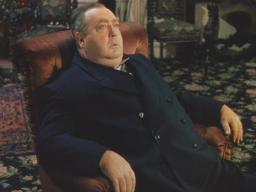
Eugene Pallette was a thin leading man in the silent era, but, after a tour of duty in WWI, he came back to Hollywood to find out he'd been usurped by younger, handsomer men. He decided to gain a shitload of weight and become a character actor. His health suffered, but his career flourished. I am immediately overjoyed when I see Pallette in a movie. He was a great comedian, for many reasons. He had excellent comedic timing, especially in his reaction shots and double-takes. He looked funny. He had a funny voice (it's a cliche at this point to call it "froggy," but no other word fits--he was the uber-frog). And, most importantly, he always played characters who were either constantly pissed off or constantly living it up with booze, babes, and huge fat cigars. In his best roles, he played guys who bounced back and forth between these two states of being. I start laughing as soon he appears onscreen, and I laugh even harder when he starts to speak. Pallette was an ultra-right-wing conservative who retired from movies in the late 1940s because he was convinced a Communist invasion was imminent. He moved to Oregon, bought a home in the country that he converted into a heavily fortified compound/bomb shelter/hunting lodge so he would be prepared when the Russians attacked. Many Hollywood stars visited his compound for long hunting and fishing weekends, particularly Clark Gable. Pallette died of cancer in 1954.

Recommended:
The Birth of a Nation (D.W. Griffith, 1915)
Intolerance (D.W. Griffith, 1916)
Shanghai Express (Josef von Sternberg, 1932)
The Adventures of Robin Hood (Michael Curtiz & William Keighley, 1938)
The Lady Eve (Preston Sturges, 1941)
Heaven Can Wait (Ernst Lubitsch, 1943)
The Gang's All Here (Busby Berkeley, 1943)

Monday, November 13, 2006

Favorite Actor Monday


Far from the polished robotic alien "cuteness" or indentured servitude for frighteningly ambitious yet talentless monster parents projected by most child and teen actors, Linda Manz was something else entirely--a human being. She's so good that her performances can be, and often are, mistaken for bad acting. We're so used to the bland professionalism of modern Hollywood celebrity performance that when somebody actually does something, we often get embarrassed and uncomfortable and are unable to respond in any other way but a negative one. We are all complicit in creating an American culture that is almost completely worthless and empty, but it doesn't really have to be that way. If we didn't fill our empty hours with so much useless junk and actively pursue the destruction of everything beautiful and wonderful about ourselves, maybe our current mainstream art and entertainment wouldn't be so loud, stupid, boring, negative, and dead. Maybe we wouldn't have to be such overdetermined spelunkers to find the good stuff. Maybe the good stuff would be everywhere, within everyone's reach, whether they lived in cities or small towns or whether they were fiendishly enthusiastic or mildly curious. Maybe I wouldn't be such an asshole. You know what? It's only a movie. This is true. It's only a movie, or song, or book, or painting, or photo, or sandwich, or high five. But these things add up. Anyway, Linda Manz was a great teenaged actor. Then she retired to have a family and a regular life, which is an underrated and sensible decision. She's been in a few movies as an adult, but mostly, she has better things to do. I wish someone would beat Julia Roberts to death with a lead bat. Are you that someone? Linda Manz is not a bad actor!

Recommended:
Days of Heaven (Terrence Malick, 1978)
Out of the Blue (Dennis Hopper, 1980)
Gummo (Harmony Korine, 1997)

Monday, November 06, 2006

Favorite Actor Monday


For a guy whose seemingly one-note delivery is still continually trotted out by hack comics/impressionists, James Stewart played a lot of different kinds of parts in a lot of different kinds of ways. The scene in "It's a Wonderful Life" in which he shares a telephone receiver with Donna Reed is possibly my favorite scene in movies. James Stewart was so damned likable and such a great actor, I can even forgive him for being a Republican. James Stewart, you're alright.

Recommended (there are a lot of Frank Capra and Anthony Mann movies missing, not because I dislike them, but because I have a lot of gaps to fill in the Capra and Mann filmographies):
The Shop Around the Corner (Ernst Lubitsch, 1940)
It's a Wonderful Life (Frank Capra, 1946)
Rear Window (Alfred Hitchcock, 1954)
The Man Who Knew Too Much (Alfred Hitchcock, 1956)
Vertigo (Alfred Hitchcock, 1958)
Two Rode Together (John Ford, 1961)
The Man Who Shot Liberty Valance (John Ford, 1962)
Cheyenne Autumn (John Ford, 1964) (Stewart's scenes are great in this, even though tonally and narratively they have nothing to do with the rest of the film, and were only added for comic relief)
The Shootist (Don Siegel, 1976)

Blog Archive