Sunday, February 24, 2013

Recent business

I've had the urge to get back into doing a little more writing on this blog, so I'm going to start posting about movies I watch in the theater. This is what I've seen so far this year.

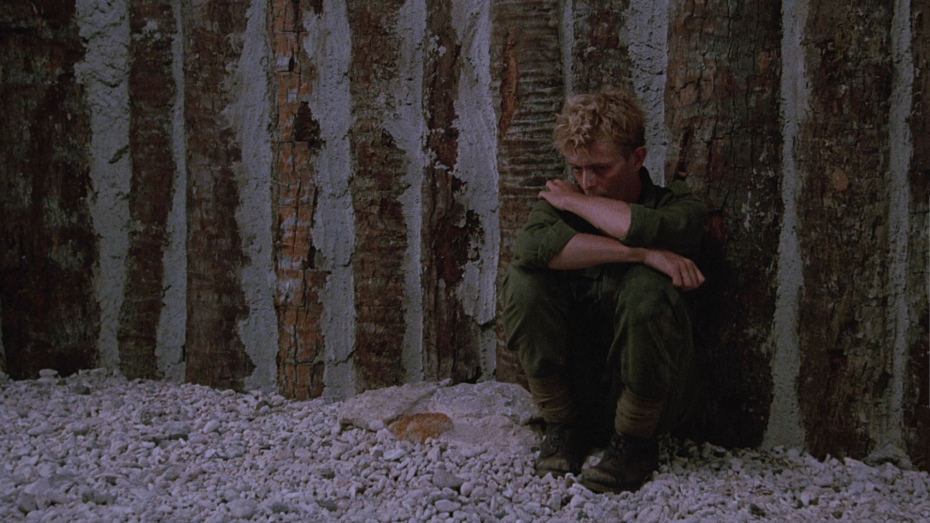
Not Fade Away (David Chase)
The first film from the creator of The Sopranos, David Chase, has quickly come and gone without much media hubbub, hoopla, hyperbole, or ham giveaways (I ran out of alliterative descriptors before that last one, but I was on a roll. Forgive me.) This is a damn shame. The Sopranos is my favorite television drama, and though Chase's film doesn't come close to the formal beauty or emotional impact of that amazing show (how could it?), it does have a hell of a lot more ideas, earned emotion, and entertainment value than most recent American films. Like The Sopranos, Not Fade Away energizes and transforms a familiar story by telling it in a personal, unusual way. Chase's semi-autobiographical period piece is about a young rock band in suburban New Jersey in the early-to-mid 1960s, particularly drummer-turned-singer Douglas (John Magaro) and his family and friends. Despite a few embarrassing scenes and lines of dialogue, Chase largely succeeds in creating a world that feels almost as lived-in as his TV show. Chase's subject matter is familiar territory in terms of setting, period, and chain of events (suburban white America, the '60s, youth culture, coming of age, a rock band trying to make it, the generation gap), but he structures the film as a series of ellipses that skip events and chunks of time that have been belabored by earlier works. Cliches are avoided by simply skipping over any scene that would provide it. For example, Douglas and his girlfriend have a horrible fight and break up. The next scene takes place several months later, and they are once again together, but Chase doesn't bother showing how or why the two patched things up. And the band never makes it big, so we avoid the whole spectacular rise and fall and rise again nonsense American film is so damn obsessed with retelling. Instead, like most bands, they don't have what it takes and simply fizzle out. They're an above average suburban New Jersey bar band with a couple good originals, and that's it. Not Fade Away's final moments are as gorgeous and daring as the final Sopranos episode, and probably just as likely to piss off any viewer who needs every conclusion tidy and final so it can be safely tucked into bed in time for the next diversion.
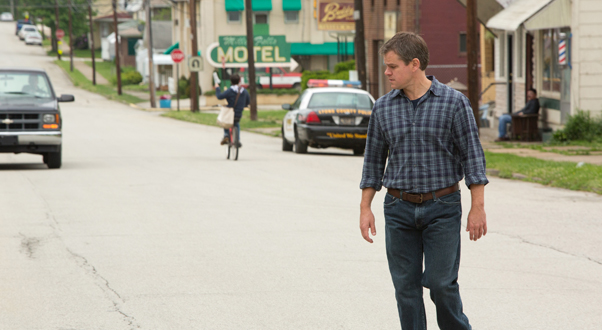
Promised Land (Gus Van Sant)
Gus Van Sant alternates between highly personal independent projects he adapts, writes, or co-writes himself and director-for-hire projects offered to him by producers, studios, or actors. When he does his own thing, he's one of my favorite directors. When he's a hired gun, the results are often disappointing. There are exceptions (his remake of Psycho was a personal project he'd wanted to do years before, but is baffling to me; To Die For and Milk were for-hire films he was able to make his own), but I'm generally wary of Van Sant the hired gun. I had low expectations for this film. Written by Matt Damon and John Krasinski from a story idea by Dave Eggers, anti-frakking drama Promised Land was meant to be Damon's directorial debut. When Damon's acting schedule prevented him from doing the necessary prep work as director, he made a last-minute offer to Van Sant. So, Promised Land is basically Good Will Frakking with John Krasinski as Ben Affleck, right? Yes and no. It's far from Van Sant's best work, Krasinski's smug mug still drives me insane, and the surprise twist at the end is pretty abominably stupid, but the overall feel of this one is far less forced and hollow than Good Will Hunting, the performances are relaxed and natural, the small town is portrayed in a far more accurate light than Hollywood normally attempts, and Van Sant makes it look awful purty. The film also spends more time on the characters than on being a soapbox lecture about the perils of frakking (Frakaganda? Again, I apologize.) I really liked Frances McDormand's interactions with Damon and the way Van Sant shot the landscape. Still, it's nothing particularly special and is too often a reminder of what Van Sant can do with better material. This is the kind of movie made for forced family holiday viewing. It won't matter if you miss some of the dialogue when your loudest relative starts braying nonsense about his/her day or health woes or how much Obama sucks or what Charlie Sheen is up to, but it will be better than most Hollywood swill.

Zero Dark Thirty (Kathryn Bigelow)
First, the right wing nuts bashed this movie for being pro-Obama propaganda. Than the lefties bashed it for being pro-CIA, pro-torture propaganda. These two groups should get together and cuddle because most of them made these accusations without bothering to see the film. After seeing it for myself, I can't side with either group. Bigelow has made a dark, ambiguous film about the absence of humanity and the cold, single-minded devotion to duty in both Al-Qaeda's terrorism and the CIA's counterterrorism. She gives the audience enough room to make up their own minds about the ethical justifications or lack thereof in our country's response to the hunt for Bin Laden. Was it worth it? What did we gain from it? The questions are implied. Not answered. The film depicts torture, and even shows a sliver of usable information coming from the use of torture, but is hardly a flag-waving love letter to the CIA or an apology for "enhanced interrogation techniques," in language-molesting bullshitspeak. The film depressed me, but not because it was pro-torture or because it was bad. I admired it. Bigelow again proved herself to be one of the most talented directors of visceral action and kinetic movement. The final sequence, in which the SEALs storm Bin Laden's compound, is top-notch filmmaking. The film depressed me because the world is a pro-death, pro-revenge nuthouse. As the credits rolled, I sat still for a second thinking about how everything is fucked and the world is a dark, sad place. At the same time, the man behind me yelled, "Wooo! USA!" That the film could inspire both these immediate responses is a testament to its power and skill and its potential negative impact as a big-budget mainstream prestige picture. If the jingoistic war hawk fistpumpers are going to ignore the film's ambiguity and find their own fantasy America in it, maybe it will do more harm than good. Here's hoping Bigelow has another Near Dark or Point Break in her somewhere.
Interestingly, leftist political journalists tend to think this film is pro-torture propaganda, while leftist filmmakers and film critics have been largely supportive of the film. As my viewing experience shows, there are many ways to watch a movie. Filmmakers and serious film critics tend to focus on form, style, and structure and find their meanings there, while journalists more often focus on the film's screenplay, content, and statements made about the film by its makers. We could benefit from exchanging more ideas about this, but I'd just like to say that most journalists are missing a lot of what Bigelow is saying in terms of facial expressions, juxtaposition of scenes, and where she puts her camera at crucial moments in the film. Also, I'd like to say that artists are notoriously unreliable interview subjects about their own work, and journalists too often take artists' statements about the work as gospel when they should be looking for their answers in the work itself.

Amour (Michael Haneke)
I'm pretty shocked that this movie received several Oscar nominations. It's French. Strike one. Hollywood is completely uninterested in any other country, with the occasional exception of the UK and any movie it can remake shittily. It stars two actors in their eighties. Strike two. Hollywood pretends old people don't exist, and it also pretends any woman older than 34 doesn't exist unless she's a rapping granny. It's a film that doesn't try to tell you how to feel from a filmmaker who specializes in exceedingly dark films with open-ended conclusions. Strikes three through a million. Oh wait, the film is about physical disability. The Oscars eat disabilities with a spoon. Still, it's an odd choice, but I hope it makes more people seek it out. Haneke's film about aging, decline, and death is as formally beautiful as the rest of his work and contains a trio of incredible performances from three of my favorite actors: Jean-Louis Trintignant, Emmanuelle Riva, and Isabelle Huppert.

The World's Greatest Sinner (Timothy Carey)
God and Satan bless the Alamo Drafthouse for presenting this super-rare 35mm screening of oddball genius actor Timothy Carey's beautifully strange 1962 labor of love. Carey wrote, edited, directed, and starred in this one-of-a-kind story of an insurance agent, Clarence Hilliard, who changes his name to God, quits the insurance game, gets into street preaching, becomes a rock star, and makes a deal with Satan to achieve political success until Satan comes back to collect. Sometimes infuriating, sometimes repetitive, sometimes transcendent, sometimes hilarious, always unique, this movie made me feel a little more alive. I can't imagine most people sitting through it, but those who do are my brothers and sisters.

Timothy Carey bonus track
Here's Carey with Seymour Cassel in one of my favorite scenes from John Cassavetes' Minnie & Moskowitz


My moviegoing: 2004

Abbas Kiarostami's Taste of Cherry (1997)
Austin Film Society's Iranian film series


Sunday, January 06, 2013

My favorite films of 2012

Ten years ago, I started writing down in a little notebook every movie I see on the big screen. Glancing through that notebook in preparation for writing this post, I noticed that I went to the movies a lot less this year. On the surface, that fact may seem to indicate a poor year for film, at least for a guy with my taste (i.e., me) but the opposite is true. I loved this movie year, and I was lucky enough to see at least 12 or 13 possible contenders for the all-time favorites list. So, here they are. First, my 10 favorite films of the year in the order I saw them, the honorable mentions, and the best revival and reissue screenings of older films. As usual, there were many films I missed and many others that haven't played in Austin yet, so omissions may not be matters of judgment.

MY 10 FAVORITES

The Kid with a Bike (Luc & Jean-Pierre Dardenne)
The Belgian siblings Dardenne have never let me down, but this is one of their strongest pieces of work. Theirs is an ethical, humanist cinema about neglected, damaged lives discovering their own value and their connections to others, but it is also tough, free of sentiment, and formally innovative. The Kid with a Bike is one of their most propulsive and contains one of the best child performances I've seen, from Thomas Doret.

Bernie (Richard Linklater)
This dark comedy based on a true Texas murder features surprisingly excellent, against-type performances from Jack Black and Matthew McConaughey (continuing Linklater's streak of coaxing great work from actors who normally bug the shit out of me), a real sense of community, and a hilariously affectionate bull's-eye depiction of the absurdity that is Texas. Texans will probably appreciate this movie the most (East Coast critics have tended to misunderstand the film's tone, thinking Linklater is laughing at instead of with his subjects), but there's plenty here for non-Texans, too. And it's great to see underused character actor Sonny Carl Davis.

The Turin Horse (Bela Tarr)
Hungarian director Tarr says this will be his last film. If he's telling the truth, which he probably is (directors have a much better track record than musicians at sticking to their proclaimed retirements), then film will have lost one of its strongest and most innovative formal stylists. A plot description makes this sound like a parody of an art film (an old man and his daughter live in rural poverty in an isolated countryside plagued by a fierce, unrelenting windstorm; the film follows several days of their lives consisting mostly of drudge work and consumption of potatoes), but Tarr's painterly images, graceful camera work, gorgeous b&w photography, and technique of filming each day's repetitive chores from a different vantage point make this possibly second only to Satantango in his impressive filmography. I couldn't shake this hypnotic movie.

Moonrise Kingdom (Wes Anderson)
I hope the Wes Anderson backlash has finally cooled down to a low simmer. I've never seen a guy dumped on more for making personal films that look distinctively his and for beginning his career with so much goodwill. This is one of Anderson's best, shot on 16mm and combining the sweet, awkward work he did with young adolescents in Rushmore with the doll's-house/storybook visual quality of his stop-motion animation film Fantastic Mr. Fox, with the dream cast of Frances McDormand, Bill Murray, Tilda Swinton, Edward Norton, Bruce Willis, Bob Balaban, and Harvey Keitel, who are all upstaged by the child leads, Jared Gilman and Kara Heyward, in their first movie roles. It may be one of the best films I've seen about that ridiculous, heart-destroying time between childhood and adolescence. You might be a bad person if you don't like this. I say that with the caveat that three of my favorite people detest Anderson. But they hated him before the backlash, so I will cut them some slack. They're wrong, though.

Dark Horse (Todd Solondz)
It's a disgrace how neglected Solondz's last three films have been. He's quietly edging closer and closer to becoming a suburban New Jersey Fassbinder, and hardly anyone is taking notice. Like Fassbinder, Solondz is the only other filmmaker I can think of who is able to make me feel so much empathy and common human fellowship for people who are so selfish, monstrous, sadistic, weak, and/or cruel, and he creates this empathy by emphasizing their weaknesses instead of their strengths. It's spooky stuff. Solondz is creating a distinct body of work combining satire, dark comedy, slice-of-life realism, and a weird, stylized magical realism. I wish he'd get the attention he received when he made Welcome to the Dollhouse and Happiness back in the late 1990s, but this is not a fair world.

Killer Joe (William Friedkin)
This unrepentantly sleazy, amoral neo-noir made me feel dirty. I loved it. I laughed so much. In the opening scene, Emile Hirsch's character tries to get inside the locked trailer home of his father and stepmother during a rainstorm. His stepmother, played by Gina Gershon, answers the door nude from the waist down. Hirsch asks her why she answered the door without any bottoms on, and she replies, "I didn't know it was you." Something happens with fried chicken that I've definitely never seen before. On my way out of the theater, an elderly man sitting a few seats away from me told his wife, "That was the worst movie I've ever seen in my life." Unexpectedly, Matthew McConaughey gives a fantastic performance in the title role. I loved him in Dazed and Confused, but he's spent the remaining twenty years smearing his patented brand of smarm-glaze on a series of forgettable Hollywood bullshit mediocrities, running shirtless on the beach with his bestie/professional asshole Lance Armstrong, and generally wasting away in Bongoritaville. Then, he gives two great performances in the same year, and I hear great things about his work in Soderbergh's Magic Mike, unseen by me. This year, he'll be in Scorsese's new one and Jeff Nichols' followup to Take Shelter. Could one of my least favorite actors be turning into one of my favorites? Freaky-deaky.

Cosmopolis (David Cronenberg)
The best-looking digitally shot film I've seen, Cronenberg's latest is a hyperstylized, vaguely sci-fi adaptation of a critically polarizing Don DeLillo novel that feels like a companion piece to Cronenberg's Videodrome and eXistenZ. Cronenberg's films always make my lists, but this is an exceedingly strong work about modern capitalism, globalization, money, and language that is darkly funny and unsettling as well as a formal delight. A great stylistic marriage of his older and newer work.

The Master (Paul Thomas Anderson)
Shot on 65mm and blown up to 70mm for theaters equipped to project it in that format (the first feature shot on 65 since Branagh's Hamlet in 1996), The Master is both epic and intimate. After a fruitful boy wonder period marrying Scorsese to Altman, Anderson in his last three films has become an American original, with shades of Kubrick and Malick. I'm in awe of his visual skills. I want to mainline every frame of this gorgeous damn thing. He somehow manages to combine large-scale, self-important bigness, heavy with symbolism and archetypes, and small, strange, personal, visceral, intimate moments into a weirdly singular vision. I've heard a lot of complaints about how this film looks great and has wonderful performances but no story. To that I say, film is a visual medium, and there's usually too goddamn much story, so good on anyone who cuts loose any of that dead wood. Many of these same people complaining about the so-called lack of story here have no problem watching current Hollywood films consisting of chunks of CGI data slamming into other chunks of CGI data. Where's the story there?

Killing Them Softly (Andrew Dominik)
I'm deeply in the minority in my admiration for this movie. It received tepid reviews, was a box office bomb, and has not been received cordially by audiences who did show up. Most of the criticism stems from some admittedly heavy-handed political sermonizing that added together probably consists of only 5 minutes of the running time and/or an emphasis on dialogue instead of shootouts. The non-sermonizing 90 minutes contain some of our best character actors (James Gandolfini, Richard Jenkins, Vincent Curatola, Ray Liotta, Scoot McNairy, Ben Mendelsohn, Max Casella, and Sam Shepard) and one of our most interesting movie stars (Brad Pitt) bringing to life the wonderful dialogue of crime novelist George V. Higgins, photographed by brilliant cinematographer Greig Fraser, and directed by the great, underrated Andrew Dominik. So, fuck you, America, you're mostly wrong about this one.

Holy Motors (Leos Carax)
I've never seen such an enjoyable, thrilling, invigorating, exciting film about despair, death, defeat, futility, indignity, and inevitability. Holy Motors is Carax's first feature since 1999 (he made the excellent short film Merde in 2008 as part of the anthology film Tokyo!). In the meantime, several projects fell through, collaborators died, his girlfriend died, and the film industry began its mad rush to embrace digital and let film-on-film disappear forever. Carax, using his acting surrogate Denis Lavant (who has starred in every Carax film except Pola X), writes a digital love/hate letter to cinema for an audience that he said in an interview is comprised of  "people who will soon be dead." Lavant plays an actor who rides around in a limo (the second limo-centered film on my list after Cosmopolis) driven by veteran actress Edith Scob, playing different characters at each stop. There's no way to do this film justice. It's indescribable and wonderful and you should just see it.

ALMOST MADE THE LIST

Django Unchained (Quentin Tarantino)
A few pacing problems and minor quibbles kept this out of my top 10, but it hit my spaghetti western sweet spot. I usually think Leonardo DiCaprio tries too hard (I forget which comedian had the great line about thinking "I bet that guy was the best actor in his high school play" every time he sees him on screen), but I loved him, and the rest of the cast, in this thing. I also loved seeing all the great '60s, '70s, and '80s character and TV actors pop up in cameo roles. Not the masterpiece Tarantino was going for, but pretty damn entertaining.

We Need to Talk about Kevin (Lynne Ramsay)
Lynne Ramsay makes a welcome return after a long absence. Some beautiful images and performances, but also some heavy-handed moments and unrelenting grimness. I still highly recommend it. 

LESSER FILMS THAT HAD SOME GOOD THINGS GOING FOR THEM

Silver Linings Playbook (David O. Russell)
Carnage (Roman Polanski)
Neil Young Journeys (Jonathan Demme)
Lawless (John Hillcoat)

MY FAVORITE REVIVAL AND REISSUE SCREENINGS

Killer of Sheep (Charles Burnett)/Shadows (John Cassavetes) double feature
Two of my favorite films on the same night. I've written about both before. They're inexhaustible, rough around the edges, awkward, poetic masterpieces that I'll never tire of seeing.

35 Shots of Rum (Claire Denis)
Denis uses Ozu's Late Spring as inspiration in this impressionistic story of the friendship between a father and his adult daughter. Denis leaves out what most movies overexplain and shows us what those movies leave out. I love her films and this is one of her best.

Rope (Alfred Hitchcock)
Hitchcock uses some sleight of hand to make his film look like it was shot in one take, but it's more than a gimmick in this underrated gem.

World on a Wire (Rainer Werner Fassbinder)
Most successful creative people are talented and ambitious. Fassbinder was a goddamned genius. I use that word here without hyperbole. This miniseries for German TV was almost impossible to see until its restoration a few years ago. Criterion put it out on DVD and Blu-Ray, but seeing it on film on a big screen was an amazing experience. Its four hours flew by.

Possession (Andrzej Zulawski)
This weird domestic drama/horror film/psychological thriller/European art film hybrid blew my mind. One of the most intense films I've ever seen. Skip your colonic and watch this instead.

Wake in Fright (Ted Kotcheff)
A masterpiece and one of the key films of the 1970s, this Australian movie was restored by Drafthouse Films last year and will finally see a DVD release in February. Another intense, indescribable film, it's set in the Australian outback, has one of my favorite Donald Pleasence performances, and is one of the toughest films I've seen about insanity, isolation, machismo, nihilism, sexuality, kangaroo hunting, and beer chugging. Director Kotcheff would later direct Weekend at Bernie's. I wish that were an urban legend, but it isn't. The same man who made this dark, twisted, beautiful gem made Weekend at Bernie's. What a world.

Nothing Lasts Forever (Tom Schiller)
Schiller's only feature film, Nothing Lasts Forever suffered a cruel fate. Schiller made short films for the first 11 seasons of Saturday Night Live, and got the chance to make a feature in 1984. He made something so unique, beautiful, and personal that the studio didn't know how to market it and never released it. It didn't even get a VHS or DVD release. This is bullshit. Schiller's film appropriates the style of classic 30s/40s Hollywood and is in black and white with a few scenes in Technicolor. A fantasy/comedy that is kindred spirits tonally with the films of Guy Maddin, Pee-Wee's Playhouse, Phil Hartman's SNL characters, early Letterman, and Joe Versus the Volcano, Schiller's film is both ironically detached from its subjects and sweetly earnest. Bill Murray has a great role as an evil bus driver/tour guide who takes senior citizens (including Larry "Bud" Melman) to the moon in a spaceship that looks just like a city bus (with live entertainment from Eddie Fisher). For now, the only place you can see this movie is late-night European TV, occasional film festival showings, and the odd screening at places like the Alamo Drafthouse, which is where I saw it. Oh yeah, the whole thing is on YouTube. But if you get a chance to see it on a big screen where you can throw Schiller some money for his work, don't hesitate.

Sergio Leone's Once upon a Time in the West would have made this list, but a digital print was screened. Something vital seemed to be missing. The grain, the stray hairs, the reel markers, the atmosphere. I love seeing films shot on film projected on film. Digital has come a long way and is really starting to look great, but films shot on film lose some of their vital essence when projected digitally, some of their magic voodoo ghost juice (that's a technical term). Film also decays more beautifully and can be preserved longer than some goddamn digital file. Film must be preserved. Why do we have to shortchange the old technology every time a new technology shows up?

Sunday, December 23, 2012

American movies, 1970-1979

George A. Romero's Dawn of the Dead (1978)


Sunday, December 09, 2012

My moviegoing: 2004

Jorge Bolado's Segundo Siglo (1999)
Austin Film Society's Recent Mexican Films series
This blurry, distorted still was the best image I could find from the slim pickings available for this obscure essay film. I confess to remembering next to nothing about it except that its main subject was Martin LaSalle, the nonprofessional who played the title role in Bresson's Pickpocket, and that it also featured photographer and occasional filmmaker Robert Frank.

Monday, October 22, 2012

American movies, 1970-1979

Steve Rash's The Buddy Holly Story (1978)
This film follows the standard conventions that have calcified and hardened into that dead-end but omnipresent genre of nonhuman pseudo-feeling, that robotic checklist of events so beloved by Academy Awards voters and hack directors and screenwriters: the celebrity biopic. However, because this was the 1970s, the film still had atmosphere, a lived-in feeling, and a cast full of oddball character actors and show biz types (Don Stroud, Charles Martin Smith, Paul Mooney, Fred Travalena, Hendrix drummer Buddy Miles). Gary Busey may seem like an odd choice to play Buddy Holly, especially considering what he's become, but he acquits himself nicely. The film isn't much to look at, but it has scrapbook charm. Steve Rash later went on to direct Pauly Shore in Son in Law, Whoopi Goldberg in Eddie, and straight-to-DVD sequels to American Pie, Bring It On, and Road Trip. Carrie Fisher and Chevy Chase were coke-addled enough to be in Rash's Buddy Holly followup. A clip is here, though I have to warn you that it's three minutes you'll never get back.  

Thursday, October 18, 2012

Harris Savides, 1957-2012


One of my favorite modern cinematographers died last week at the too-young age of 55. I got really excited when I saw Savides' name in the credits of a film. He had this amazing talent for capturing light and turning it into an expressive, poetic tool that served the aesthetics of the directors he worked with while subtly revealing Savides as a distinctive artist in his own right. He wasn't a showoff, and his work didn't call unnecessary attention to itself, but it was beautiful stuff. I'm going to miss seeing it.
Savides was a still photographer who started working in movies in his late thirties after a transitional period photographing music videos. He had an especially fruitful partnership with Gus Van Sant. They started working together on Van Sant's worst film, Finding Forrester. That movie is well-photographed garbage, but Van Sant followed it up with three of his best (Gerry, Elephant and Last Days), using Savides on all three. Savides also worked on Van Sant's Milk and Restless. Besides Van Sant, Savides was a cinematographer for David Fincher, John Turturro, Jonathan Glazer, Noah Baumbach, Ridley Scott, Woody Allen, and Sofia Coppola.


Thursday, August 30, 2012

Belated R.I.P. Department

Two directors I admire passed away recently: Chris Marker and Tony Scott. On the surface and maybe deeper, these two filmmakers represented opposing factions. Mentioning Marker -- elder statesman of what lazy media types like to call "the European art film" -- and Scott -- creator of loud, garish, macho Hollywood blockbusters -- as creative peers may come across as misguided and silly at first glance. Marker made uncategorizable essay films that drew on photography, literature, politics, and philosophy from an international perspective. Scott (mostly) made Hollywood spectacles full of American stars, quick cutting, nonstop action, guns, cars, trains, fighter jets, nuclear submarines, one-liners, fistfights, and explosions. Marker made Sans Soleil. Scott made Top fuckin' Gun. Marker died from natural causes at the age of 91. Scott jumped off a Los Angeles bridge.
And yet. Both men, however different their cinemas were from each other, innately understood that film was about images, sound, and movement and the correlations between them.  Both enjoyed collaborating with other writers and filmmakers. Both made many films as expatriates. (Scott was British and moved to the States in the 1980s.) They started in different mediums (journalism and photography for Marker, painting for Scott) and made their first films in their thirties. Both men were intensely private, and their films feel both personal and elusive. A goofy sense of humor and pop art and comic book influences are shared between them.
I know I'm finding these connections because of the timing of their deaths and stretching a thin comparison. However, they're both dead and the medium is a little weaker because of it.

Images from Marker's La Jetee and Sans Soleil and Scott's True Romance and Crimson Tide

Wednesday, June 20, 2012

R.I.P. Susan Tyrrell

For the last few years of her life, Susan Tyrrell had been living in Austin, Texas, and I didn't even know it. I could have run into her at a taco stand or Home Depot or a tire fire or a motorcycle accident. Unfortunately, I didn't get the chance. Tomorrow, several hundred fucking Jaydens, Brittanys, Braydens, and Graysons will be born, but never again another Susan Tyrrell.

Monday, June 11, 2012

My moviegoing: 2004

Joel & Ethan Coen's The Ladykillers (2004)
The only Coen Brothers film I have a hard time finding some kind words for, The Ladykillers seemed like evidence of a creative decline at the time of its release. This chronically lazy remake full of superior smirks and obvious jokes about Bob Jones University and irritable bowel syndrome appeared just months after the enjoyable but very slight Intolerable Cruelty, which had a couple of glaringly tone-deaf scenes of its own. I thought the tombstone was already engraved: COENS 1985-2004 THEY USED TO BE GOOD. More proof that I don't know much. They followed The Ladykillers with four films that I think are among their best: the Cormac McCarthy adaptation No Country for Old Men, the massively underrated Burn After Reading, A Serious Man, and the Charles Portis adaptation True Grit. A few months ago, I saw part of The Ladykillers on network television as I ate my hungover Sunday afternoon breakfast, and it wasn't nearly as bad as I remembered.

Monday, May 07, 2012

American movies, 1970-1979

Terrence Malick's Days of Heaven (1978)

Sunday, May 06, 2012

My moviegoing: 2004

Jacques Becker's Touchez pas au Grisbi (1954)


Tuesday, April 03, 2012

American movies, 1970-1979

Philip Kaufman's Invasion of the Body Snatchers (1978)


Sunday, March 25, 2012

My moviegoing: 2004

Michel Gondry's Eternal Sunshine of the Spotless Mind (2004)

Wednesday, February 29, 2012

Erland Josephson, 1923-2012

The great Swedish actor Erland Josephson, a welcome presence in many of Ingmar Bergman's films who also worked with Andrei Tarkovsky (twice) and Theo Angelopoulos, died earlier this week at the age of 88.

from the top:
The Passion of Anna (Ingmar Bergman)
Scenes from a Marriage (Ingmar Bergman)
Nostalghia (Andrei Tarkovsky)
The Sacrifice (Andrei Tarkovsky)


Monday, February 20, 2012

American movies, 1970-1979

Monte Hellman's China 9, Liberty 37 (1978)


Sunday, February 12, 2012

My moviegoing: 2004

Errol Morris' The Fog of War: Eleven Lessons from the Life of Robert S. McNamara (2003)

Friday, February 03, 2012

Ben Gazzara 1930-2012


I've only mentioned it in passing five million times, but John Cassavetes is my favorite filmmaker. I am a fundamentalist proselytizer of the man and his movies. As corny as it sounds, his work can change your life. It changed mine. It didn't get me a job or a wife or a car or a spaghetti dinner or save me from drowning or move me to Bucharest or remove one of my legs (I did or didn't do those things on my own), but it did open all kinds of previously closed doors in my brain and heart and make me a more open, patient, receptive, alive person. I'm not shitting you. It killed a lot of cynicism in me while also toughening me up. His movies stuck to me like wet pieces of those really thick brown paper towels you used to find in elementary school restrooms. He didn't do this by himself. He created one of the two most exciting troupes of actors in 1960s/70s/80s film (the other being Rainer Werner Fassbinder's). Peter Falk, Seymour Cassel, Gena Rowlands, Tim Carey, Val Avery, others I'm momentarily forgetting. One of those close collaborators and friends and one of my favorite actors, Ben Gazzara, died today, Feb. 3, the same day Cassavetes died 23 years ago. With Falk's death last year and Avery's in 2009, Cassavetes' amazing troupe is down to just Rowlands and Cassel.


I don't mean to make this post solely about Cassavetes. Gazzara was a welcome presence in dozens of other films. He was reportedly a great stage actor, too, but I'd be telling tales out of school if I pretended to know anything about theater. I'm going to miss seeing him on the screen.

Recommended:
Husbands (John Cassavetes, 1970)
The Killing of a Chinese Bookie (John Cassavetes, 1976)
Opening Night (John Cassavetes, 1977)
Saint Jack (Peter Bogdanovich, 1979)
The Spanish Prisoner (David Mamet, 1997)
Buffalo '66 (Vincent Gallo, 1998)
The Big Lebowski (Joel & Ethan Coen, 1998)
Happiness (Todd Solondz, 1998)
Dogville (Lars Von Trier, 2003)
"Quartier Latin" segment from Paris, je t'aime (Gerard Depardieu, 2006)

He's also good in Spike Lee's not very good Summer of Sam and totally bonkers in Road House.


Blog Archive