
Sunday, May 28, 2006


Sunday, May 21, 2006
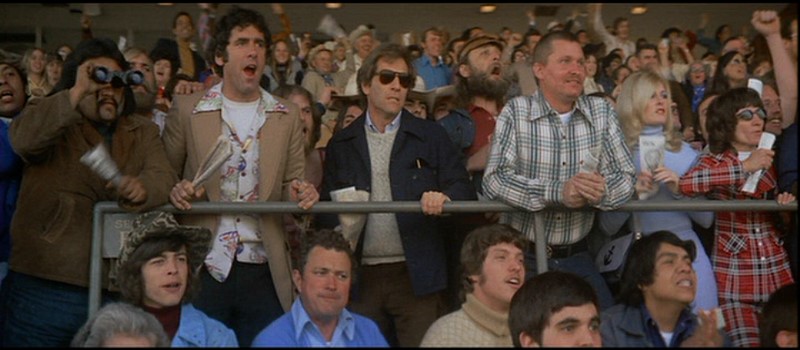
Sometimes you see something so good you just want to give up

Celine and Julie Go Boating (Jacques Rivette) needs no superlatives from me, or anyone. It's shamefully not available on DVD. Get off your ass, Netflixers, and go to the video store. If you hate this film, you hate me.
Saturday, May 13, 2006
I like movies
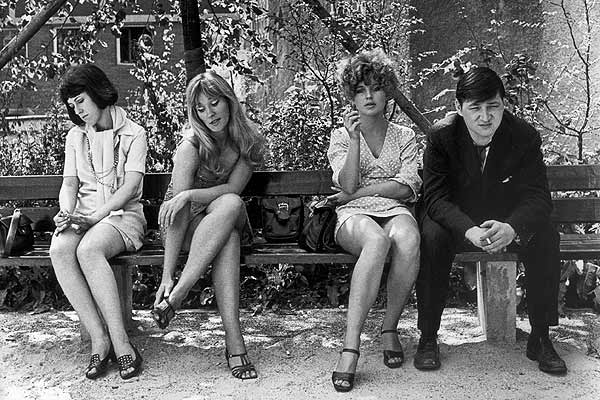
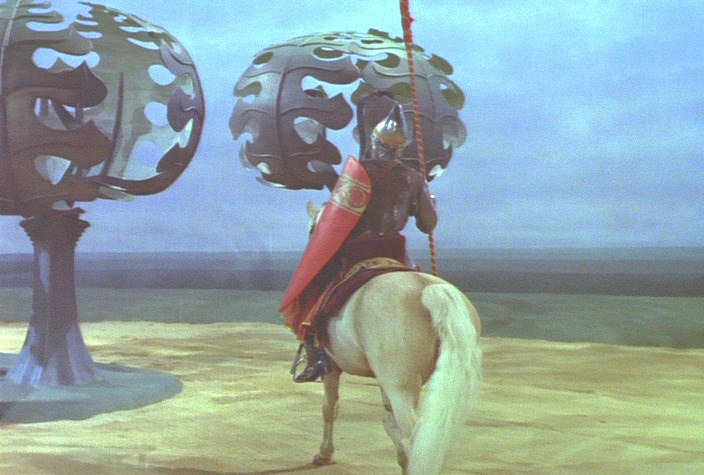
Some recommendations from the past couple of months:
Sans Soleil (Chris Marker)
Neil Young: Heart of Gold (Jonathan Demme)
L'Enfant (Luc and Jean-Pierre Dardenne)
Lonesome Jim (Steve Buscemi)
The Big Parade (King Vidor)
Le Plaisir (Max Ophuls)
Numero Deux (Jean-Luc Godard)
and especially
Perceval (Eric Rohmer)
Katzelmacher (Rainer Werner Fassbinder)
Yuck
Learn how not to write by reading this article. Learn how to be an asshole by emulating every person quoted in the article. "Movies" are gross.
Saturday, May 06, 2006
I like these guys a lot
Damn. Two Moviebot posts in one hour. This is, by far, the record. Anyway, here is a link to a short but sweet interview with Dan Clowes and Terry Zwigoff, whose second collaborative film, "Art School Confidential," should be coming to Austin soon. I'm going to heartily recommend it, though I haven't seen it yet, because Zwigoff and Clowes have yet to disappoint me, even a little bit. These guys are funny, smart, and they give a shit. They've also been accused of being misanthropes, but they care about our quality of life more than almost any two contemporary artists I can name. I've loved every Zwigoff film so far ("Louie Bluie," "Crumb," "Ghost World," "Bad Santa") and I've loved every Clowes comic I've read. There's so much wrong with our present culture, and it makes me feel good that there are two guys out there like Zwigoff and Clowes.
Friday, May 05, 2006
A clarification
I think my previous post might lead some to believe I have nothing but contempt for "Kill Bill" and the Coen Brothers, when in fact I had a great time watching the former and I have mostly great times watching the latter (especially "The Big Lebowski," especially not "The Ladykillers"). The point of my sentence, I think, was that a lot of people who love film seem to think Tarantino and the Coens are the absolute pinnacle of human achievement, while I think they are a hell of a lot of fun, but far from the top of the heap. I don't want to write them off as "entertainment," a word and definition I hate intensely (I prefer the word pleasure), but Tarantino and the Coens both seem genuinely afraid of real human experience, while my absolute favorites (I think I mentioned Cassavetes, Bresson, and Tarkovsky in particular) are absolutely fearless in their exploration of what it means to be a living human being and their works are far richer than Tarantino, etc., but nobody gives a flying fuck. If they do care, they usually grossly misread the films to fit whatever sociopolitical interpretation is fashionable this Wednesday. To me, art is at its best when the holy trinity of brain, groin, and stomach are simultaneously engaged, but I'm not some humorless intellectual who can't appreciate a good time. Tarantino and the Coens supply good times, and good times are important. There's just a whole lot more out there to discover if you spend a little time looking. I'm going to put my soapbox away now and drink some beer. Goodnight, everybody.
Tuesday, May 02, 2006
Sunday, April 30, 2006
Some ideas about a friend's post
My friend Professor Romance wrote a post about disparities in appreciation between art and science. Read it before you read this. I am greatly sympathetic to this post, but I am also coming at it from the perspective of a guy who has a tremendous amount of interest in art and some pretty serious deficiencies in math and science. I'll deal with that later, but first I want to tackle his frustration at social situations in which attempted conversation about science or math brands one as a nerd or a bore and conversation about music, movies, etc. gets everyone talking and offering opinions. Although I would have very little to contribute to a conversation about science or math, I feel more at home with his frustration than I do with a lot of people who share my interests. I think Prof. Romance is actually fortunate, in that people who don't know much about science and math will refrain from spouting off a lot of uninformed opinions, while art gets confused with entertainment and hipster lifestyle accessories. People who haven't seen a film predating their birthdate will consider themselves experts on cinema, while someone will spout off on music or literature simply because they have the right haircut and know a couple of people's names. Art (or the conflation of silly entertainment as art) is sexier than mathematics. Rock and roll leads to a lot more naked blondes and whiskey than entymology. That's just the way it is. However, real discussion about art and its aesthetics is just as absent from my life as discussion about science is from yours. When I go to a party, people will talk a lot about "Kill Bill" or the Coen Brothers, but finding someone with something to say about Robert Bresson, John Cassavetes, or Andrei Tarkovsky, to pick just three of the filmmakers whose work has (no shit) changed my life is like pulling teeth from my ass. When I do find someone who can talk about this stuff, he or she is usually a pretentious cocksucker who filters the work through some kind of fashionable sociological construct, rather than dealing with what the films are: their form, content, and structure. When I want to discuss this work, I have to pick up a book by one of the handful of critics who actually give a shit about it, and have an internal debate with myself. Most people don't give a shit about the artists I like. This does not make me feel "cool," hip or happy. Mostly, it makes me frustrated and angry. I imagine you feel the same way about science, math, and Spinoza. While "art" may be talked about more than science, it is usually because art is so easily confused with consumption, and it is fashionable as consumption. People are mostly just trying to get laid, and a lot of art talk is merely code for "I'm not a date rapist or a frat boy drunk on Coors." If science had more of an influence on haircuts, if math came in collectible 7" sleeves, people would spout off a lot more shit about it.
To move on to my lack of interest in science and math, it is not something I'm particularly proud of, though I don't feel like my lack of interest has anything to do with cowardice. Unfortunately, my science and math teachers in high school and college were unbelievably awful, and my English, history, and music teachers were mostly wonderful. This lopsided education, combined with my natural interest in the arts and my struggles with science and math (always difficult subjects for me), mostly dampened my interest in science and math while expanding my love of art. Whenever I learned a science fact or figured out some mathematical problem, I felt a real sense of wonder and accomplishment (this is still the case). However, this sense of wonder and/or accomplishment pales in comparison to what I get from a favorite piece of music, a film, a painting, a photograph, or a short story. Art does something to me I can't put into words. It gives me most of what I get out of bed for. Life is ridiculously short. My interest in the arts is a bit extreme, but it's something I need in my life, otherwise I'm incredibly unhappy. If I go two days without listening to music, it's very hard for me to function. I find life without music, literature, or movies almost unbearable. This all sounds melodramatic, and maybe it is (in practice, it's more matter-of-fact than melodramatic), but it's true. If I wanted to learn more about math and science, I would have to cut back on the other stuff, and I'm just not willing to do that. However, I'm still young. I've changed gradually and added interests, and science just might be one of them.
Finally, Prof. Romance, your frustration ("What is wrong with these dudes? Why don't they see what I see in math or science?") seems to me a frustration that every thoughtful person shares, namely "Why don't more people see things the way I do?" Some of my friends share my interests and some of them don't, but what unites them all, I think, is a strong sense of humor and a dissatisfaction with the complacent apathy of everyday life. All of us give a shit about something we don't "have" to give a shit about, and that is what makes us all worth knowing. Most of the people in my hometown don't have any passions or interests at all, including my father, and that scares the shit out of me more than anything.
P.S. Be glad you have a deep interest in something that frightens dilletantes. It's a blessing, not a curse.
To move on to my lack of interest in science and math, it is not something I'm particularly proud of, though I don't feel like my lack of interest has anything to do with cowardice. Unfortunately, my science and math teachers in high school and college were unbelievably awful, and my English, history, and music teachers were mostly wonderful. This lopsided education, combined with my natural interest in the arts and my struggles with science and math (always difficult subjects for me), mostly dampened my interest in science and math while expanding my love of art. Whenever I learned a science fact or figured out some mathematical problem, I felt a real sense of wonder and accomplishment (this is still the case). However, this sense of wonder and/or accomplishment pales in comparison to what I get from a favorite piece of music, a film, a painting, a photograph, or a short story. Art does something to me I can't put into words. It gives me most of what I get out of bed for. Life is ridiculously short. My interest in the arts is a bit extreme, but it's something I need in my life, otherwise I'm incredibly unhappy. If I go two days without listening to music, it's very hard for me to function. I find life without music, literature, or movies almost unbearable. This all sounds melodramatic, and maybe it is (in practice, it's more matter-of-fact than melodramatic), but it's true. If I wanted to learn more about math and science, I would have to cut back on the other stuff, and I'm just not willing to do that. However, I'm still young. I've changed gradually and added interests, and science just might be one of them.
Finally, Prof. Romance, your frustration ("What is wrong with these dudes? Why don't they see what I see in math or science?") seems to me a frustration that every thoughtful person shares, namely "Why don't more people see things the way I do?" Some of my friends share my interests and some of them don't, but what unites them all, I think, is a strong sense of humor and a dissatisfaction with the complacent apathy of everyday life. All of us give a shit about something we don't "have" to give a shit about, and that is what makes us all worth knowing. Most of the people in my hometown don't have any passions or interests at all, including my father, and that scares the shit out of me more than anything.
P.S. Be glad you have a deep interest in something that frightens dilletantes. It's a blessing, not a curse.
Friday, April 14, 2006
Sunday, April 09, 2006
Tuesday, March 14, 2006
Paste-eating philistines
For those of you who helped Failure to Launch and The Shaggy Dog become, respectively, the number one and number two grossing films of the week, thanks for your dedicated efforts in the fight to make the United States of America the dumbest fucking country on earth. When you decided to go to either of these movies, did you look through the paper and weigh your options? Did you decide that, yes, "Failure to Launch" and/or "The Shaggy Dog" truly rises to the top amid the sea of cinematic possibilities available in the area this week? If you went to one of these two movies, did you enjoy it? Why did you enjoy it? I'd like to know. Honestly. I don't understand you very well. Help me understand. We need to reach some common ground, average American moviegoer, because right now I feel like I hate you. I wish you ill. I don't like feeling that way. I don't want to feel ill will and hatred. I'm really a positive guy, believe it or not. There is much in life I hate, but I am glad to be alive. Are you glad to be alive? If you are, you're sure sending mixed messages. Was your ticket purchase at the multiplex a cry for help? Have you hit rock bottom? Do you no longer care how you spend your time? Do you just wander around, dazed, spending money where you're told? Do you have a hard time distinguishing between information and advertising? Have you ever sought out anything on your own? Do you hate yourself? Is art something that is other people's business? Is the coddling, patronizing familiar your preferred way of life? Are you devoid of a brain, a heart, a penis, and/or a vagina? If I smashed your head open with a baseball bat, what would come out? Straw?
All is not lost. I've seen some great, great things in the last three weeks, and some good things, too. I've seen two of the best films I've ever seen, I Fidanzati and Under the Roofs of Paris.
"I Fidanzati" (Ermanno Olmi) is fresher than every rotting corpse stinking up the multiplex now and forever. It takes advantage of the possibilities of film editing in ways that are continually ignored by the plodding televisionisms or graceless displays of thoughtless technique of most mainstream movies. This film is structure, content, form, and the thoughtful connection of achronological images causing each viewer to construct his/her own narrative. It's so instinctively right. It isn't a waste of labor and energy.
"Under the Roofs of Paris" (Rene Clair) is one of the first of that group of films, mostly clumsy, that marked the transition from silence to sound. It isn't clumsy. It's graceful, beautiful, funny, sad, and other adjectives that have been drained of their meaning by being thrown around on undeserving work. Its studio-built replicas of Paris streets create a dreamy, melancholy atmosphere in which the city is a continuous, living organism. It is a musical, in that the music, like the city, is also a continuous, living organism, passing from background score to a hummed tune on the female lead's lips to songs sung by the actors to a phonograph playing in a bar, and on and on. The camera glides gracefully over the fake city, and then becomes completely still. Dialogue is accentuated, then dropped out completely, overtaken by the music, then brought back again. We observe characters through windows and glass doors, then up close, then the camera retreats again. And the guy doesn't get the girl in the end, unless he does.
Two recent films seen on the big screen excited me, obviously because I thought they were good, but also because they seemed to me a clearer picture of the America we actually live in than the billboard/infomercial/catalogue-photo America of shit like almost every mainstream American film, "independent" or Hollywood. If you see them, and still prefer "Failure to Launch" or "Star Wars" or "Crash" or "Traffic" or any other diverting lie, we may not live in the same country. In all honesty, I haven't seen "Failure to Launch" or "Crash," so I'm mostly talking about their trailers and how they've been marketed and/or reviewed, but, when it comes to Hollywood filmmaking, what's the difference? Also, I'm talking about Academy Award "Crash," not the great David Cronenberg "Crash." Anyway, the two American films about the America we actually live in are Tommy Lee Jones' The Three Burials of Melquiades Estrada and Michel Gondry's Dave Chappelle's Block Party.
Coming soon to Can-Smashing Robot: A tale of small-town life that turned into a tale of American life in general, featuring Dave Chappelle, $50 million, Americans' reactions to both, Devolution, freedom from choice, how city Americans are just as lazy, complacent, and curiousity-free as their small town counterparts, and is it just me or does our country keep getting batshit-fucking crazier and crazier and stupider and stupider? Also, money is bullshit! Thank god you can trade it in for art.
All is not lost. I've seen some great, great things in the last three weeks, and some good things, too. I've seen two of the best films I've ever seen, I Fidanzati and Under the Roofs of Paris.
"I Fidanzati" (Ermanno Olmi) is fresher than every rotting corpse stinking up the multiplex now and forever. It takes advantage of the possibilities of film editing in ways that are continually ignored by the plodding televisionisms or graceless displays of thoughtless technique of most mainstream movies. This film is structure, content, form, and the thoughtful connection of achronological images causing each viewer to construct his/her own narrative. It's so instinctively right. It isn't a waste of labor and energy.
"Under the Roofs of Paris" (Rene Clair) is one of the first of that group of films, mostly clumsy, that marked the transition from silence to sound. It isn't clumsy. It's graceful, beautiful, funny, sad, and other adjectives that have been drained of their meaning by being thrown around on undeserving work. Its studio-built replicas of Paris streets create a dreamy, melancholy atmosphere in which the city is a continuous, living organism. It is a musical, in that the music, like the city, is also a continuous, living organism, passing from background score to a hummed tune on the female lead's lips to songs sung by the actors to a phonograph playing in a bar, and on and on. The camera glides gracefully over the fake city, and then becomes completely still. Dialogue is accentuated, then dropped out completely, overtaken by the music, then brought back again. We observe characters through windows and glass doors, then up close, then the camera retreats again. And the guy doesn't get the girl in the end, unless he does.
Two recent films seen on the big screen excited me, obviously because I thought they were good, but also because they seemed to me a clearer picture of the America we actually live in than the billboard/infomercial/catalogue-photo America of shit like almost every mainstream American film, "independent" or Hollywood. If you see them, and still prefer "Failure to Launch" or "Star Wars" or "Crash" or "Traffic" or any other diverting lie, we may not live in the same country. In all honesty, I haven't seen "Failure to Launch" or "Crash," so I'm mostly talking about their trailers and how they've been marketed and/or reviewed, but, when it comes to Hollywood filmmaking, what's the difference? Also, I'm talking about Academy Award "Crash," not the great David Cronenberg "Crash." Anyway, the two American films about the America we actually live in are Tommy Lee Jones' The Three Burials of Melquiades Estrada and Michel Gondry's Dave Chappelle's Block Party.
Coming soon to Can-Smashing Robot: A tale of small-town life that turned into a tale of American life in general, featuring Dave Chappelle, $50 million, Americans' reactions to both, Devolution, freedom from choice, how city Americans are just as lazy, complacent, and curiousity-free as their small town counterparts, and is it just me or does our country keep getting batshit-fucking crazier and crazier and stupider and stupider? Also, money is bullshit! Thank god you can trade it in for art.
Wednesday, March 01, 2006
Self-Indulgent Ramble Series, Essay 1: The Canon
It’s a constant source of irritation to me that most people, especially wonderful people who are a lot smarter than me, never see the films I love the most. Additionally, a lot of these smart people think movies are either irrelevant or dead. The mass audience seems to think of movies as a pleasant, forgettable diversion. They also seem to think there is no difference between seeing something on video and seeing it on the big screen, that art is a boring chore, and that subject matter or plot dictates a film’s interest to an audience. It is also a source of irritation that more people, even casual filmgoers, don’t know who is directing the film they are watching and how that film fits into the director’s body of work. This probably makes me sound like an elitist prick, but most people know who performed the music they listen to, who wrote the books they read, and who painted the painting they’re staring at on the gallery wall. Knowing who is responsible for the art you respond to helps you make better choices and avoid a lot of dogshit. Somehow, a lot of people who make informed choices about the other art and entertainment in their lives approach film from such childish perspectives: “I like boxing, so I’m going to see ‘Million Dollar Baby.’ I’m interested in the Holocaust, so I’m going to see ‘Schindler’s List.’ I like dinosaurs, so I’m going to see ‘
Dr. Mystery’s Canon of Cinematic Gold
John Cassavetes: almost everything, but particularly Shadows, Faces, A Woman Under the Influence, The Killing of a Chinese Bookie, and Love Streams
Charles Burnett: To Sleep With Anger
Howard Hawks: His Girl Friday, To Have and Have Not, The Big Sleep,
Robert Bresson: Diary of a Country Priest, A Man Escaped, Au Hasard Balthazar, The Devil Probably, L’Argent
Charlie Chaplin: City Lights, Monsieur Verdoux, A King in
Barbara Loden: Wanda
Buster Keaton: most of the silent shorts
Mike Leigh: Bleak Moments, Meantime, High Hopes, Life is Sweet, Naked
Marx Brothers: Animal Crackers, Horse Feathers, Duck Soup
Roberto Rossellini:
Vittorio De Sica: The Bicycle Thief, Umberto D
Rainer Werner Fassbinder: The American Soldier, Ali: Fear Eats the Soul,
Tom Noonan: What Happened Was, The Wife
Nicholas Ray: In a Lonely Place, Johnny Guitar, Rebel Without a Cause, Bitter Victory, They Live By Night
Werner Herzog: Fata Morgana, Aguirre: The Wrath of God, The Enigma of Kaspar Hauser, Stroszek, Even Dwarfs Started Small
Jacques Tati: Playtime, Mon Oncle, M. Hulot’s
Yasujiro Ozu:
Ingmar Bergman: Persona, Cries and Whispers, Scenes from a Marriage, Fanny and Alexander
David Cronenberg: Rabid, The Fly, Dead Ringers, Crash, A History of Violence
Elaine May: Mikey and Nicky, The Heartbreak Kid, A New Leaf
Jim Jarmusch: Stranger than
Aki Kaurismaki: Ariel, The Man Without a Past
Larry David: Curb Your Enthusiasm
Andrei Tarkovsky: Stalker, The Sacrifice, Solaris
Gus Van Sant: Drugstore Cowboy, My Own Private
Carl Dreyer: Ordet, Gertrud, The Passion of Joan of Arc, The Parson’s Widow
George Romero: Night of the Living Dead, Martin, The Crazies, Dawn of the Dead
Harmony Korine: Gummo, Julien Donkey-Boy
Frank Capra: It’s a Wonderful Life
Edward Yang: Yi Yi
Wong Kar-Wai:
Monte Hellman: The Shooting, Ride in the Whirlwind, Two-Lane Blacktop, Cockfighter
Wim Wenders: Kings of the Road,
Robert Altman: McCabe and Mrs. Miller,
Wes Anderson: Bottle Rocket, Rushmore, The Life Aquatic with Steve Zissou
Jafar Panahi: The Circle, Crimson Gold
Abbas Kiarostami: Close-Up, Life and Nothing More, Taste of Cherry, The Wind Will Carry Us, Ten
Kenji Mizoguchi: Ugetsu, Sansho the Bailiff
Takeshi Kitano: Fireworks, Zatoichi, Sonatine
Sam Peckinpah: Ride the High Country, The Wild Bunch, Bring Me the Head of Alfredo Garcia, Pat Garrett and Billy the Kid
Su Friedrich: Sink or Swim, The Rules of the Road
Chris Smith: American Job, American Movie
Shirley Clarke: Portrait of Jason
Dennis Hopper: Out of the Blue
Luis Bunuel: Viridiana, Belle de Jour, The Discreet Charm of the Bourgeoisie, The Phantom of Liberty
Lionel Rogosin: On the Bowery
Jean Renoir: Grand Illusion, The Rules of the Game, Picnic on the Grass
Terry Zwigoff: Louie Bluie, Crumb, Ghost World, Bad Santa
Todd Haynes: Safe, Superstar: The Life of Karen Carpenter, Far from Heaven
Erich Von Stroheim: Greed, Foolish Wives
F.W. Murnau: Nosferatu,
Lars Von Trier: The Kingdom, Breaking the Waves, Dancer in the Dark, The Idiots, Dogville
Paul Thomas Anderson: Punch-Drunk Love
Jean Vigo: L’Atalante, Zero for Conduct
Claude Chabrol: Le Boucher, Les Bonnes Femmes, La Ceremonie
Francois Truffaut: Stolen Kisses, Shoot the Piano Player, The 400 Blows
Jean-Luc Godard: Breathless, Band of Outsiders, Contempt, Weekend, Passion
David Lynch: Eraserhead, Blue Velvet,
Martin Scorsese: Mean Streets, Taxi Driver, The King of Comedy, After Hours
Hou Hsiao-Hsien: The Puppetmaster, Goodbye South Goodbye
Ermanno Olmi: Il Posto, I Fidanzati
Alan Clarke: Scum, Made in Britain, The Firm, Elephant, Rita Sue and Bob Too
Luc and Jean-Pierre Dardenne: La Promesse, Rosetta, The Son
Steve Buscemi: Trees Lounge, Animal Factory
I’m going to stop here. There are many, many others.
Monday, February 13, 2006
Movement, part 2
Seeing Richard Pryor: Live in Concert (Jeff Margolis) last week, it pained me to think about how often he was wasted in bad films and how his MS seemed to be some kind of vengeful retribution inflicted by insulted gods wanting to punish an artist whose comedy relied, almost exclusively, on facial expressions, body language, mimicry, anthropomorphization, and constant movement. Mostly, though, I laughed and watched a great artist at work. Pryor's stand-up comedy depended on Pryor's performance and delivery. If one were to transcribe his comedy and read it, it might produce a few smiles or nods of recognition, but most of it would lay dead on the page. Pryor's jokes are funny because of his delivery, not what is being delivered. He is a performer, in the best sense of the word, scrunching his body into the shape of a question mark and hopping from side to side as he talks about getting beaten by his father, lying on the floor in a ball and punching himself in the chest as he tells the story of his first heart attack, turning himself into an old woman, a lying little kid, Muhammad Ali, a white man, a pet monkey who likes to fuck people in the ear, a German sheperd, the engine of a car, and on and on. Pryor the artist is a living pinball, constantly in motion, banking off the multiplicity of human experience. Like all the artists I admire, he is simultaneously tough and compassionate, loving people while never letting them off the hook, and he never exempts himself from his work. He's not making judgments from on high and passing them down to an audience, he is discovering things about himself while performing and forcing the audience into self-discoveries as well. I would rank him, as a stand-up, right up there with lots of artists I admire in his wildly exciting understanding of patterns of speech and behavior and how body language and movement can reveal hidden mental states, including John Cassavetes, Mike Leigh, Charlie Chaplin, Buster Keaton, the Marx Brothers, Tom Noonan, Charles Burnett, Bill Hicks, Lenny Bruce, Elaine May, Howard Hawks, Stanley Elkin, Barry Hannah, etc. If I'm making this sound too lofty, rest assured it is also funny as shit.
Tuesday, February 07, 2006
Movement and discomfort in performance
I've already written about the widespread behavioral tic of two men leaving an empty seat in between them in a movie theater. I would also like to bring up something that happened at the screening of Brokeback Mountain I attended. During the scene in which Michelle Willams' character sees the characters played by Heath Ledger and Jake Gyllenhaal kissing, inadvertently discovering that her husband is having a homosexual affair, the audience, largely comprised of middle-aged straight couples, laughed heartily, though the scene is hardly played for laughs and I doubt much laughter would have ensued if the kiss was the product of a heterosexual affair. In the lobby, after the movie ended, most of these couples were talking about how much they enjoyed the film. So why did they laugh? They laughed because they were uncomfortable watching two men kiss, and they didn't know what else to do. Judging solely from appearances and overheard conversations (I could be way off), the audience members were largely middle and upper-middle class, middle-aged, white Americans with mainstream, conventional taste and manners. These are people who are not used to being uncomfortable. Though I share a lot of sociologic background with this audience, I am almost never comfortable. If I were forced to tally a percentage of my social discomfort, I would probably find that roughly 86% of my social encounters in life have been uncomfortable, painful, and/or awkward. Since so much of my life is socially uncomfortable, I am very receptive to art that thrives on making its audience uncomfortable, as long as this is achieved without condescension or contrivance. When comfort zones are nowhere to be found, the audience is forced to participate, to act, to work toward new ways of understanding life, to think. This can, at its best, lead to personal growth. As much as I enjoyed "Brokeback Mountain," and I enjoyed it a great deal, it is a fairly conventional romantic western, aside from the novelty of a homosexual love story in a mainstream film. I don't consider it an uncomfortable film. It was a skillful, old-fashioned crowd-pleaser. However, a lot of the audience members have probably never seen two men kiss onscreen before. As much as their laughter bothered me, it also made me feel like these people were working through their discomfort, trying to get past it. Maybe next time, it won't make them so uncomfortable. They won't need to laugh. The fact that they were even there, and that they loved the movie, is a hopeful sign. If two guys kissing is no big deal, what else is no big deal? My friends, a whole lot of shit is no big fucking deal. We seem so afraid of our own movements and behaviors, so constricted and locked into our patterns, so afraid to be human, afraid of our own existence, embarrassed by it. A couple of movies I've seen in the last couple of months have made me think about the laughter in the theater, and the value of discomfort and its effect on physical movement. The first is Mike Leigh's first film, from 1971, Bleak Moments. If you read most critics, they'll tell you that Leigh is in the long tradition of British "kitchen-sink realists" and that his films are predominantly overtly leftist political tracts about the economic effects of the British class system. This misreading of his work is epidemic. Someone should tell this legion of megabores to watch his film with their eyes, not their mouths. Though many of his films are grounded in the everyday and bear many resemblances to realism, kitchen-sink or otherwise, and a lot of his characters talk about their economic situation, Leigh's films are about behavior, performance, interaction, movement, discovery, pattern disruption, connection, and disconnection, not polemics or cinema verite. He wants to find things, not tell you what he already knows or merely observe life. His filmmaking methods tell you that much. Leigh picks a group of actors. He tells each actor to create a character. He works with them throughout this process. When the characters are created, he writes a script using the characters created by the acting troupe. This has been the case for all his films, with the partial exception of his two period pieces ("Vera Drake" and "Topsy-Turvy") when the story ideas came first. "Bleak Moments" is one of his funniest films, but also one of the toughest to watch. Every character in this film is profoundly uncomfortable, and their interactions make the audience just as uncomfortable. They are pathologically shy, inarticulate, embarrassed, withdrawn, afraid, closed-off. Anne Raitt (it's a shame she hasn't appeared in many films--her performance here is one of the most quietly memorable I've had the pleasure to see), as Sylvia, finally makes tentative movements away from social paralysis, and it's simultaneously funny and sad to see her character, a passionate, sharply funny, intelligent but painfully shy woman stuck in a life she's too wonderful for, rebel against the constraints of her own physical space. Every performance in this film is a tiny masterpiece of dis-ease, whole planets of emotion revealed in tiny movements of the lips, eyes, and fingers.
Movement plays a huge part in the other film I want to talk about, "Richard Pryor: Live in Concert," but I'm getting sleepy, so I'll write about that one tomorrow.
Movement plays a huge part in the other film I want to talk about, "Richard Pryor: Live in Concert," but I'm getting sleepy, so I'll write about that one tomorrow.
Monday, February 06, 2006
Self-promotion
I got a short thing about my favorite movies of the year published in the online Australian movie magazine, Senses of Cinema. Read it here, if you feel like it and have nothing else to do.
Thursday, February 02, 2006
Dumb article written by dumbos about dumbshits
This is one of the dumbest things I've ever read. I don't have time to go over it, but pretty much every sentence is just about the dumbest thing ever. A few of the dumbest moments:
"From biopics to message films, audiences and creators alike seem to be drawn to 'reality'-based movies - both in content and technique, say those who teach, study, analyze, and criticize the film industry."
First of all, if biopics and message movies are your idea of "reality" (whatever the shit that is), you don't live on Earth. Secondly, if you were actually studying, analyzing, teaching, and/or criticizing films instead of the "film industry," well, you would be on the right track, but probably still making inane, irrelevant comments to the AP. We need a Vietnam War equivalent in academia, thin out some irrelevant, irrelevant motherfuckers quick.
"To some, Oscar night - and the movies it celebrates - has become a Rorschach test for a self-absorbed industry out of touch with mainstream tastes. Other culture watchers, though, insist that the cinematic tribute reflects, and even guides, America's collective direction and values."
Honestly, people like watching stars in purty dresses, and media hoopla tends to draw crowds. That's all it is. It can't be out of touch with mainstream tastes when nothing is more middlebrow and mainstream, and it sure as hell doesn't reflect and guide our collective direction and values. Thanks for inventing a fake story and commenting on it, "film industry" experts. Well, goodnight, everybody. I'm going to go back to my critique of the "music industry" now. Is it out of touch with Joe Schmoe, or does it guide, shape, and reflect his direction and values? What about whacking off? I study that, too. Listen to this vexing proposition. Is masturbation only for the hoity-toity, or is it also enjoyed by the hoi polloi?
"From biopics to message films, audiences and creators alike seem to be drawn to 'reality'-based movies - both in content and technique, say those who teach, study, analyze, and criticize the film industry."
First of all, if biopics and message movies are your idea of "reality" (whatever the shit that is), you don't live on Earth. Secondly, if you were actually studying, analyzing, teaching, and/or criticizing films instead of the "film industry," well, you would be on the right track, but probably still making inane, irrelevant comments to the AP. We need a Vietnam War equivalent in academia, thin out some irrelevant, irrelevant motherfuckers quick.
"To some, Oscar night - and the movies it celebrates - has become a Rorschach test for a self-absorbed industry out of touch with mainstream tastes. Other culture watchers, though, insist that the cinematic tribute reflects, and even guides, America's collective direction and values."
Honestly, people like watching stars in purty dresses, and media hoopla tends to draw crowds. That's all it is. It can't be out of touch with mainstream tastes when nothing is more middlebrow and mainstream, and it sure as hell doesn't reflect and guide our collective direction and values. Thanks for inventing a fake story and commenting on it, "film industry" experts. Well, goodnight, everybody. I'm going to go back to my critique of the "music industry" now. Is it out of touch with Joe Schmoe, or does it guide, shape, and reflect his direction and values? What about whacking off? I study that, too. Listen to this vexing proposition. Is masturbation only for the hoity-toity, or is it also enjoyed by the hoi polloi?
Monday, January 30, 2006
Slow declines
I was looking at some stills from "Raging Bull" on a DVD-reviewing website tonight, and was struck by the difference in intensity in Robert De Niro's eyes then, and now. The guy's obviously been phoning it in for years now, and who can blame him? I guess everybody gets tired of their day job eventually, no matter how fulfilling. The only difference is that people aren't cumming in their shorts because we're giving them lackluster results. If we phone it in at work, we get yelled at. If De Niro phones it in, some 29-year-old director has multiple orgasms because a legend is standing next to him. I wish he would just retire and get it over with. But what else would he do? Maybe he doesn't want to retire, and who am I to tell him he should? He doesn't owe us anything. We're lucky to have what he's given us. It's just that I'd rather see him give lousy performances than the zombified mediocrity he's attached himself to for most of the last ten years, give or take a couple of brief revivifications. Why are these old Hollywood guys so afraid of giving up their star salaries to actually do some fucking acting in good films? They're already rich. Why not take that pay cut and give some real acting a whirl again? If I liked sports, it would probably be like watching Michael Jordan's professional baseball attempts or George Foreman's last few fights. Except I don't like sports. I like movies, and most audience members seem content to watch our best athletes play their B-game.
Thursday, January 19, 2006
The middle seat
I was at the Dobie Theater on Monday, watching Jia Zhangke's The World (which is one of the most cinematically satisfying films, in its use of visual space and the movement of the actors and the camera through this space, I've seen in a long time) when I saw another example of the Middle Seat Maneuver. I see this all the time, but I was surprised to see it at a screening of a 2 1/2-hour Chinese art film. The Middle Seat Maneuver, otherwise known as the I'm Not Gay, occurs when two men attend a film screening together but leave an empty seat between them to loudly signify their heterosexuality (or possibly their closeted, self-hating homosexuality). I don't understand this move. If two men go to a movie together and sit next to each other, I don't jump to any sexual conclusions, and I imagine most other people don't, either. If, however, two men perform the Middle Seat Maneuver, I immediately assume one of three things about at least one of the men: 1) Raging homophobe. 2) Horribly insecure man. 3) Closeted homosexual. Come on, guys. The Middle Seat Maneuver arouses exactly the kind of suspicion you're so desperately trying to avoid. Let's give them the benefit of the doubt, though. Maybe these guys are not trying to advertise their pussy-nailing abilities to a theater full of strangers. Maybe they're worried about ruining their friendship. Maybe they're such passionate cinephiles that, when touched deeply by a film, their hearts erupt with feeling and they start to make out. This would, of course, damage their friendship. They can't afford to take that chance. Their friendship is too meaningful, too important. In this day and age, when corporate greed, terrorism, warfare, and the 311/Creed altercation are part and parcel of daily life, this devotion to a lasting friendship between two straight men must be congratulated and saluted.
Subscribe to:
Posts (Atom)