Friday, June 24, 2011

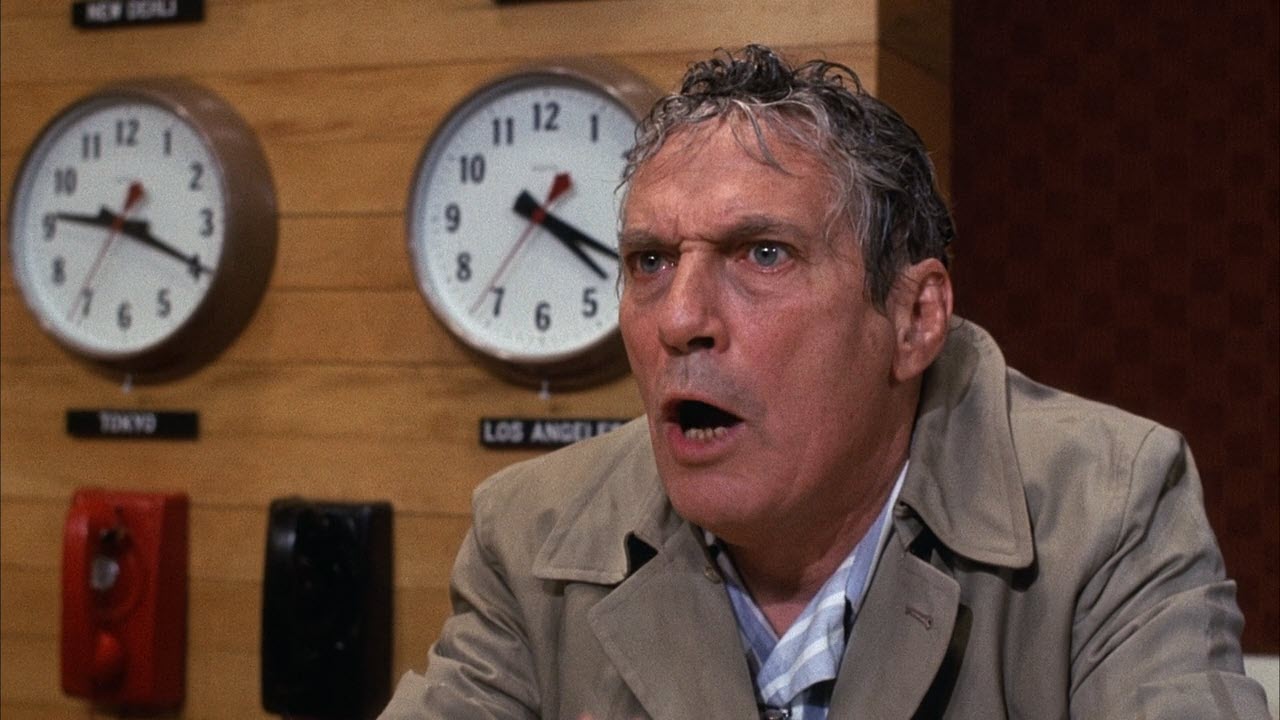
R.I.P. Peter Falk


Remember when an average guy with a lazy eye could be a movie star? What the hell is wrong with Hollywood now? Nobody has any character in their face. All we have are anonymous pretty people chasing CGI monsters and supervillains in front of a green screen for an average shot length of .05 seconds or smug bores falling in and out of love and back in love based on idiotic misunderstandings.
This kind of grumbling doesn't belong in a Peter Falk tribute, so I'll stop now. He was in two of the greatest American films, A Woman Under the Influence and Mikey & Nicky, and one of the greatest German films, Wings of Desire. He was in a near-great American film, Husbands, and a formative childhood film for most people my age, The Princess Bride. Columbo was a very entertaining show, and I'm glad he was in it, but he did plenty of other stuff, obituary writers. Big Trouble had an unhappy production and was very uneven (a dying Cassavetes took over when original director Andrew Bergman quit or was fired, depending on the source), but the scene where Falk gives Alan Arkin a sardine-flavored liqueur leads to the greatest spit-take in cinema history. I loved watching this guy.


My moviegoing: 2003

from Jean-Luc Godard and Anne-Marie Mieville's Six fois deux/Sur et sous la communication (1976)
Austin Film Society's Godard/Mieville series
They showed the second episode of this French TV miniseries.

Tuesday, June 21, 2011

Sunday, June 19, 2011

My moviegoing: 2003

from Jean-Luc Godard's For Ever Mozart (1996)
Austin Film Society's Godard/Mieville series

Monday, June 13, 2011

Friday, June 10, 2011

My moviegoing: 2003

from Jane Campion's In the Cut (2003)
This film fails as a thriller and has plenty of flaws, but succeeds in all kinds of interesting ways. A director's imperfections, failures, and partial successes can be just as illuminating and instructive as the masterpieces and major achievements. Sometimes, these failures are even more personal and formally interesting than the films that do everything right.

Wednesday, June 08, 2011

American movies, 1970-1979

from Don Siegel's The Shootist (1976)

Sunday, June 05, 2011

My moviegoing: 2003

from Jean-Luc Godard's Band of Outsiders (1964)
Austin Film Society's Godard/Mieville series


Friday, May 27, 2011

American movies, 1970-1979

from Martin Scorsese's Taxi Driver (1976)

Wednesday, May 25, 2011

My moviegoing: 2003

from Andy Warhol's My Hustler (1965) and Hedy (1966)
Austin Film Society's Warhol retrospective


Tuesday, May 17, 2011

Sunday, May 15, 2011

My moviegoing: 2003

from Lau Kar-Leung's Return to the 36th Chamber (1980)
Austin Film Society's Chinese Martial Arts series

Wednesday, May 11, 2011

American movies, 1970-1979

from Alan J. Pakula's All the President's Men (1976)

Monday, May 09, 2011

My moviegoing: 2003

from Paul Morrissey & Andy Warhol's The Chelsea Girls (1966)
Austin Film Society's Warhol retrospective

Friday, April 29, 2011

American movies, 1970-1979

from Elaine May's Mikey & Nicky (1976)


Tuesday, April 26, 2011

My moviegoing: 2003


An image from Shohei Imamura's segment of the anthology film September 11 (2002), a hit-and-miss collection of 11 short films made by 11 prominent directors from 11 countries, given an 11-minute, nine-second, and one-frame time limit to respond to the events of September 11. Both an intriguing premise and a silly gimmick, September 11 is worth seeing just to get a sense of 9/11 as interpreted by mostly non-American sensibilities. Unfortunately, the American segment of the film, directed by Sean Penn, is the film's and Penn's worst effort. Here's the full lineup of directors and countries:
Youssef Chahine (Egypt)
Amos Gitai (Israel)
Alejandro Gonzalez Inarritu (Mexico)
Shohei Imamura (Japan)
Claude Lelouch (France)
Ken Loach (United Kingdom)
Samira Makhmalbaf (Iran)
Mira Nair (India)
Idrissa Ouedraogo (Burkina Faso)
Sean Penn (U.S.)
Danis Tanovic (Bosnia-Herzegovina)

Thursday, April 21, 2011

Monday, April 18, 2011

My moviegoing: 2003

from Quentin Tarantino's Kill Bill: Vol. 1 (2003)

Tuesday, April 12, 2011

Sidney Lumet, 1924-2011


I forgot to write Elizabeth Taylor and Farley Granger posts, so here's my Sidney Lumet tribute before he's too dead to bother.
One of the last active American filmmakers who began his career in the 1950s is gone. Lumet was never in my top tier of favorite directors, possibly because he was more of a studio craftsman than the obsessively personal filmmakers I'm drawn toward. He made some bad movies, and he wasn't the most visually distinctive director, with some notable exceptions. He was a great storyteller and director of actors, enthusiastic, youthful, not pretentious, sharp, interested in people. His best films, though, were personal and visually distinctive, in addition to their other virtues. Dog Day Afternoon is one of the finest films of the 1970s and one of the best movies about America and American desperation. Even in Lumet movies I find lacking, great moments poke through. Running on Empty has a certain ordinariness to it that can sometimes push it toward TV movie territory, but the teenage romance between River Phoenix and Martha Plimpton is sweetly honest and affecting. Lumet just watches them and lets it happen without condescending to the characters or the audience. Treat Williams gives a hysterically overblown performance in Prince of the City, but Lumet manages to create a chilly atmosphere of pervasive corruption and paranoid fear and matches that emotional geography with a compatibly physical one. Jerry Orbach's very good in that movie when he's not ducking Williams' scenery-chewing. I also like that Lumet went out on a high note with two of his most critically acclaimed movies after a long string of mediocre ones: Find Me Guilty and Before the Devil Knows You're Dead. The penultimate film was a commercial flop, but his last movie put him back in the spotlight.
Recommended:
12 Angry Men (1957)
Serpico (1973)
Dog Day Afternoon (1975)
Network (1976)
The Verdict (1982)
Before the Devil Knows You're Dead (2007)

Recommended, with reservations or for nostalgic purposes only:
The Wiz (1978)
Prince of the City (1981)
Running on Empty (1988)
Guilty as Sin (1993)

I need to catch up with some of his other films. He made a lot.

Tuesday, April 05, 2011

American movies, 1970-1979

from Alfred Hitchcock's Family Plot (1976)

Sunday, April 03, 2011

My moviegoing: 2003

from Andy Warhol's Mario Banana #1 (1964), Mario Banana #2 (1964), Blow Job (1964), Poor Little Rich Girl (1965), and Outer and Inner Space (1966)
Austin Film Society's Warhol retrospective


Wednesday, March 30, 2011

American movies, 1970-1979

from Bruce Conner's Take the 5:10 to Dreamland (1976)

Tuesday, March 29, 2011

My moviegoing: 2003

from Joel & Ethan Coen's Intolerable Cruelty (2003)

Thursday, March 24, 2011

American movies, 1970-1979

from John Cassavetes' The Killing of a Chinese Bookie (1976)


Wednesday, March 23, 2011

My moviegoing: 2003

from Takashi Miike's Ichi the Killer (2001)
Midnight screening at the Alamo Drafthouse


Monday, March 14, 2011

American movies, 1970-1979

from John Carpenter's Assault on Precinct 13 (1976)

Friday, March 11, 2011

My moviegoing: 2003

from Richard Linklater's The School of Rock (2003)

Sunday, March 06, 2011

American movies, 1970-1979

from Robert Altman's Buffalo Bill and the Indians, or Sitting Bull's History Lesson (1976)

Monday, February 28, 2011

My moviegoing: 2003

from Sofia Coppola's Lost in Translation (2003)

Sunday, February 20, 2011

American movies, 1970-1979

from Steven Spielberg's Jaws (1975)
A distinctly American, character-driven, personal film whose massive success helped end the era of widely distributed distinctly American, character-driven, personal films, eventually leading to the current era of generically American, computer-driven, impersonal films. Is it unfair to blame Spielberg and George Lucas? Maybe. We can blame Nirvana for Silverchair and Candlebox, but it's worth pointing out that Kurt Cobain used his success to turn small-town kids like me on to The Raincoats, Melvins, early Meat Puppets, Daniel Johnston, Mudhoney, Flipper, Wipers, and Beat Happening, while Spielberg produced both Transformers movies for Michael Bay and convinced the media into anointing him a super-saint just for making Schindler's List, a good but flawed movie that mainstream culture gatekeepers perversely mutated into something far more important than the Holocaust itself. The popular media turned Spielberg into Schindler, and the Holocaust into entertainment that made us feel good about ourselves. Spielberg also made facile, childish overpraised pieces of shit like The Color Purple, Saving Private Ryan, and Munich that show a major director thinking serious subject matter is the same thing as serious thought and proving that it sure as fuck isn't. George Lucas? Two words: Jar-Jar Binks. On the other hand, Kurt Cobain was a rich, paranoid, unpleasant junkie who blew his head off even though he had a young daughter, while Spielberg's supposed kiddie entertainments (Jaws, Close Encounters, Raiders of the Lost Ark, E.T.) reveal a rich, unique talent and are far more serious than his empty-headed big-issue Oscar-bait movies. He also made the wild, underrated mess 1941 and the underrated, misunderstood Kubrick collaboration, A.I., which I consider a truly great movie and Spielberg's one true masterpiece. I think the ending has been misinterpreted as Spielberg cheese when it's really one of the bleakest, darkest, most fucked-up endings I've ever seen. He didn't inherit the film from Kubrick, as has been misreported too often. Both men methodically planned the film together for more than a decade, with Kubrick deciding Spielberg should direct early in the process. I'm getting away from my point, though. I keep meaning to write about A.I. since it's one of the only Spielberg films I love without much reservation, but that's not my point here. What's my point? That life is complicated, and that Jaws is a prime example of 1970s American film while also setting a template for the 1980s blockbuster, which set the template for our current mainstream cinema, which looks like what happens when an Old Navy catalog has an epileptic seizure during a commercial for the U.S. Army, and it lasts two and a half hours.

Tuesday, February 15, 2011

My moviegoing: 2003

from Shari Springer Berman & Robert Pulcini's American Splendor (2003)

Monday, February 07, 2011

American movies, 1970-1979

from Frank Perry's Rancho Deluxe (1975)

Sunday, February 06, 2011

R.I.P. Tura Satana & Maria Schneider

R.I.P. to Tura Satana, star of Russ Meyer's Faster, Pussycat! Kill! Kill! and ex-girlfriend of Elvis Presley. I was fortunate enough to see her in person at an outdoor screening of the Russ Meyer film in Austin six or seven years ago and hear her speak about making that film and dating Elvis.
A belated R.I.P. to Maria Schneider, most famous for playing opposite Marlon Brando in Bertolucci's Last Tango in Paris, but also an underrated presence in many other films, including Antonioni's The Passenger and Collard's Savage Nights.


Thursday, February 03, 2011

My moviegoing: 2003

from Seijun Suzuki's Pistol Opera (2001)

Blog Archive