I was irritated to discover Richard Roeper and guest host Fred Willard (an actor I like a lot) giving two thumbs down to Michel Gondry's newest and best film, "The Science of Sleep," on Ebert and Roeper's show last weekend. I'm not going to tell you how highly I value this movie, mostly because anything I recommend seems to underwhelm almost everybody else (not because I'm some kind of supercool movie hipster, mostly because I value plot and dollar bills so much less than most, much to my continually frustrating dismay). Fuck it, I'll tell you. It's my favorite thing I've seen in theaters all year. What bothers me about this double thumbs-down is that this particular television show is practically the only mainstream outlet for discussion of non-Hollywood film. Even if a film doesn't "work," and these TV and newspaper guys are obsessed with whether a movie "works" or "doesn't work," shouldn't a film with ambition, honesty, and originality get a recommendation regardless of its success as a cohesive narrative entertainment (never mind that this film is cohesive, entertaining, and a narrative, if you have the patience of a twelve-year-old, most Americans do not). Most Hollywood bullshit crapfests "work," narratively speaking, and are, almost without exception, worthless. A lot of interesting, ambitious, original, and beautiful films don't "work," narratively speaking, but are worth your time if you think movies can be more than what they are. It's a beautiful, largely untapped medium, film, and it deserves better than a couple of guys warning thousands of Americans away from something because they're too fucking lazy to step out of their comfort zones for a couple of hours. "The Science of Sleep" is funny, sad, honest, playful, and just right about the way dreamers struggle at work, the trouble shy people have at kindling romance, and the way couples hurt each other. It has a visual reason to exist, thank god! So many critics go on and on about how important a good "story" is to a movie's success. You just want to slap them and say, "It's a visual medium, you fucknuts! Who gives a fuck about your motherfucking stories? What about visual poetry, you douchebags? What abouut the confluence of sound and image? What about body language and facial expressions? Read your Hardy Boys books and fuck off!" Also, Fred Willard really offended me and gave a backhanded compliment to Charlotte Gainsbourg when he said that "she stops just short of pretty." You have been in Hollywood too long, Mr. Willard, if you don't realize how amazingly pretty Gainsbourg is.
For god's sake, my favorite actor of the week, Timothy Carey, looked like a raccoon who wanted to hug you and light fireworks inside your mother's house. Does that "work" as a narrative for you? Does he "stop short of pretty"?
Wednesday, September 27, 2006

Monday, September 25, 2006
Favorite Actor Monday
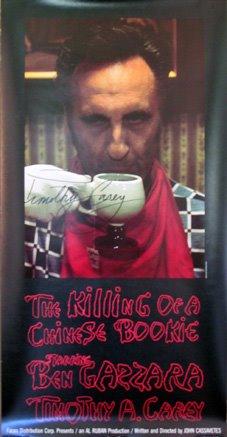 Timothy Carey was more interested in life than a career. He cared about you, but he didn't give a damn what you thought of him. He was often broke, and John Cassavetes occasionally paid his dental bills. He turned down a role in "The Godfather" and was fired from "Reservoir Dogs" by co-star and producer Harvey Keitel because Carey claimed to have never heard of Keitel (the part was then given to Lawrence Tierney). He made Elia Kazan so angry that his voice was dubbed over by another actor in "East of Eden" (his performance was great anyway). While auditioning for a part in "The Godfather, Part II," he fired a gun loaded with blanks at Francis Ford Coppola. He faked his own kidnapping. When Cassavetes went to his house for the first time, he made him wear an attack dog suit, then sicced Rottweilers on him while shouting "It's not you they hate, it's the suit." He was in "One-Eyed Jacks," the only movie Marlon Brando directed. I haven't seen it yet, but I bought the DVD for one dollar at Walgreen's, and I can't wait. He directed a movie called "The World's Greatest Sinner." (Bootleg VHS copies can be found on the Internet, but I'm holding out for an official DVD release. I can't hold out too long, though.) It is about an insurance salesman who becomes a rock star/fundamentalist preacher/cult messiah. A then-unknown Frank Zappa composed the score. He attempted to direct other features, but they remained unfinished at the time of his death. One was called "Tweet's Ladies of Pasadena" and is about a man who rollerskates everywhere, is married to a 300-pound female wrestler, is the only male member of a ladies' knitting club, and whose life ambition is to clothe every animal in the world. Another, "The Insect Trainer," is based on Carey's belief that the fart should be as socially acceptable as the cough or the sneeze. The plot concerns a cockroach-befriending dishwasher who accidentally kills a woman with a fart. It was eventually performed as a play with his son in the lead. Carey once wanted to make a film that, when exhibited, would feed directly from the projector into a shredder. It could only be shown one time. He died in 1994, after a series of strokes. He was in "D.C. Cab."
Recommended Timothy Carey performances:
East of Eden (Elia Kazan, 1955)
The Killing (Stanley Kubrick, 1956)
Paths of Glory (Stanley Kubrick, 1957)
Head (Bob Rafelson, 1968)
Minnie and Moskowitz (John Cassavetes, 1971)
The Killing of a Chinese Bookie (John Cassavetes, 1976)

Monday, September 18, 2006
Favorite Actor Monday
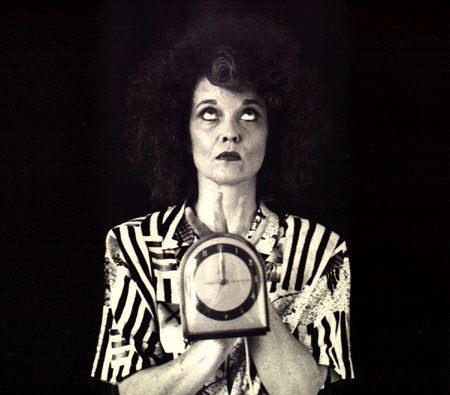
Movie stars get too much attention, and are often the least interesting thing about a movie. I'm a much bigger fan of character actors, or, to use lame-o Oscar-speak, "supporting actors." (This makes them sound like they are nothing more than jock straps for Tom Cruise.) Grace Zabriskie is one of my favorites. She made her character on "Twin Peaks," who does almost nothing but cry or drift into catatonia, infinitely interesting. Her performance as Susan's mother on "Seinfeld" is wickedly funny. Even though she hasn't been in anything I've wanted to see for about twelve years or so, I think she's great. (Fortunately, she's in David Lynch's new movie, "Inland Empire," along with Harry Dean Stanton, Laura Dern, and Jeremy Irons. I'm excited about that.)
Recommended Grace Zabriskie performances:
Drugstore Cowboy (Gus Van Sant, 1989)
Wild at Heart (David Lynch, 1990)
Twin Peaks (David Lynch, etc., 1990-91)
My Own Private Idaho (Gus Van Sant, 1991)
Twin Peaks: Fire Walk With Me (David Lynch, 1992)
Seinfeld (various, 1992-98)
I also recommend, with caution, An Officer and a Gentleman (Taylor Hackford, 1982) and Even Cowgirls Get the Blues (Gus Van Sant, 1993). The former is successful junk and the latter is an honorable mess, but she's good in both. She's not very good in The Big Easy (Jim McBride, 1987) but neither is anyone else.
Monday, September 11, 2006
Favorite Actor Monday

Warren Oates is possibly my favorite actor. He could play anything. He gave all his characters, even the creeps and buffoons, dignity. All his performances were subtle, even his broad ones. I can see traces of him in current actors I admire, including Jeff Bridges, Billy Bob Thornton, John C. Reilly, and Philip Seymour Hoffman. He died way too young, of a heart attack a few months before his 54th birthday. Like his good friend and fellow Favorite Actor Monday alum Harry Dean Stanton, he was born and raised in Kentucky. One of his last films was "Stripes." I'm not including it in my recommendations because I haven't seen it since I was a kid and can't remember how substantial Oates' role was, but I thought I should at least mention it. Bill Murray and Oates sharing screen space might really be worth seeing.
Recommended Warren Oates performances:
Ride the High Country (Sam Peckinpah, 1962)
The Shooting (Monte Hellman, 1967)
In the Heat of the Night (Norman Jewison, 1967)
The Wild Bunch (Sam Peckinpah, 1969)
Two-Lane Blacktop (Monte Hellman, 1971)
The Hired Hand (Peter Fonda, 1971)
Badlands (Terrence Malick, 1973)
Bring Me the Head of Alfredo Garcia (Sam Peckinpah, 1974)
Cockfighter (Monte Hellman, 1974)
92 in the Shade (Thomas McGuane, 1975)
China 9, Liberty 37 (Monte Hellman, 1978)
1941 (Steven Spielberg, 1979)
Thursday, September 07, 2006
Unintentionally disturbing Czech movie posters
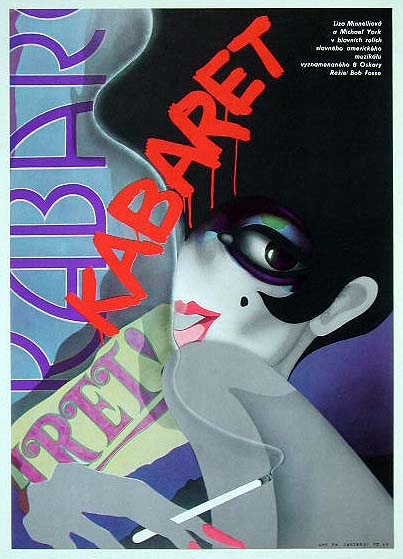
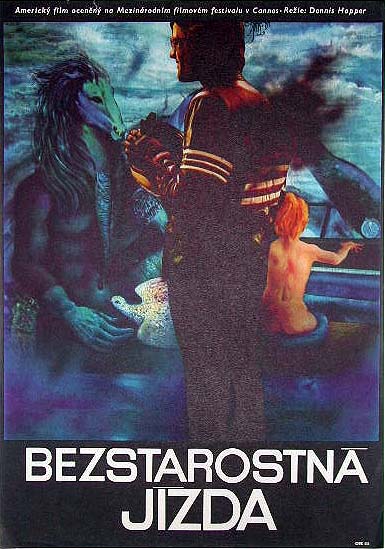


From the top, Bob Fosse's "Cabaret," Dennis Hopper's "Easy Rider," Luis Bunuel's "Belle de jour," and Steven Spielberg's "E.T. The Extra-Terrestrial."
Monday, September 04, 2006
Favorite Actor Monday: Labor Day Edition
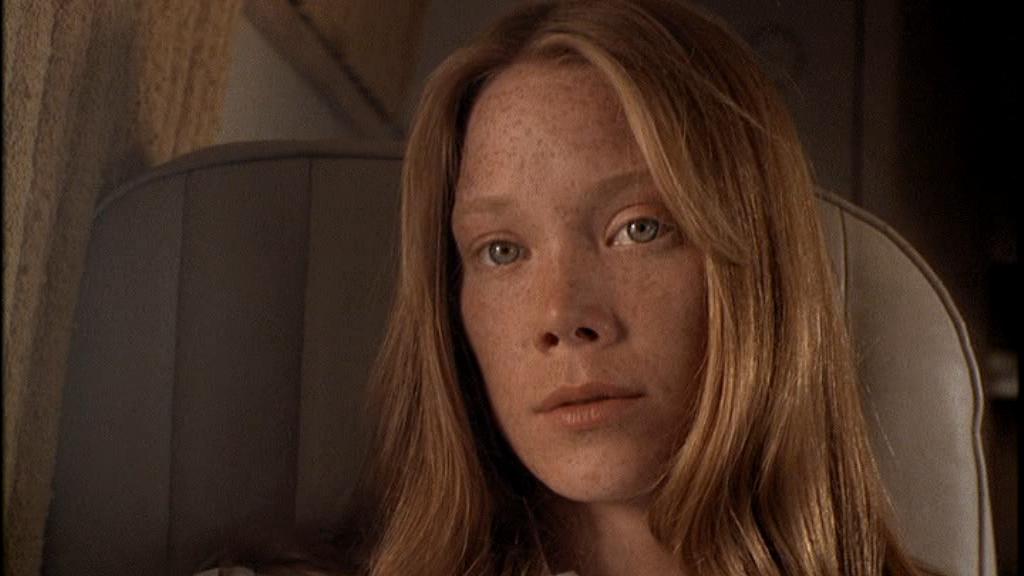
I have a big crush on 1970s Sissy Spacek. She had the amazing ability to look strange, average, and beautiful simultaneously. If there's a certain wildness that's missing from her features now, she is still a great actress. She has enormous range and a completely unpretentious way of inhabiting her characters. She deserves as much, if not more, of the accolades showered on Meryl Streep.
Recommended Sissy Spacek performances:
Badlands (Terrence Malick, 1973)
Carrie (Brian de Palma, 1976)
3 Women (Robert Altman, 1977)
Coal Miner's Daughter (Michael Apted, 1980)
Affliction (Paul Schrader, 1997)
The Straight Story (David Lynch, 1999)
In the Bedroom (Todd Field, 2001)
Monday, August 28, 2006
Favorite Actor Monday

Since I haven't updated in a long time, and inspired by Spacebeer's Secret Boyfriend Wednesday, I think I will institute a weekly feature: Favorite Actor Monday. It will be a welcome balance to the otherwise director-heavy focus of my rant-heavy movie blog. I can think of no one more appropriate to kick off this weekly feature than Harry Dean Stanton. I love character actors. He is one of the best. I was born on July 14. He was born on July 14. He plays guitar in a band. I like the rock and roll. He's been in a lot of good movies. I like movies. Harry Dean Stanton, you are one of Mr. Krauter's favorite actors.
Recommended Harry Dean Stanton performances:
Ride in the Whirlwind (Monte Hellman, 1965)
Two-Lane Blacktop (Monte Hellman, 1971)
Cisco Pike (Bill L. Norton, 1972)
Pat Garrett & Billy the Kid (Sam Peckinpah, 1973)
Cockfighter (Monte Hellman, 1974)
Rancho Deluxe (Frank Perry, 1975)
Farewell, My Lovely (Dick Richards, 1975)
92 in the Shade (Thomas McGuane, 1975)
Straight Time (Ulu Grosbard, 1978)
Alien (Ridley Scott, 1979)
Repo Man (Alex Cox, 1984)
Paris, Texas (Wim Wenders, 1984)
Pretty in Pink (Howard Deutch, 1986)
Wild at Heart (David Lynch, 1990)
Twin Peaks: Fire Walk with Me (David Lynch, 1992)
She's So Lovely (Nick Cassavetes, 1997)
The Straight Story (David Lynch, 1999)
The Pledge (Sean Penn, 2001)
Even if some of these movies disappoint, and most of them don't, they work whenever Stanton is on the screen.
Friday, August 11, 2006
A whole lot of bullshit
I've got a lot on my mind, particularly concerning my visits to the Vietnam Memorial and Holocaust Museum during my vacation to D.C. last week, and their relations to my life and art, Art, and ART!!!, and their relationship with both elitism and cultural tourism and/or terrorism, and what the fuck it actually means to be a citizen of the United States, but first I want to point any real, living human being to these thoughtful reviews of Oliver Stone's latest shitsterpiece, "World Trade Center." I think they set up a lot of what went through my mind last week when I was a cultural tourist/terrorist, though I must warn everyone that I haven't seen this film, and hopefully never will. I've spent enough time with Oliver Stone movies to realize that he is undoubtedly the worst filmmaker I have ever had the unfortunate luck of being acquainted with. (I have to end that sentence with a preposition, sorry. If you have a problem with that, watch "Nixon." Then fuck off.)
Jonathan Rosenbaum
J. Hoberman
Jim Emerson
(The J. Hoberman headline is seriously misleading. This headline is yet another example of how newspaper employees don't communicate with each other.)
I'm sorry our mainstream culture is so damaging. Maybe Conor Oberst can write a horrible song about this. Problem solved.
Jonathan Rosenbaum
J. Hoberman
Jim Emerson
(The J. Hoberman headline is seriously misleading. This headline is yet another example of how newspaper employees don't communicate with each other.)
I'm sorry our mainstream culture is so damaging. Maybe Conor Oberst can write a horrible song about this. Problem solved.
Saturday, July 29, 2006
Playtime

For those living in or near Austin, Jacques Tati's Playtime will be playing at the Paramount Theatre on Saturday, August 5, and Sunday, August 6 in a 70mm print. I saw it there two years ago, and I hope to see it again many times. A DVD is available, but if any film needs to be seen on a huge screen, it's this one. The DVD might just reduce it to mush. There are multiple events happening on the screen simultaneously, so the viewer is left to decide what to look at, what people to watch, how to see the movie. You could watch it fifty times without repeating yourself. It's a French film, but it is unsubtitled because the dialogue consists almost entirely of grunts, groans, mumbles, squeals, incomprehensible mutterings, and small-talk pidgin French and English. The film has many things to say about work, play, loneliness, community, and life in a city. It is also one of the funniest films ever made. Tati constructed an artificial mini-Paris in rural France that is this film's setting and filled it with bustling, ugly, beautiful, chaotic life. It is something to see, and I hope you do.
Friday, July 21, 2006
Yikes
While Roger Ebert recuperates from emergency surgery, several different columnists at the Chicago Sun-Times and his web editor are taking over the reviews for him until he returns. Opinion columnist Bill Zwecker is somehow one of these substitutes. Zwecker has the writing skill of a retarded twelve-year-old mountain lion given the gift of speech. Here are some samples from his review of "Clerks II":
"Where would they be 10 years hence? What would their lives be like today? Not only has Smith given us some very humorous answers, with "Clerks II," he has achieved something rarely accomplished by any filmmaker -- the creation of a sequel as good, and possibly funnier, than the wonderful original that inspired it.
Is "Clerks II" outrageous? Absolutely.
Somewhat over the top? Without question.
Completely intended for a very adult audience? You betchya."
"As I found myself laughing uproariously at the craziness and zaniness of it all, I also discovered I was drawn in by Smith's clever (and totally subversive!) way to make us think about the core values of love, friendship and loyalty.
And fans of Jay and Silent Bob will, I think, be totally delighted by how these iconic stoners are used by Smith to add even more richness to this juicy mixture of great offbeat humor.
After seeing 'Clerks II,' I walked out of the theater saying, 'OK, Kevin Smith. All is forgiven. Obviously, 'Jersey Girls' was just a silly aberration. You not only have not lost your comedic touch -- you've taken it to new heights.'"
To completely read the very full review, click on this juicy, zany (and totally subversive!) link.
"Where would they be 10 years hence? What would their lives be like today? Not only has Smith given us some very humorous answers, with "Clerks II," he has achieved something rarely accomplished by any filmmaker -- the creation of a sequel as good, and possibly funnier, than the wonderful original that inspired it.
Is "Clerks II" outrageous? Absolutely.
Somewhat over the top? Without question.
Completely intended for a very adult audience? You betchya."
"As I found myself laughing uproariously at the craziness and zaniness of it all, I also discovered I was drawn in by Smith's clever (and totally subversive!) way to make us think about the core values of love, friendship and loyalty.
And fans of Jay and Silent Bob will, I think, be totally delighted by how these iconic stoners are used by Smith to add even more richness to this juicy mixture of great offbeat humor.
After seeing 'Clerks II,' I walked out of the theater saying, 'OK, Kevin Smith. All is forgiven. Obviously, 'Jersey Girls' was just a silly aberration. You not only have not lost your comedic touch -- you've taken it to new heights.'"
To completely read the very full review, click on this juicy, zany (and totally subversive!) link.
Chilled-out entertainer

I hate bumper stickers. I don't care what your other car is, where your child attends school, how much you love and/or hate Jesus, dead babies, and/or the Dave Matthews Band, or who you vote for. I don't understand your need to tell all who drive behind you these things. I also don't understand why you would want to assist in U.S. culture's wildly successful program of reducing all aspects of human behavior, discourse, personality, taste, and politics to mass-produced identity brands. One of these identity brands is the counterkultur-intellectual-ecowarrior-TVhater. This brand comes in two flavors: purple Kill Your Television and vanilla raspberry swirl Throw Away Your Television. These neato slogans niftily and zanily forget that instead of killing your television, you should be killing yourself. Television brought us "The Office." "The Office," though it is a TV show, is one of my favorite films of all time. It will stand the test of time. It is great. It is funny, brutal, and compassionate. It is good. Your bumper sticker has dumbed down our world more than any television program, including "The Nanny," "That 80s Show," and "Friends." Kill yourself. You are too dumb to find the button that turns your television off, so you are too dumb to live. I don't care if your child is an honor roll student at Austin High. In fact, he/she sounds like such a genius that he/she can run the household for you after you blow your brains out. Now, if you'll excuse me, my dishwasher failed to properly clean my favorite cereal bowl in its entirety, so I am going to print several bumper stickers extolling the virtues of killing dishwashers.
By the way, TV also brought us "Curb Your Enthusiasm." What did you do? Asshole. Wheat from the chaff, buddy. It's not that difficult.
Sunday, July 09, 2006
Tuesday, July 04, 2006
It's a cheap shot, but...

From imdb.com's trivia for "director" Michael Bay:
"Films often feature a US President giving a major speech before a major action is to be committed."
from personal Michael Bay quotes:
"I write my own action. There's a scene in The Island (2005), a highway chase where a pile of train wheels fall off a truck and smash into the oncoming cars. That thought came to me as I was driving next to a truck carrying rail wheels. My mind is very fertile, so I'm like 'That's very dangerous!' I sent someone out to do research and found out those train wheels weigh a TON each..."
Happy birthday Plop Blop and the current worst country on earth!
My mind is very fertile. Once I saw a dog take a shit, and wrote a scene where a dog took a shit. My mind is very fertile!
Friday, June 09, 2006
Green not blue
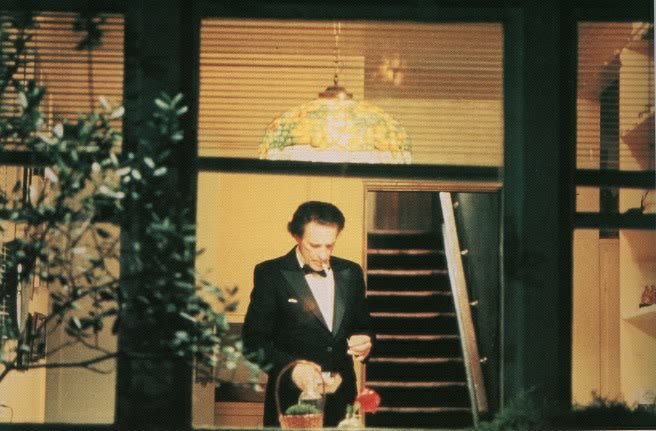
My favorite movie of all time is John Cassavetes' Love Streams. I think to gain a full appreciation of this film, you have to see all of his other films first, simply because it's his last (official) film (not counting "Big Trouble," which is funny, but not written by him and taken only as a job of work after the original director quit), it references most of his other films, and he was dying when he made it. But that's just trivia, and is mostly unimportant. It is criminally out of print on video and never released on DVD in the
"I've been pointed out by people
My name is mud
I've been dreaming all the dreams
and dancing in the evening
Singing in the shower
But nothing seems to take your place,
I'm almost in love with you
I nearly miss you
I've hardly seen you
When I do I get a feeling that something should be there
I almost like your eyes
They're green not blue
Your touch could thrill me
What can I do
I'm not, but almost, in love with you"
Monday, June 05, 2006
Another one bites the dust
 Shohei Imamura died of cancer a few days ago. He made two films I love, The Eel and Dr. Akagi, and one I really like, Black Rain. I've also seen a short film of his in the anthology September 11 that is pretty damn good. He was an old man, but I would have gladly traded Oliver Stone's, Kevin Smith's, David Fincher's, and Christopher Nolan's entire existences for a few more years of Imamura.
Sunday, May 28, 2006
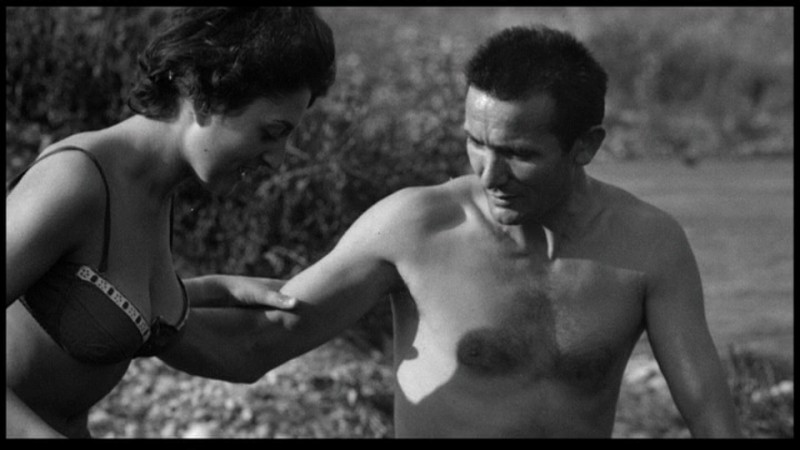
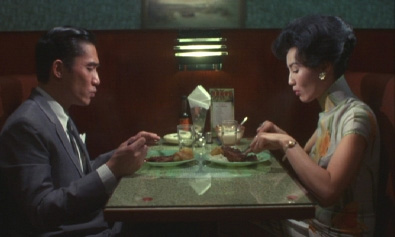
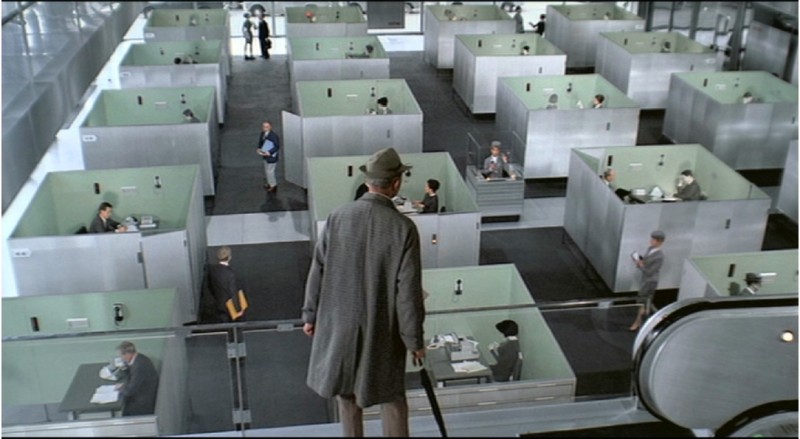
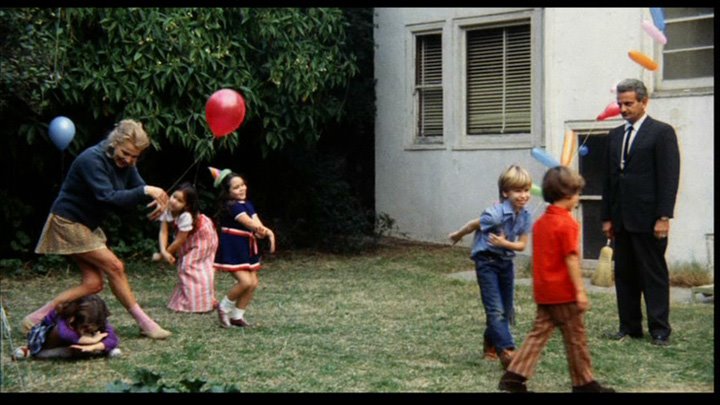
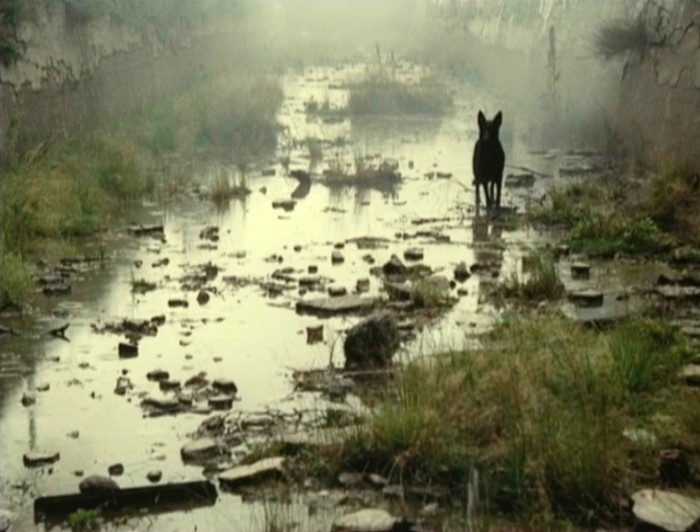
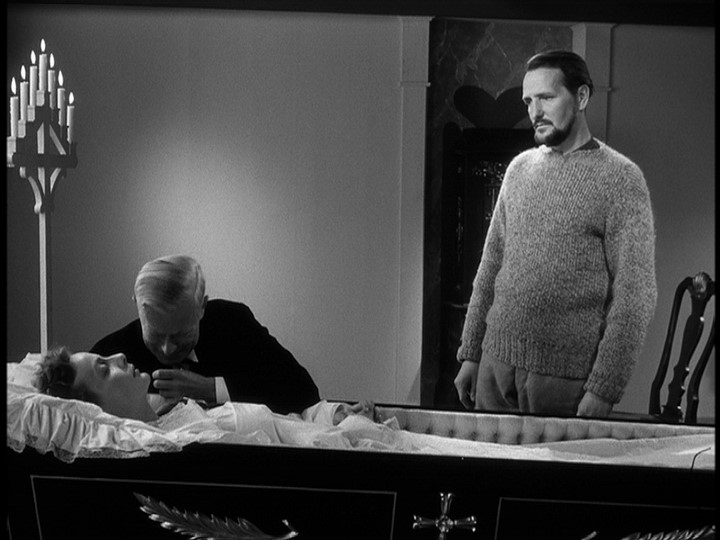
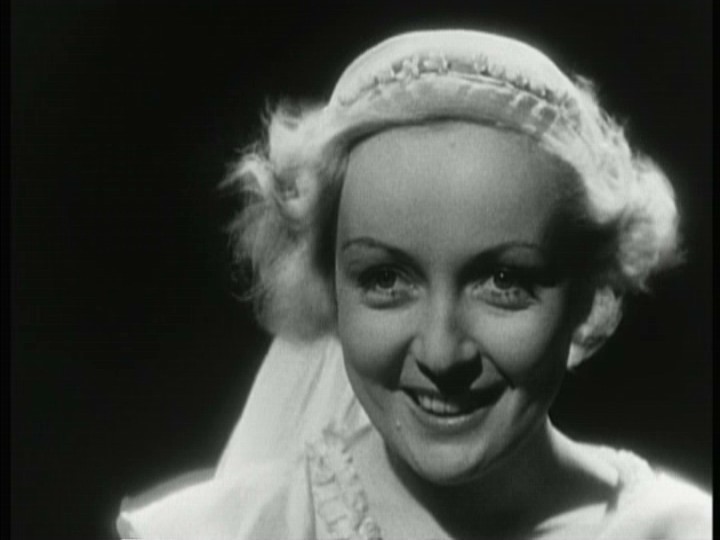
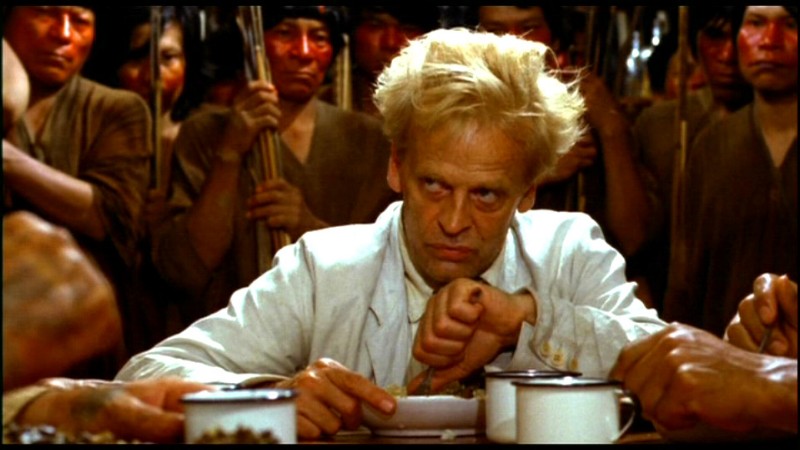
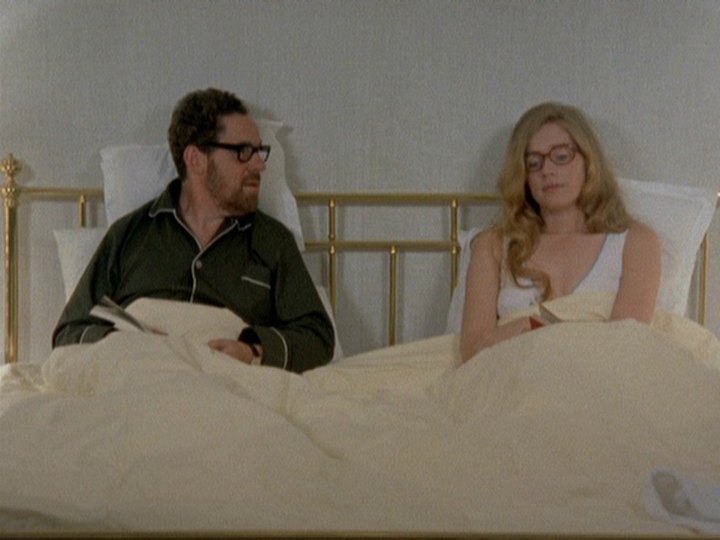
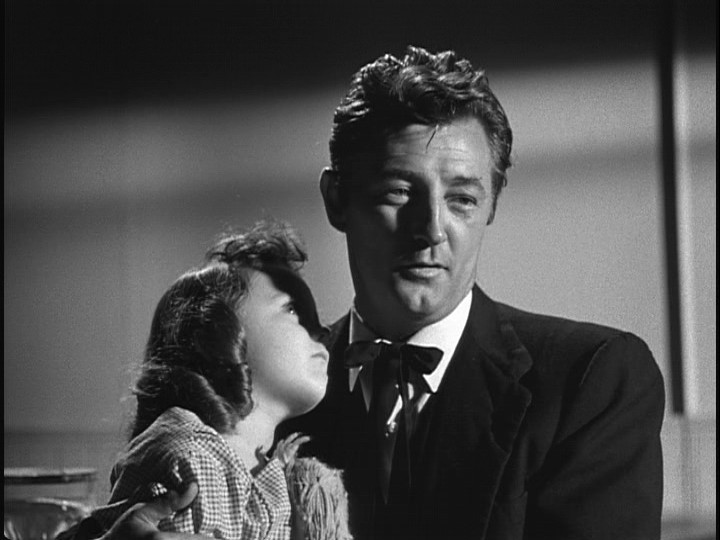
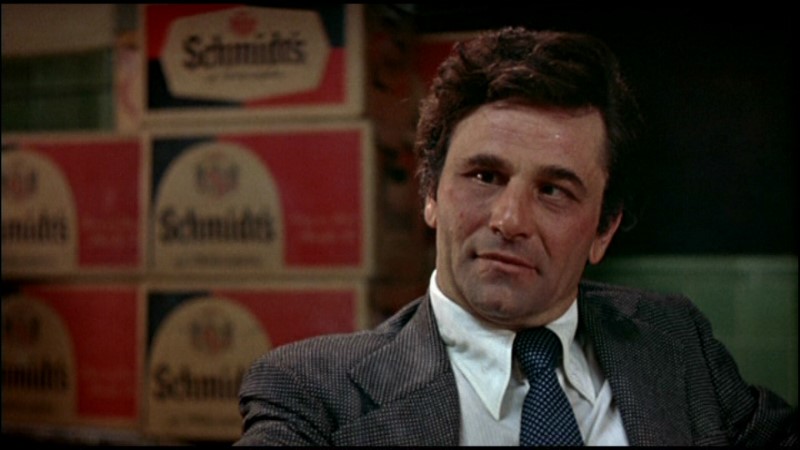
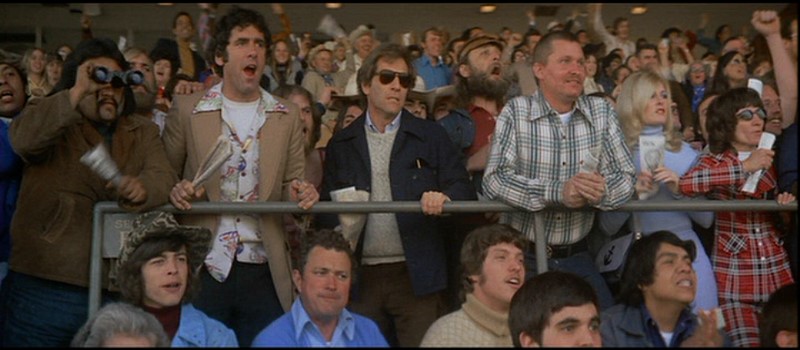
The world in 24 images
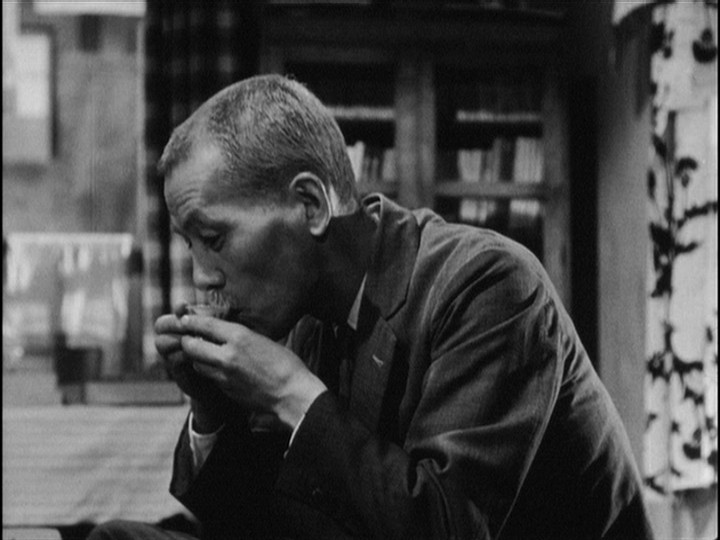
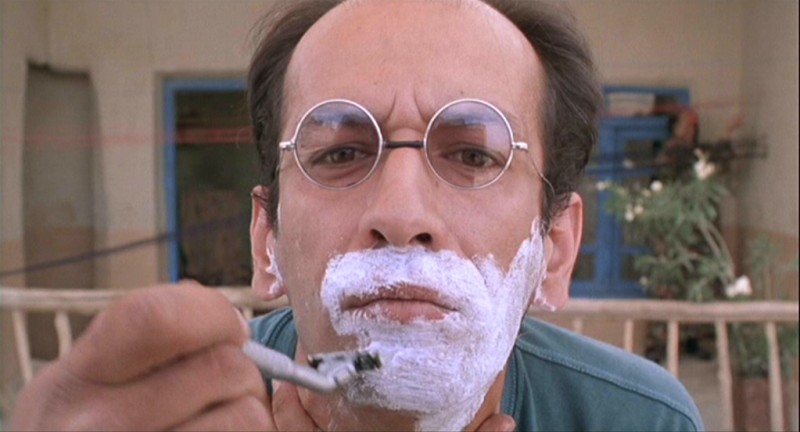
Twenty-four stills from twenty-four of my favorite movies.
From top to bottom:
The Killing of a Chinese Bookie (John Cassavetes, 1976)
The Kid (Charlie Chaplin, 1921)
Tokyo Story (Yasujiro Ozu, 1953)
The Wind Will Carry Us (Abbas Kiarostami, 1999)
Les Bonnes Femmes (Claude Chabrol, 1960)
I Fidanzati (Ermanno Olmi, 1963)
In the Mood for Love (Wong Kar-Wai, 2000)
Playtime (Jacques Tati, 1967)
Au Hasard Balthazar (Robert Bresson, 1966)
A Woman under the Influence (John Cassavetes, 1974)
Stalker (Andrei Tarkovsky, 1979)
Rio Bravo (Howard Hawks, 1959)
Ordet (Carl Theodor Dreyer, 1955)
L'Atalante (Jean Vigo, 1934)
Fitzcarraldo (Werner Herzog, 1982)
Scenes from a Marriage (Ingmar Bergman, 1973)
Rebel without a Cause (Nicholas Ray, 1955)
The Night of the Hunter (Charles Laughton, 1955)
Mikey and Nicky (Elaine May, 1976)
Love Streams (John Cassavetes, 1984)
The Bicycle Thief (Vittorio De Sica, 1948)
Naked (Mike Leigh, 1993)
Ali: Fear Eats the Soul (Rainer Werner Fassbinder, 1974)
California Split (Robert Altman, 1974)
I hate directors who aren't interested in people's faces.
From top to bottom:
The Killing of a Chinese Bookie (John Cassavetes, 1976)
The Kid (Charlie Chaplin, 1921)
Tokyo Story (Yasujiro Ozu, 1953)
The Wind Will Carry Us (Abbas Kiarostami, 1999)
Les Bonnes Femmes (Claude Chabrol, 1960)
I Fidanzati (Ermanno Olmi, 1963)
In the Mood for Love (Wong Kar-Wai, 2000)
Playtime (Jacques Tati, 1967)
Au Hasard Balthazar (Robert Bresson, 1966)
A Woman under the Influence (John Cassavetes, 1974)
Stalker (Andrei Tarkovsky, 1979)
Rio Bravo (Howard Hawks, 1959)
Ordet (Carl Theodor Dreyer, 1955)
L'Atalante (Jean Vigo, 1934)
Fitzcarraldo (Werner Herzog, 1982)
Scenes from a Marriage (Ingmar Bergman, 1973)
Rebel without a Cause (Nicholas Ray, 1955)
The Night of the Hunter (Charles Laughton, 1955)
Mikey and Nicky (Elaine May, 1976)
Love Streams (John Cassavetes, 1984)
The Bicycle Thief (Vittorio De Sica, 1948)
Naked (Mike Leigh, 1993)
Ali: Fear Eats the Soul (Rainer Werner Fassbinder, 1974)
California Split (Robert Altman, 1974)
I hate directors who aren't interested in people's faces.








Sunday, May 21, 2006
Sometimes you see something so good you just want to give up
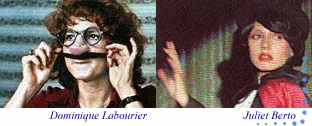
Celine and Julie Go Boating (Jacques Rivette) needs no superlatives from me, or anyone. It's shamefully not available on DVD. Get off your ass, Netflixers, and go to the video store. If you hate this film, you hate me.
Saturday, May 13, 2006
I like movies
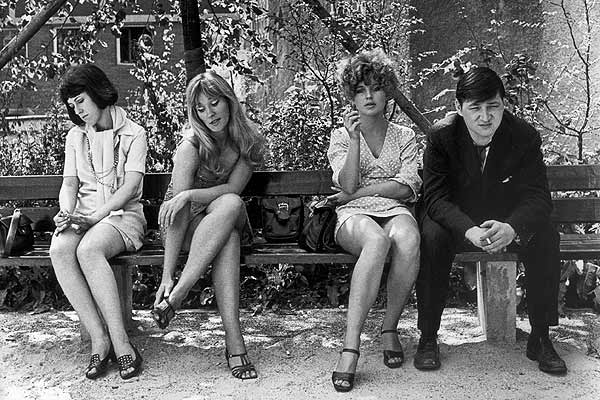
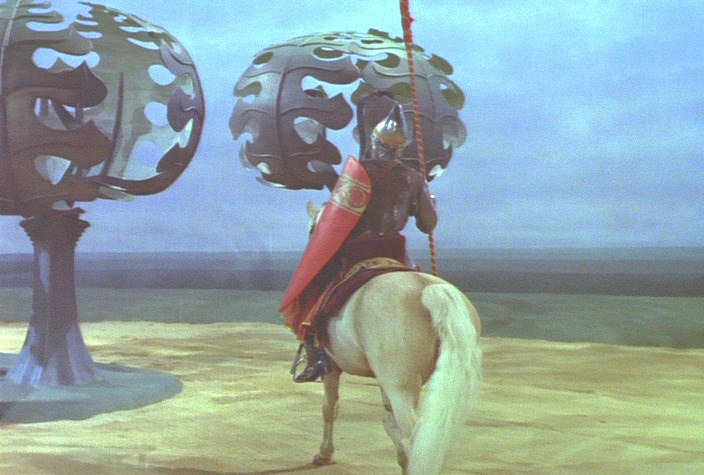
Some recommendations from the past couple of months:
Sans Soleil (Chris Marker)
Neil Young: Heart of Gold (Jonathan Demme)
L'Enfant (Luc and Jean-Pierre Dardenne)
Lonesome Jim (Steve Buscemi)
The Big Parade (King Vidor)
Le Plaisir (Max Ophuls)
Numero Deux (Jean-Luc Godard)
and especially
Perceval (Eric Rohmer)
Katzelmacher (Rainer Werner Fassbinder)
Yuck
Learn how not to write by reading this article. Learn how to be an asshole by emulating every person quoted in the article. "Movies" are gross.
Saturday, May 06, 2006
I like these guys a lot
Damn. Two Moviebot posts in one hour. This is, by far, the record. Anyway, here is a link to a short but sweet interview with Dan Clowes and Terry Zwigoff, whose second collaborative film, "Art School Confidential," should be coming to Austin soon. I'm going to heartily recommend it, though I haven't seen it yet, because Zwigoff and Clowes have yet to disappoint me, even a little bit. These guys are funny, smart, and they give a shit. They've also been accused of being misanthropes, but they care about our quality of life more than almost any two contemporary artists I can name. I've loved every Zwigoff film so far ("Louie Bluie," "Crumb," "Ghost World," "Bad Santa") and I've loved every Clowes comic I've read. There's so much wrong with our present culture, and it makes me feel good that there are two guys out there like Zwigoff and Clowes.
Friday, May 05, 2006
A clarification
I think my previous post might lead some to believe I have nothing but contempt for "Kill Bill" and the Coen Brothers, when in fact I had a great time watching the former and I have mostly great times watching the latter (especially "The Big Lebowski," especially not "The Ladykillers"). The point of my sentence, I think, was that a lot of people who love film seem to think Tarantino and the Coens are the absolute pinnacle of human achievement, while I think they are a hell of a lot of fun, but far from the top of the heap. I don't want to write them off as "entertainment," a word and definition I hate intensely (I prefer the word pleasure), but Tarantino and the Coens both seem genuinely afraid of real human experience, while my absolute favorites (I think I mentioned Cassavetes, Bresson, and Tarkovsky in particular) are absolutely fearless in their exploration of what it means to be a living human being and their works are far richer than Tarantino, etc., but nobody gives a flying fuck. If they do care, they usually grossly misread the films to fit whatever sociopolitical interpretation is fashionable this Wednesday. To me, art is at its best when the holy trinity of brain, groin, and stomach are simultaneously engaged, but I'm not some humorless intellectual who can't appreciate a good time. Tarantino and the Coens supply good times, and good times are important. There's just a whole lot more out there to discover if you spend a little time looking. I'm going to put my soapbox away now and drink some beer. Goodnight, everybody.
Tuesday, May 02, 2006
Sunday, April 30, 2006
Some ideas about a friend's post
My friend Professor Romance wrote a post about disparities in appreciation between art and science. Read it before you read this. I am greatly sympathetic to this post, but I am also coming at it from the perspective of a guy who has a tremendous amount of interest in art and some pretty serious deficiencies in math and science. I'll deal with that later, but first I want to tackle his frustration at social situations in which attempted conversation about science or math brands one as a nerd or a bore and conversation about music, movies, etc. gets everyone talking and offering opinions. Although I would have very little to contribute to a conversation about science or math, I feel more at home with his frustration than I do with a lot of people who share my interests. I think Prof. Romance is actually fortunate, in that people who don't know much about science and math will refrain from spouting off a lot of uninformed opinions, while art gets confused with entertainment and hipster lifestyle accessories. People who haven't seen a film predating their birthdate will consider themselves experts on cinema, while someone will spout off on music or literature simply because they have the right haircut and know a couple of people's names. Art (or the conflation of silly entertainment as art) is sexier than mathematics. Rock and roll leads to a lot more naked blondes and whiskey than entymology. That's just the way it is. However, real discussion about art and its aesthetics is just as absent from my life as discussion about science is from yours. When I go to a party, people will talk a lot about "Kill Bill" or the Coen Brothers, but finding someone with something to say about Robert Bresson, John Cassavetes, or Andrei Tarkovsky, to pick just three of the filmmakers whose work has (no shit) changed my life is like pulling teeth from my ass. When I do find someone who can talk about this stuff, he or she is usually a pretentious cocksucker who filters the work through some kind of fashionable sociological construct, rather than dealing with what the films are: their form, content, and structure. When I want to discuss this work, I have to pick up a book by one of the handful of critics who actually give a shit about it, and have an internal debate with myself. Most people don't give a shit about the artists I like. This does not make me feel "cool," hip or happy. Mostly, it makes me frustrated and angry. I imagine you feel the same way about science, math, and Spinoza. While "art" may be talked about more than science, it is usually because art is so easily confused with consumption, and it is fashionable as consumption. People are mostly just trying to get laid, and a lot of art talk is merely code for "I'm not a date rapist or a frat boy drunk on Coors." If science had more of an influence on haircuts, if math came in collectible 7" sleeves, people would spout off a lot more shit about it.
To move on to my lack of interest in science and math, it is not something I'm particularly proud of, though I don't feel like my lack of interest has anything to do with cowardice. Unfortunately, my science and math teachers in high school and college were unbelievably awful, and my English, history, and music teachers were mostly wonderful. This lopsided education, combined with my natural interest in the arts and my struggles with science and math (always difficult subjects for me), mostly dampened my interest in science and math while expanding my love of art. Whenever I learned a science fact or figured out some mathematical problem, I felt a real sense of wonder and accomplishment (this is still the case). However, this sense of wonder and/or accomplishment pales in comparison to what I get from a favorite piece of music, a film, a painting, a photograph, or a short story. Art does something to me I can't put into words. It gives me most of what I get out of bed for. Life is ridiculously short. My interest in the arts is a bit extreme, but it's something I need in my life, otherwise I'm incredibly unhappy. If I go two days without listening to music, it's very hard for me to function. I find life without music, literature, or movies almost unbearable. This all sounds melodramatic, and maybe it is (in practice, it's more matter-of-fact than melodramatic), but it's true. If I wanted to learn more about math and science, I would have to cut back on the other stuff, and I'm just not willing to do that. However, I'm still young. I've changed gradually and added interests, and science just might be one of them.
Finally, Prof. Romance, your frustration ("What is wrong with these dudes? Why don't they see what I see in math or science?") seems to me a frustration that every thoughtful person shares, namely "Why don't more people see things the way I do?" Some of my friends share my interests and some of them don't, but what unites them all, I think, is a strong sense of humor and a dissatisfaction with the complacent apathy of everyday life. All of us give a shit about something we don't "have" to give a shit about, and that is what makes us all worth knowing. Most of the people in my hometown don't have any passions or interests at all, including my father, and that scares the shit out of me more than anything.
P.S. Be glad you have a deep interest in something that frightens dilletantes. It's a blessing, not a curse.
To move on to my lack of interest in science and math, it is not something I'm particularly proud of, though I don't feel like my lack of interest has anything to do with cowardice. Unfortunately, my science and math teachers in high school and college were unbelievably awful, and my English, history, and music teachers were mostly wonderful. This lopsided education, combined with my natural interest in the arts and my struggles with science and math (always difficult subjects for me), mostly dampened my interest in science and math while expanding my love of art. Whenever I learned a science fact or figured out some mathematical problem, I felt a real sense of wonder and accomplishment (this is still the case). However, this sense of wonder and/or accomplishment pales in comparison to what I get from a favorite piece of music, a film, a painting, a photograph, or a short story. Art does something to me I can't put into words. It gives me most of what I get out of bed for. Life is ridiculously short. My interest in the arts is a bit extreme, but it's something I need in my life, otherwise I'm incredibly unhappy. If I go two days without listening to music, it's very hard for me to function. I find life without music, literature, or movies almost unbearable. This all sounds melodramatic, and maybe it is (in practice, it's more matter-of-fact than melodramatic), but it's true. If I wanted to learn more about math and science, I would have to cut back on the other stuff, and I'm just not willing to do that. However, I'm still young. I've changed gradually and added interests, and science just might be one of them.
Finally, Prof. Romance, your frustration ("What is wrong with these dudes? Why don't they see what I see in math or science?") seems to me a frustration that every thoughtful person shares, namely "Why don't more people see things the way I do?" Some of my friends share my interests and some of them don't, but what unites them all, I think, is a strong sense of humor and a dissatisfaction with the complacent apathy of everyday life. All of us give a shit about something we don't "have" to give a shit about, and that is what makes us all worth knowing. Most of the people in my hometown don't have any passions or interests at all, including my father, and that scares the shit out of me more than anything.
P.S. Be glad you have a deep interest in something that frightens dilletantes. It's a blessing, not a curse.
Friday, April 14, 2006
Sunday, April 09, 2006
Tuesday, March 14, 2006
Paste-eating philistines
For those of you who helped Failure to Launch and The Shaggy Dog become, respectively, the number one and number two grossing films of the week, thanks for your dedicated efforts in the fight to make the United States of America the dumbest fucking country on earth. When you decided to go to either of these movies, did you look through the paper and weigh your options? Did you decide that, yes, "Failure to Launch" and/or "The Shaggy Dog" truly rises to the top amid the sea of cinematic possibilities available in the area this week? If you went to one of these two movies, did you enjoy it? Why did you enjoy it? I'd like to know. Honestly. I don't understand you very well. Help me understand. We need to reach some common ground, average American moviegoer, because right now I feel like I hate you. I wish you ill. I don't like feeling that way. I don't want to feel ill will and hatred. I'm really a positive guy, believe it or not. There is much in life I hate, but I am glad to be alive. Are you glad to be alive? If you are, you're sure sending mixed messages. Was your ticket purchase at the multiplex a cry for help? Have you hit rock bottom? Do you no longer care how you spend your time? Do you just wander around, dazed, spending money where you're told? Do you have a hard time distinguishing between information and advertising? Have you ever sought out anything on your own? Do you hate yourself? Is art something that is other people's business? Is the coddling, patronizing familiar your preferred way of life? Are you devoid of a brain, a heart, a penis, and/or a vagina? If I smashed your head open with a baseball bat, what would come out? Straw?
All is not lost. I've seen some great, great things in the last three weeks, and some good things, too. I've seen two of the best films I've ever seen, I Fidanzati and Under the Roofs of Paris.
"I Fidanzati" (Ermanno Olmi) is fresher than every rotting corpse stinking up the multiplex now and forever. It takes advantage of the possibilities of film editing in ways that are continually ignored by the plodding televisionisms or graceless displays of thoughtless technique of most mainstream movies. This film is structure, content, form, and the thoughtful connection of achronological images causing each viewer to construct his/her own narrative. It's so instinctively right. It isn't a waste of labor and energy.
"Under the Roofs of Paris" (Rene Clair) is one of the first of that group of films, mostly clumsy, that marked the transition from silence to sound. It isn't clumsy. It's graceful, beautiful, funny, sad, and other adjectives that have been drained of their meaning by being thrown around on undeserving work. Its studio-built replicas of Paris streets create a dreamy, melancholy atmosphere in which the city is a continuous, living organism. It is a musical, in that the music, like the city, is also a continuous, living organism, passing from background score to a hummed tune on the female lead's lips to songs sung by the actors to a phonograph playing in a bar, and on and on. The camera glides gracefully over the fake city, and then becomes completely still. Dialogue is accentuated, then dropped out completely, overtaken by the music, then brought back again. We observe characters through windows and glass doors, then up close, then the camera retreats again. And the guy doesn't get the girl in the end, unless he does.
Two recent films seen on the big screen excited me, obviously because I thought they were good, but also because they seemed to me a clearer picture of the America we actually live in than the billboard/infomercial/catalogue-photo America of shit like almost every mainstream American film, "independent" or Hollywood. If you see them, and still prefer "Failure to Launch" or "Star Wars" or "Crash" or "Traffic" or any other diverting lie, we may not live in the same country. In all honesty, I haven't seen "Failure to Launch" or "Crash," so I'm mostly talking about their trailers and how they've been marketed and/or reviewed, but, when it comes to Hollywood filmmaking, what's the difference? Also, I'm talking about Academy Award "Crash," not the great David Cronenberg "Crash." Anyway, the two American films about the America we actually live in are Tommy Lee Jones' The Three Burials of Melquiades Estrada and Michel Gondry's Dave Chappelle's Block Party.
Coming soon to Can-Smashing Robot: A tale of small-town life that turned into a tale of American life in general, featuring Dave Chappelle, $50 million, Americans' reactions to both, Devolution, freedom from choice, how city Americans are just as lazy, complacent, and curiousity-free as their small town counterparts, and is it just me or does our country keep getting batshit-fucking crazier and crazier and stupider and stupider? Also, money is bullshit! Thank god you can trade it in for art.
All is not lost. I've seen some great, great things in the last three weeks, and some good things, too. I've seen two of the best films I've ever seen, I Fidanzati and Under the Roofs of Paris.
"I Fidanzati" (Ermanno Olmi) is fresher than every rotting corpse stinking up the multiplex now and forever. It takes advantage of the possibilities of film editing in ways that are continually ignored by the plodding televisionisms or graceless displays of thoughtless technique of most mainstream movies. This film is structure, content, form, and the thoughtful connection of achronological images causing each viewer to construct his/her own narrative. It's so instinctively right. It isn't a waste of labor and energy.
"Under the Roofs of Paris" (Rene Clair) is one of the first of that group of films, mostly clumsy, that marked the transition from silence to sound. It isn't clumsy. It's graceful, beautiful, funny, sad, and other adjectives that have been drained of their meaning by being thrown around on undeserving work. Its studio-built replicas of Paris streets create a dreamy, melancholy atmosphere in which the city is a continuous, living organism. It is a musical, in that the music, like the city, is also a continuous, living organism, passing from background score to a hummed tune on the female lead's lips to songs sung by the actors to a phonograph playing in a bar, and on and on. The camera glides gracefully over the fake city, and then becomes completely still. Dialogue is accentuated, then dropped out completely, overtaken by the music, then brought back again. We observe characters through windows and glass doors, then up close, then the camera retreats again. And the guy doesn't get the girl in the end, unless he does.
Two recent films seen on the big screen excited me, obviously because I thought they were good, but also because they seemed to me a clearer picture of the America we actually live in than the billboard/infomercial/catalogue-photo America of shit like almost every mainstream American film, "independent" or Hollywood. If you see them, and still prefer "Failure to Launch" or "Star Wars" or "Crash" or "Traffic" or any other diverting lie, we may not live in the same country. In all honesty, I haven't seen "Failure to Launch" or "Crash," so I'm mostly talking about their trailers and how they've been marketed and/or reviewed, but, when it comes to Hollywood filmmaking, what's the difference? Also, I'm talking about Academy Award "Crash," not the great David Cronenberg "Crash." Anyway, the two American films about the America we actually live in are Tommy Lee Jones' The Three Burials of Melquiades Estrada and Michel Gondry's Dave Chappelle's Block Party.
Coming soon to Can-Smashing Robot: A tale of small-town life that turned into a tale of American life in general, featuring Dave Chappelle, $50 million, Americans' reactions to both, Devolution, freedom from choice, how city Americans are just as lazy, complacent, and curiousity-free as their small town counterparts, and is it just me or does our country keep getting batshit-fucking crazier and crazier and stupider and stupider? Also, money is bullshit! Thank god you can trade it in for art.
Wednesday, March 01, 2006
Self-Indulgent Ramble Series, Essay 1: The Canon
It’s a constant source of irritation to me that most people, especially wonderful people who are a lot smarter than me, never see the films I love the most. Additionally, a lot of these smart people think movies are either irrelevant or dead. The mass audience seems to think of movies as a pleasant, forgettable diversion. They also seem to think there is no difference between seeing something on video and seeing it on the big screen, that art is a boring chore, and that subject matter or plot dictates a film’s interest to an audience. It is also a source of irritation that more people, even casual filmgoers, don’t know who is directing the film they are watching and how that film fits into the director’s body of work. This probably makes me sound like an elitist prick, but most people know who performed the music they listen to, who wrote the books they read, and who painted the painting they’re staring at on the gallery wall. Knowing who is responsible for the art you respond to helps you make better choices and avoid a lot of dogshit. Somehow, a lot of people who make informed choices about the other art and entertainment in their lives approach film from such childish perspectives: “I like boxing, so I’m going to see ‘Million Dollar Baby.’ I’m interested in the Holocaust, so I’m going to see ‘Schindler’s List.’ I like dinosaurs, so I’m going to see ‘
Dr. Mystery’s Canon of Cinematic Gold
John Cassavetes: almost everything, but particularly Shadows, Faces, A Woman Under the Influence, The Killing of a Chinese Bookie, and Love Streams
Charles Burnett: To Sleep With Anger
Howard Hawks: His Girl Friday, To Have and Have Not, The Big Sleep,
Robert Bresson: Diary of a Country Priest, A Man Escaped, Au Hasard Balthazar, The Devil Probably, L’Argent
Charlie Chaplin: City Lights, Monsieur Verdoux, A King in
Barbara Loden: Wanda
Buster Keaton: most of the silent shorts
Mike Leigh: Bleak Moments, Meantime, High Hopes, Life is Sweet, Naked
Marx Brothers: Animal Crackers, Horse Feathers, Duck Soup
Roberto Rossellini:
Vittorio De Sica: The Bicycle Thief, Umberto D
Rainer Werner Fassbinder: The American Soldier, Ali: Fear Eats the Soul,
Tom Noonan: What Happened Was, The Wife
Nicholas Ray: In a Lonely Place, Johnny Guitar, Rebel Without a Cause, Bitter Victory, They Live By Night
Werner Herzog: Fata Morgana, Aguirre: The Wrath of God, The Enigma of Kaspar Hauser, Stroszek, Even Dwarfs Started Small
Jacques Tati: Playtime, Mon Oncle, M. Hulot’s
Yasujiro Ozu:
Ingmar Bergman: Persona, Cries and Whispers, Scenes from a Marriage, Fanny and Alexander
David Cronenberg: Rabid, The Fly, Dead Ringers, Crash, A History of Violence
Elaine May: Mikey and Nicky, The Heartbreak Kid, A New Leaf
Jim Jarmusch: Stranger than
Aki Kaurismaki: Ariel, The Man Without a Past
Larry David: Curb Your Enthusiasm
Andrei Tarkovsky: Stalker, The Sacrifice, Solaris
Gus Van Sant: Drugstore Cowboy, My Own Private
Carl Dreyer: Ordet, Gertrud, The Passion of Joan of Arc, The Parson’s Widow
George Romero: Night of the Living Dead, Martin, The Crazies, Dawn of the Dead
Harmony Korine: Gummo, Julien Donkey-Boy
Frank Capra: It’s a Wonderful Life
Edward Yang: Yi Yi
Wong Kar-Wai:
Monte Hellman: The Shooting, Ride in the Whirlwind, Two-Lane Blacktop, Cockfighter
Wim Wenders: Kings of the Road,
Robert Altman: McCabe and Mrs. Miller,
Wes Anderson: Bottle Rocket, Rushmore, The Life Aquatic with Steve Zissou
Jafar Panahi: The Circle, Crimson Gold
Abbas Kiarostami: Close-Up, Life and Nothing More, Taste of Cherry, The Wind Will Carry Us, Ten
Kenji Mizoguchi: Ugetsu, Sansho the Bailiff
Takeshi Kitano: Fireworks, Zatoichi, Sonatine
Sam Peckinpah: Ride the High Country, The Wild Bunch, Bring Me the Head of Alfredo Garcia, Pat Garrett and Billy the Kid
Su Friedrich: Sink or Swim, The Rules of the Road
Chris Smith: American Job, American Movie
Shirley Clarke: Portrait of Jason
Dennis Hopper: Out of the Blue
Luis Bunuel: Viridiana, Belle de Jour, The Discreet Charm of the Bourgeoisie, The Phantom of Liberty
Lionel Rogosin: On the Bowery
Jean Renoir: Grand Illusion, The Rules of the Game, Picnic on the Grass
Terry Zwigoff: Louie Bluie, Crumb, Ghost World, Bad Santa
Todd Haynes: Safe, Superstar: The Life of Karen Carpenter, Far from Heaven
Erich Von Stroheim: Greed, Foolish Wives
F.W. Murnau: Nosferatu,
Lars Von Trier: The Kingdom, Breaking the Waves, Dancer in the Dark, The Idiots, Dogville
Paul Thomas Anderson: Punch-Drunk Love
Jean Vigo: L’Atalante, Zero for Conduct
Claude Chabrol: Le Boucher, Les Bonnes Femmes, La Ceremonie
Francois Truffaut: Stolen Kisses, Shoot the Piano Player, The 400 Blows
Jean-Luc Godard: Breathless, Band of Outsiders, Contempt, Weekend, Passion
David Lynch: Eraserhead, Blue Velvet,
Martin Scorsese: Mean Streets, Taxi Driver, The King of Comedy, After Hours
Hou Hsiao-Hsien: The Puppetmaster, Goodbye South Goodbye
Ermanno Olmi: Il Posto, I Fidanzati
Alan Clarke: Scum, Made in Britain, The Firm, Elephant, Rita Sue and Bob Too
Luc and Jean-Pierre Dardenne: La Promesse, Rosetta, The Son
Steve Buscemi: Trees Lounge, Animal Factory
I’m going to stop here. There are many, many others.
Monday, February 13, 2006
Movement, part 2
Seeing Richard Pryor: Live in Concert (Jeff Margolis) last week, it pained me to think about how often he was wasted in bad films and how his MS seemed to be some kind of vengeful retribution inflicted by insulted gods wanting to punish an artist whose comedy relied, almost exclusively, on facial expressions, body language, mimicry, anthropomorphization, and constant movement. Mostly, though, I laughed and watched a great artist at work. Pryor's stand-up comedy depended on Pryor's performance and delivery. If one were to transcribe his comedy and read it, it might produce a few smiles or nods of recognition, but most of it would lay dead on the page. Pryor's jokes are funny because of his delivery, not what is being delivered. He is a performer, in the best sense of the word, scrunching his body into the shape of a question mark and hopping from side to side as he talks about getting beaten by his father, lying on the floor in a ball and punching himself in the chest as he tells the story of his first heart attack, turning himself into an old woman, a lying little kid, Muhammad Ali, a white man, a pet monkey who likes to fuck people in the ear, a German sheperd, the engine of a car, and on and on. Pryor the artist is a living pinball, constantly in motion, banking off the multiplicity of human experience. Like all the artists I admire, he is simultaneously tough and compassionate, loving people while never letting them off the hook, and he never exempts himself from his work. He's not making judgments from on high and passing them down to an audience, he is discovering things about himself while performing and forcing the audience into self-discoveries as well. I would rank him, as a stand-up, right up there with lots of artists I admire in his wildly exciting understanding of patterns of speech and behavior and how body language and movement can reveal hidden mental states, including John Cassavetes, Mike Leigh, Charlie Chaplin, Buster Keaton, the Marx Brothers, Tom Noonan, Charles Burnett, Bill Hicks, Lenny Bruce, Elaine May, Howard Hawks, Stanley Elkin, Barry Hannah, etc. If I'm making this sound too lofty, rest assured it is also funny as shit.
Tuesday, February 07, 2006
Movement and discomfort in performance
I've already written about the widespread behavioral tic of two men leaving an empty seat in between them in a movie theater. I would also like to bring up something that happened at the screening of Brokeback Mountain I attended. During the scene in which Michelle Willams' character sees the characters played by Heath Ledger and Jake Gyllenhaal kissing, inadvertently discovering that her husband is having a homosexual affair, the audience, largely comprised of middle-aged straight couples, laughed heartily, though the scene is hardly played for laughs and I doubt much laughter would have ensued if the kiss was the product of a heterosexual affair. In the lobby, after the movie ended, most of these couples were talking about how much they enjoyed the film. So why did they laugh? They laughed because they were uncomfortable watching two men kiss, and they didn't know what else to do. Judging solely from appearances and overheard conversations (I could be way off), the audience members were largely middle and upper-middle class, middle-aged, white Americans with mainstream, conventional taste and manners. These are people who are not used to being uncomfortable. Though I share a lot of sociologic background with this audience, I am almost never comfortable. If I were forced to tally a percentage of my social discomfort, I would probably find that roughly 86% of my social encounters in life have been uncomfortable, painful, and/or awkward. Since so much of my life is socially uncomfortable, I am very receptive to art that thrives on making its audience uncomfortable, as long as this is achieved without condescension or contrivance. When comfort zones are nowhere to be found, the audience is forced to participate, to act, to work toward new ways of understanding life, to think. This can, at its best, lead to personal growth. As much as I enjoyed "Brokeback Mountain," and I enjoyed it a great deal, it is a fairly conventional romantic western, aside from the novelty of a homosexual love story in a mainstream film. I don't consider it an uncomfortable film. It was a skillful, old-fashioned crowd-pleaser. However, a lot of the audience members have probably never seen two men kiss onscreen before. As much as their laughter bothered me, it also made me feel like these people were working through their discomfort, trying to get past it. Maybe next time, it won't make them so uncomfortable. They won't need to laugh. The fact that they were even there, and that they loved the movie, is a hopeful sign. If two guys kissing is no big deal, what else is no big deal? My friends, a whole lot of shit is no big fucking deal. We seem so afraid of our own movements and behaviors, so constricted and locked into our patterns, so afraid to be human, afraid of our own existence, embarrassed by it. A couple of movies I've seen in the last couple of months have made me think about the laughter in the theater, and the value of discomfort and its effect on physical movement. The first is Mike Leigh's first film, from 1971, Bleak Moments. If you read most critics, they'll tell you that Leigh is in the long tradition of British "kitchen-sink realists" and that his films are predominantly overtly leftist political tracts about the economic effects of the British class system. This misreading of his work is epidemic. Someone should tell this legion of megabores to watch his film with their eyes, not their mouths. Though many of his films are grounded in the everyday and bear many resemblances to realism, kitchen-sink or otherwise, and a lot of his characters talk about their economic situation, Leigh's films are about behavior, performance, interaction, movement, discovery, pattern disruption, connection, and disconnection, not polemics or cinema verite. He wants to find things, not tell you what he already knows or merely observe life. His filmmaking methods tell you that much. Leigh picks a group of actors. He tells each actor to create a character. He works with them throughout this process. When the characters are created, he writes a script using the characters created by the acting troupe. This has been the case for all his films, with the partial exception of his two period pieces ("Vera Drake" and "Topsy-Turvy") when the story ideas came first. "Bleak Moments" is one of his funniest films, but also one of the toughest to watch. Every character in this film is profoundly uncomfortable, and their interactions make the audience just as uncomfortable. They are pathologically shy, inarticulate, embarrassed, withdrawn, afraid, closed-off. Anne Raitt (it's a shame she hasn't appeared in many films--her performance here is one of the most quietly memorable I've had the pleasure to see), as Sylvia, finally makes tentative movements away from social paralysis, and it's simultaneously funny and sad to see her character, a passionate, sharply funny, intelligent but painfully shy woman stuck in a life she's too wonderful for, rebel against the constraints of her own physical space. Every performance in this film is a tiny masterpiece of dis-ease, whole planets of emotion revealed in tiny movements of the lips, eyes, and fingers.
Movement plays a huge part in the other film I want to talk about, "Richard Pryor: Live in Concert," but I'm getting sleepy, so I'll write about that one tomorrow.
Movement plays a huge part in the other film I want to talk about, "Richard Pryor: Live in Concert," but I'm getting sleepy, so I'll write about that one tomorrow.
Monday, February 06, 2006
Self-promotion
I got a short thing about my favorite movies of the year published in the online Australian movie magazine, Senses of Cinema. Read it here, if you feel like it and have nothing else to do.
Thursday, February 02, 2006
Dumb article written by dumbos about dumbshits
This is one of the dumbest things I've ever read. I don't have time to go over it, but pretty much every sentence is just about the dumbest thing ever. A few of the dumbest moments:
"From biopics to message films, audiences and creators alike seem to be drawn to 'reality'-based movies - both in content and technique, say those who teach, study, analyze, and criticize the film industry."
First of all, if biopics and message movies are your idea of "reality" (whatever the shit that is), you don't live on Earth. Secondly, if you were actually studying, analyzing, teaching, and/or criticizing films instead of the "film industry," well, you would be on the right track, but probably still making inane, irrelevant comments to the AP. We need a Vietnam War equivalent in academia, thin out some irrelevant, irrelevant motherfuckers quick.
"To some, Oscar night - and the movies it celebrates - has become a Rorschach test for a self-absorbed industry out of touch with mainstream tastes. Other culture watchers, though, insist that the cinematic tribute reflects, and even guides, America's collective direction and values."
Honestly, people like watching stars in purty dresses, and media hoopla tends to draw crowds. That's all it is. It can't be out of touch with mainstream tastes when nothing is more middlebrow and mainstream, and it sure as hell doesn't reflect and guide our collective direction and values. Thanks for inventing a fake story and commenting on it, "film industry" experts. Well, goodnight, everybody. I'm going to go back to my critique of the "music industry" now. Is it out of touch with Joe Schmoe, or does it guide, shape, and reflect his direction and values? What about whacking off? I study that, too. Listen to this vexing proposition. Is masturbation only for the hoity-toity, or is it also enjoyed by the hoi polloi?
"From biopics to message films, audiences and creators alike seem to be drawn to 'reality'-based movies - both in content and technique, say those who teach, study, analyze, and criticize the film industry."
First of all, if biopics and message movies are your idea of "reality" (whatever the shit that is), you don't live on Earth. Secondly, if you were actually studying, analyzing, teaching, and/or criticizing films instead of the "film industry," well, you would be on the right track, but probably still making inane, irrelevant comments to the AP. We need a Vietnam War equivalent in academia, thin out some irrelevant, irrelevant motherfuckers quick.
"To some, Oscar night - and the movies it celebrates - has become a Rorschach test for a self-absorbed industry out of touch with mainstream tastes. Other culture watchers, though, insist that the cinematic tribute reflects, and even guides, America's collective direction and values."
Honestly, people like watching stars in purty dresses, and media hoopla tends to draw crowds. That's all it is. It can't be out of touch with mainstream tastes when nothing is more middlebrow and mainstream, and it sure as hell doesn't reflect and guide our collective direction and values. Thanks for inventing a fake story and commenting on it, "film industry" experts. Well, goodnight, everybody. I'm going to go back to my critique of the "music industry" now. Is it out of touch with Joe Schmoe, or does it guide, shape, and reflect his direction and values? What about whacking off? I study that, too. Listen to this vexing proposition. Is masturbation only for the hoity-toity, or is it also enjoyed by the hoi polloi?
Monday, January 30, 2006
Slow declines
I was looking at some stills from "Raging Bull" on a DVD-reviewing website tonight, and was struck by the difference in intensity in Robert De Niro's eyes then, and now. The guy's obviously been phoning it in for years now, and who can blame him? I guess everybody gets tired of their day job eventually, no matter how fulfilling. The only difference is that people aren't cumming in their shorts because we're giving them lackluster results. If we phone it in at work, we get yelled at. If De Niro phones it in, some 29-year-old director has multiple orgasms because a legend is standing next to him. I wish he would just retire and get it over with. But what else would he do? Maybe he doesn't want to retire, and who am I to tell him he should? He doesn't owe us anything. We're lucky to have what he's given us. It's just that I'd rather see him give lousy performances than the zombified mediocrity he's attached himself to for most of the last ten years, give or take a couple of brief revivifications. Why are these old Hollywood guys so afraid of giving up their star salaries to actually do some fucking acting in good films? They're already rich. Why not take that pay cut and give some real acting a whirl again? If I liked sports, it would probably be like watching Michael Jordan's professional baseball attempts or George Foreman's last few fights. Except I don't like sports. I like movies, and most audience members seem content to watch our best athletes play their B-game.
Thursday, January 19, 2006
The middle seat
I was at the Dobie Theater on Monday, watching Jia Zhangke's The World (which is one of the most cinematically satisfying films, in its use of visual space and the movement of the actors and the camera through this space, I've seen in a long time) when I saw another example of the Middle Seat Maneuver. I see this all the time, but I was surprised to see it at a screening of a 2 1/2-hour Chinese art film. The Middle Seat Maneuver, otherwise known as the I'm Not Gay, occurs when two men attend a film screening together but leave an empty seat between them to loudly signify their heterosexuality (or possibly their closeted, self-hating homosexuality). I don't understand this move. If two men go to a movie together and sit next to each other, I don't jump to any sexual conclusions, and I imagine most other people don't, either. If, however, two men perform the Middle Seat Maneuver, I immediately assume one of three things about at least one of the men: 1) Raging homophobe. 2) Horribly insecure man. 3) Closeted homosexual. Come on, guys. The Middle Seat Maneuver arouses exactly the kind of suspicion you're so desperately trying to avoid. Let's give them the benefit of the doubt, though. Maybe these guys are not trying to advertise their pussy-nailing abilities to a theater full of strangers. Maybe they're worried about ruining their friendship. Maybe they're such passionate cinephiles that, when touched deeply by a film, their hearts erupt with feeling and they start to make out. This would, of course, damage their friendship. They can't afford to take that chance. Their friendship is too meaningful, too important. In this day and age, when corporate greed, terrorism, warfare, and the 311/Creed altercation are part and parcel of daily life, this devotion to a lasting friendship between two straight men must be congratulated and saluted.
Monday, December 12, 2005
I have nine readers, not five readers! Oh, joy!
Don't worry. I'm working on the shit I promised. It's taking awhile. You may see it next month. If not, I got fuckin' sandwiches to eat, bitch.
Thursday, December 01, 2005
Intro to the Self-Indulgent Ramble series
I’m going to take a break from writing about individual films and spend some time attempting to understand my own interest in film. The plan is to write several sprawling posts about how and why I became obsessed with movies, formative experiences that may have led to that interest, favorite movies and why I value them, disliked films and why I dislike them, the pros and cons of film criticism, why virtually all mainstream print and television film criticism is awful, why I value certain critics’ work, how other art forms and my interest in them relate to film and my interest in it, why (usually) bio-pics are pieces of excrement, why the gently patronizing and culturally pervasive influence of middlebrow approaches to criticism (such as NPR, The New York Times, etc.) destroys thought and ignores the body and the mind, how my personal biases may cause me to overrate and underrate certain films, why I love reading and writing criticism but hate debating the merits or lack thereof of artistic works verbally, why I write Film-Watching Robot and who I think it’s for, and why I’m such a big pussy who spends hours watching movies every week but has no interest or ambition in making one of my own. Let’s get this rodeo started. First, I’m either going to tackle why I hate bio-pics or moments from my childhood that may have affected my interest in film. I’m not sure which one would make a better start. Maybe all five of my readers have an opinion.
Thursday, November 17, 2005
Daryl Hall kicked me and stole my taco while John Oates pointed and laughed
The last couple of weeks' viewing material that wasn't just an escapist retreat from the crushing disappointments of my current financial situation:
I'm Going Home (Manoel de Oliveira) 83 minutes of detail and experience, zero minutes of melodramatic bullshit.
No Direction Home: Bob Dylan (Martin Scorsese) Some of the talking-head interview footage is a useless fetishization of nostalgia, but Dylan's own words and the archival footage put the attention where it belongs: the songs, the creative process, the irrelevance of fame, and the humanization of Dylan the man.
The Squid and the Whale (Noah Baumbach) A comedy that's funny. Some flaws, but who wants to see a perfect movie? Not me.
Keane (Lodge Kerrigan) This is already gone from theaters after a ridiculously brief run, but don't worry. You still have three hundred more chances to see "The Legend of Zorro" and the eight million bio-pics that infest theaters every Oscar season. I think biographies of famous people are replacing the disabled and terminally ill as actor's choice of Oscar-bait. You want to learn something about Johnny Cash? Listen to his fucking records. That will tell you all you need to know. God, those movies are cinematic dogturds.
I'm Going Home (Manoel de Oliveira) 83 minutes of detail and experience, zero minutes of melodramatic bullshit.
No Direction Home: Bob Dylan (Martin Scorsese) Some of the talking-head interview footage is a useless fetishization of nostalgia, but Dylan's own words and the archival footage put the attention where it belongs: the songs, the creative process, the irrelevance of fame, and the humanization of Dylan the man.
The Squid and the Whale (Noah Baumbach) A comedy that's funny. Some flaws, but who wants to see a perfect movie? Not me.
Keane (Lodge Kerrigan) This is already gone from theaters after a ridiculously brief run, but don't worry. You still have three hundred more chances to see "The Legend of Zorro" and the eight million bio-pics that infest theaters every Oscar season. I think biographies of famous people are replacing the disabled and terminally ill as actor's choice of Oscar-bait. You want to learn something about Johnny Cash? Listen to his fucking records. That will tell you all you need to know. God, those movies are cinematic dogturds.
Tuesday, November 01, 2005
The erotic reawakening of Porkchop Mountain's younger brother Purvis, or how Stella got her lube back
This week, I liked Top Hat (Mark Sandrich) a hell of a lot, but I've got nothing of interest to say about it, so I'll move on.
I don't have much to say about Platform (Jia Zhang Ke), either, mostly because I don't think I fully understood it, either intellectually or emotionally, but I think it's worth seeing so I'll give it a shot. It's about a Maoist theater troupe in a small town in China, living in the anachronistic culture freeze of Maoist Communism c. 1980. Western influences and capitalistic compromises are slowly creeping in, but the town looks like postwar Italy, the kids are just starting to wear bell bottom jeans, and they regularly attend film screenings of what seem to be American and Indian escapist genre movies from the 1930s and 1940s. In what could be a subtitling error but is most likely another example of their cultural isolation, the kids refer to the movie theater as the "television." It's hard for a Western audience, or at least this Western audience member, to get a fix on what decade is being represented. I assumed the film was set in the early 1960s until a song sung one-third into the running time revealed the 1980 setting. The kids in the troupe and their Maoist rhetoric-spouting director/manager seem adrift, treading water in a stagnant culture. Things don't improve when Westernization and capitalism are tentatively added to the mix, the troupe now privatized and transformed into the hilariously titled Rock and Breakdance Electronic Band but still disconnected from their culture. I'm an ugly American bonehead when it comes to foreign politics, so I feel like I'm missing out on a great deal of context, content, and nuance. However, much of the film is also concerned with the evolving relationships between the group members as they move from their teens into their twenties and, obviously, a knowledge of Chinese politics isn't going to help you much there. Additionally, the film is shot in a way I admire, a way in which a lot of my favorite directors work. Point of view is shared between many characters, closeups are eschewed in favor of long and medium shots so we as an audience have more freedom to think instead of being forced to identify with one character in favor of another, and takes are long with a relatively still camera. If all movies were shot this way, it would be a bore, but I respond to this style more than I do any others.
I have some misgivings, but overall, I think The Son's Room (Nanni Moretti) is a really good movie. More conventional and a bit less visually interesting than the other two Moretti films I've seen, it's still the work of a singular artist and far from sentimental, excepting a couple of scenes. Even if it didn't work, I would have admired it for attempting to deal seriously with grief, particularly in the case of the death of a young person, without trying to wring out a bunch of easy tears and wallow in fake depth. I can't remember if it was Hitchcock or Welles who said (I'm paraphrasing here), "It's easy to make an audience cry. Just kill a puppy." A lot of people think a movie is great if their emotions have been exploited (just like a lot of people think a movie is important if it's based on a true story and a lot of people think drama is more artistic than comedy), but I don't agree. Emotions are easy to manipulate. Turn on any junky television drama or trashy soap opera right now, watch it for ten minutes, and feel yourself getting emotionally attached to the characters, even against your better judgment, even while part of you smirks at how stupid it is. It's no great artistic achievement to play an audience's emotions like a xylophone. It's easy. Unless we're autistic or deranged, we are empathetic animals. Our brains put us in other people's shoes constantly, whether we're watching "The OC," the World Series, Monday Night Raw, or a cat stuck in a tree. Needless to say, most movies about grief make us get to know a dying character, string us along for a few hours, then kill the character off while we cry ourselves out of the theater. I mean, while you cry yourself out of the theater. Crybaby. Naturally, there's a lot of meaning and symbolism in the saintly character's death, and a lot of hoohah about the great meaning inherent in each of our impending deaths. This movie is smarter than that. It recognizes that death is arbitrary. Random, unfair, symbolism-free, something that happens to us, not about us. The kid's there, then he's not. What happens to his family after that? This movie is about how a handful of people cope with grief. It's not concerned with showing us a bunch of people crying for two hours, though of course they cry some (however, even when, where, and how these characters cry is largely contrary to crying scenes in most films). (On an oddly related tangent, I've noticed something strange about myself. I almost never get bored watching a movie. I'm endlessly fascinated by moving images, and I could probably enthusiastically watch a three-hour film of a guy staring out the window, but I get ants in my pants during any scene of people crying. I squirm, I look at the clock, I'm bored as hell. I am bored by crying. It is boring to me. Your tears fill me with inertia.) Don't get the wrong idea. This movie is also full of humor and beauty and some nice little digs at religion and psychiatry. A scene in which the family sings along to the radio during a drive made me cringe from its lazy manipulation, but it's a minor quibble, especially when one of my favorite Brian Eno songs is effectively used later. Maybe I'm a softie, but I liked this one a lot.
I don't have much to say about Platform (Jia Zhang Ke), either, mostly because I don't think I fully understood it, either intellectually or emotionally, but I think it's worth seeing so I'll give it a shot. It's about a Maoist theater troupe in a small town in China, living in the anachronistic culture freeze of Maoist Communism c. 1980. Western influences and capitalistic compromises are slowly creeping in, but the town looks like postwar Italy, the kids are just starting to wear bell bottom jeans, and they regularly attend film screenings of what seem to be American and Indian escapist genre movies from the 1930s and 1940s. In what could be a subtitling error but is most likely another example of their cultural isolation, the kids refer to the movie theater as the "television." It's hard for a Western audience, or at least this Western audience member, to get a fix on what decade is being represented. I assumed the film was set in the early 1960s until a song sung one-third into the running time revealed the 1980 setting. The kids in the troupe and their Maoist rhetoric-spouting director/manager seem adrift, treading water in a stagnant culture. Things don't improve when Westernization and capitalism are tentatively added to the mix, the troupe now privatized and transformed into the hilariously titled Rock and Breakdance Electronic Band but still disconnected from their culture. I'm an ugly American bonehead when it comes to foreign politics, so I feel like I'm missing out on a great deal of context, content, and nuance. However, much of the film is also concerned with the evolving relationships between the group members as they move from their teens into their twenties and, obviously, a knowledge of Chinese politics isn't going to help you much there. Additionally, the film is shot in a way I admire, a way in which a lot of my favorite directors work. Point of view is shared between many characters, closeups are eschewed in favor of long and medium shots so we as an audience have more freedom to think instead of being forced to identify with one character in favor of another, and takes are long with a relatively still camera. If all movies were shot this way, it would be a bore, but I respond to this style more than I do any others.
I have some misgivings, but overall, I think The Son's Room (Nanni Moretti) is a really good movie. More conventional and a bit less visually interesting than the other two Moretti films I've seen, it's still the work of a singular artist and far from sentimental, excepting a couple of scenes. Even if it didn't work, I would have admired it for attempting to deal seriously with grief, particularly in the case of the death of a young person, without trying to wring out a bunch of easy tears and wallow in fake depth. I can't remember if it was Hitchcock or Welles who said (I'm paraphrasing here), "It's easy to make an audience cry. Just kill a puppy." A lot of people think a movie is great if their emotions have been exploited (just like a lot of people think a movie is important if it's based on a true story and a lot of people think drama is more artistic than comedy), but I don't agree. Emotions are easy to manipulate. Turn on any junky television drama or trashy soap opera right now, watch it for ten minutes, and feel yourself getting emotionally attached to the characters, even against your better judgment, even while part of you smirks at how stupid it is. It's no great artistic achievement to play an audience's emotions like a xylophone. It's easy. Unless we're autistic or deranged, we are empathetic animals. Our brains put us in other people's shoes constantly, whether we're watching "The OC," the World Series, Monday Night Raw, or a cat stuck in a tree. Needless to say, most movies about grief make us get to know a dying character, string us along for a few hours, then kill the character off while we cry ourselves out of the theater. I mean, while you cry yourself out of the theater. Crybaby. Naturally, there's a lot of meaning and symbolism in the saintly character's death, and a lot of hoohah about the great meaning inherent in each of our impending deaths. This movie is smarter than that. It recognizes that death is arbitrary. Random, unfair, symbolism-free, something that happens to us, not about us. The kid's there, then he's not. What happens to his family after that? This movie is about how a handful of people cope with grief. It's not concerned with showing us a bunch of people crying for two hours, though of course they cry some (however, even when, where, and how these characters cry is largely contrary to crying scenes in most films). (On an oddly related tangent, I've noticed something strange about myself. I almost never get bored watching a movie. I'm endlessly fascinated by moving images, and I could probably enthusiastically watch a three-hour film of a guy staring out the window, but I get ants in my pants during any scene of people crying. I squirm, I look at the clock, I'm bored as hell. I am bored by crying. It is boring to me. Your tears fill me with inertia.) Don't get the wrong idea. This movie is also full of humor and beauty and some nice little digs at religion and psychiatry. A scene in which the family sings along to the radio during a drive made me cringe from its lazy manipulation, but it's a minor quibble, especially when one of my favorite Brian Eno songs is effectively used later. Maybe I'm a softie, but I liked this one a lot.
Tuesday, October 25, 2005
Bacon double cheeseburger
This week, I'm excited about the Sirk/Fassbinder double feature the Austin Film Society is putting on tomorrow night as part of its 20th anniversary series, especially for the chance to see one of my favorite films, "Ali: Fear Eats the Soul," on the big screen. I saw some great stuff last week, too, on the lesser but adequate home video format.
Esther Kahn (Arnaud Desplechin) is an underrated and unjustly forgotten film, though it's only four or five years old. Apparently, most critics didn't like it (except for the French), and it was poorly distributed. It's an odd movie, a little disjointed and awkward, and a few scenes don't work. However, as much as I hate siding with the French (they hate America and stink of cheese while forcing champagne down the barely developed throats of their infant children, don't they?), I have to wonder what kind of film-literate person dismisses this work. "Esther Kahn" is a flawed, fascinating, physical film (sorry for the alliteration--I hate alliteration) that is infinitely more interesting than any darling of the press I can call to mind. I don't know how to rave about an actor's performance without sounding like Peter Travers or a twat, so I'll just say that I could have watched Summer Phoenix's performance for several more days without eating or sleeping. I also think this film smartly handles the problem of convincingly portraying an artistic process by keeping it elusive and mysterious, shunted off to the side and obscured, so that it becomes the film's subject almost by accident. It's dangerous territory, full of deadening and stupid traps, but Desplechin knows how to move in it.
The Kid (Charlie Chaplin) Chaplin's first full-length film paired him with the then-unknown seven-year-old son of vaudeville parents, Jackie Coogan, who most of us know from his later years as TV's Uncle Fester on "The Addams Family." It blew my mind when I found that out. I love Chaplin. Of course, he wants to be loved, and sometimes he's pretty ingratiatingly vulgar about it, but I can handle the sentimentality and the mugging. There's some damn thing I can't put my finger on about his movies, some strange mix of order and chaos, elegance and poverty, comedy and tragedy that is still ahead of its time.
I also want to make a brief Halloween plug for The Return of the Living Dead (Dan O'Bannon). I've seen it three times, and it still makes me laugh. I think this movie should be taught to film production majors to show them what can be done with a tiny budget. The film is limited to three locations, practically a stage setting, and the camera barely moves, but there are few horror/comedies I like better. The script is witty and fun, the actors have great comic timing, and the zombie gore is completely satisfying. I have a soft spot in my heart for zombie gore. At ninety minutes, there is very little padding. This is a lean, economical, smart B-movie, and the fun the cast and crew are having is present on the screen. I'll take this goofy little zombie movie over whatever overhoopla-ed drivel makes it into the Oscar race this year, which probably will be 14 more goddamn bio-pics. Film biographies are like watching a Vegas impersonator fuck a stack of Cliff's Notes.
Esther Kahn (Arnaud Desplechin) is an underrated and unjustly forgotten film, though it's only four or five years old. Apparently, most critics didn't like it (except for the French), and it was poorly distributed. It's an odd movie, a little disjointed and awkward, and a few scenes don't work. However, as much as I hate siding with the French (they hate America and stink of cheese while forcing champagne down the barely developed throats of their infant children, don't they?), I have to wonder what kind of film-literate person dismisses this work. "Esther Kahn" is a flawed, fascinating, physical film (sorry for the alliteration--I hate alliteration) that is infinitely more interesting than any darling of the press I can call to mind. I don't know how to rave about an actor's performance without sounding like Peter Travers or a twat, so I'll just say that I could have watched Summer Phoenix's performance for several more days without eating or sleeping. I also think this film smartly handles the problem of convincingly portraying an artistic process by keeping it elusive and mysterious, shunted off to the side and obscured, so that it becomes the film's subject almost by accident. It's dangerous territory, full of deadening and stupid traps, but Desplechin knows how to move in it.
The Kid (Charlie Chaplin) Chaplin's first full-length film paired him with the then-unknown seven-year-old son of vaudeville parents, Jackie Coogan, who most of us know from his later years as TV's Uncle Fester on "The Addams Family." It blew my mind when I found that out. I love Chaplin. Of course, he wants to be loved, and sometimes he's pretty ingratiatingly vulgar about it, but I can handle the sentimentality and the mugging. There's some damn thing I can't put my finger on about his movies, some strange mix of order and chaos, elegance and poverty, comedy and tragedy that is still ahead of its time.
I also want to make a brief Halloween plug for The Return of the Living Dead (Dan O'Bannon). I've seen it three times, and it still makes me laugh. I think this movie should be taught to film production majors to show them what can be done with a tiny budget. The film is limited to three locations, practically a stage setting, and the camera barely moves, but there are few horror/comedies I like better. The script is witty and fun, the actors have great comic timing, and the zombie gore is completely satisfying. I have a soft spot in my heart for zombie gore. At ninety minutes, there is very little padding. This is a lean, economical, smart B-movie, and the fun the cast and crew are having is present on the screen. I'll take this goofy little zombie movie over whatever overhoopla-ed drivel makes it into the Oscar race this year, which probably will be 14 more goddamn bio-pics. Film biographies are like watching a Vegas impersonator fuck a stack of Cliff's Notes.
Tuesday, October 18, 2005
Whoop whoop
This week I recommend Carl Dreyer's The Parson's Widow and They Caught the Ferry, conveniently on the same DVD. That guy knew where to put a camera.
Sunday, October 09, 2005
The weekly plop
Before I get into the two movies I'm recommending to anyone who is exactly like me, I want to talk about a movie I watched last week that I think is a good movie but also a perfect illustration of the kind of art that means little to me personally and a lot to most other people who have some kind of artistic bent, and why I feel more disillusioned when I'm around people who strongly share my interests (they're the fucking worst). In short, I'm constantly uncomfortable, but at least I'm used to it. I grew up in a town of 1,500 people, for christ's sake, and I sure as hell didn't find salvation in the city. (I can't believe how many people have tried to empathize with me by saying, "Hey, I grew up in a small town, too." "Oh, yeah," I say. "How many people in your town?" "40,000," they usually say, or some similar figure. If only I could have been so lucky.) Anyway, the movie is The Virgin Suicides. It's an accomplished film. I think it achieved what it set out to do. Sofia Coppola is a natural filmmaker with an eye for detail and an understanding that film is a visual medium. It's surprising how many filmmakers don't understand that. I'm unable to call this a bad film. It's good. I enjoyed it. It just doesn't mean much to me, aside from an entertaining Friday night. Most art doesn't. It doesn't because most art is symbolic, metaphoric, and/or transcendent. Symbols, metaphors, and transcendence don't make me feel alive. They distract me from life. If I can figure out what the symbols and metaphors mean, there's not much left. The artwork has been used up. It has nothing left to reveal. It's a husk, a pelt. I don't see much difference between that artwork and a crossword puzzle. Once the puzzle is solved, what are you going to do with what's left? Use and dispose. Metaphors and symbols are games. Coppola's film is based on a metaphor, and though it's a subtle and clever metaphor, what can you do with it after you've deciphered it? If I return to films that depend on metaphor and symbol for their existence, it's because of details that aren't part of those metaphors and symbols. The way an actor delivered a line or moved his/her eyebrows. The way a tree looked in the corner of the frame for a few seconds. The way a joke made me laugh or the way a smile made me think about a terrible summer. Art, to me, is about the mysteriousness and frustration and finite brutality and joy of existence and the difficulty of communication and honesty and breathing in and out. It's about dirt, blood, bone, vomit, semen, saliva, skin, teeth, the growl of a stomach, the shift of an eyebrow, the difference between what the face shows and what the mouth says. It's about tonal shifts and fluctuations, about the infinity of experience, about how each person is a minority of one, about how nothing we do can ever be understood. I don't represent red-haired people. I'm not a symbol of western Nebraska, or German, Irish, or Czech-Americans, or white males, or Generation X, or lost youth, or one crazy summer, or the Ghost of Christmas Past. I'm one human being. When art is doing something to me, I don't feel larger than life, or entertained, or intellectually inquisitive, or transcendent. I don't even feel this way when I'm on drugs. I feel alive. My nerve endings are raw. I feel present, I feel mortal, and I feel finite and real. Good art doesn't make me feel like I'm hovering outside of my body, or living solely inside my head. It makes me feel like all I have is the present and I better do something with it besides jerk off to metaphoric crossword puzzles or work dead-end office jobs until I'm dead enough to retire. Here are the two movies this week that weren't dead ends for me:
Junebug (Phil Morrison) We don't live in red or blue states, just gray ones. It's hard to tell anyone, especially family and friends, exactly what the hell you mean, especially if you don't even know.
In the Mood for Love (Wong Kar-Wai) Kar-Wai's movies are like songs. It's hard to tell where one scene ends and another begins. Take out one piece, or add another, and the whole thing falls apart. He's a master of instinct. His movies are felt, not thought out.
Junebug (Phil Morrison) We don't live in red or blue states, just gray ones. It's hard to tell anyone, especially family and friends, exactly what the hell you mean, especially if you don't even know.
In the Mood for Love (Wong Kar-Wai) Kar-Wai's movies are like songs. It's hard to tell where one scene ends and another begins. Take out one piece, or add another, and the whole thing falls apart. He's a master of instinct. His movies are felt, not thought out.
Monday, October 03, 2005
I need to update this site
I'm currently bogged down with an increasingly frustrating and hopeless job search (though I haven't regretted quitting the old one) and writing essays for a grad school application, but I do want to pick up a little slack on this site and do some more things with it. I don't think I'll go back to writing about every movie I watch, mostly because I watch too many goddamn movies and some are a lot better than others, but, for the time-starved present and near-future, I'll keep it simple. Every week, I'll mention the movies I watched during the week that meant something to me, that I would watch again, that do more than just pleasantly pass the time. Maybe some weeks I'll have nothing. This week was a particularly good one. I have five. Three on the big screen, two on video.
I got to see Au Hasard Balthazar (Robert Bresson) again, this time on the big screen. What a great experience. It's nice to forget about what a fucking mess I've made of the part of my life that makes a living and spend a couple hours seeing a great piece of art the way it was intended. It was a beautiful, sparklingly clear 35mm print, and no one in the audience showed up late, talked during the screening, or forgot to turn their cell phones off. Thanks, thoughtful citizens. (I blame our current, and, unfortunately, probably permanent, cell phone culture for the frightening increase in loudmouthery during live concerts and movies. Shut the fuck up, everybody. You're boring. It can wait. Why did you buy a ticket to this event? Etc. Too much talking and not enough listening. The world's an amazing place when you close your mouth and look at it. I'm not a Luddite. I thank the gods every day for the Internet, file-sharing, computers, cruise control, etc. I just hate cell phones, and I wish they had never been invented. A phone doesn't belong outdoors. I will always believe this. Even if I'm caught in a bear trap with nowhere else to turn. {I'm caught in a bear trap, and I can't walk out, because I love you too much, baby.} Hopefully, everyone gets brain cancer in twenty years. That'll make them shut up.)
A History of Violence (David Cronenberg). This is such a deceptively simple film. I don't even want to talk about this movie, because the reactions it caused in me are such personal ones that I want to keep them to myself. You should have plenty of your own if you watch it with the openness it demands. How does this film do so many contradictory things at once? I need to see this again, in a year or two. Then again, a few years after that.
Yi Yi (Edward Yang). Three hours and not a second is wasted, stretched, padded, labored. A lot of morons have convinced a lot of casual moviegoers that foreign films are pretentious, boring, and high-falutin' just because they're subtitled. A lot of morons on the other side of the spectrum pretend to love foreign films (and world music CDs) as a kind of high-culture affectation, a fetishization of novelty objects and a robotic display of politically correct, multi-culturalist attitudes currently fashionable among people who manage to convince a lot of other people (including their own real selves) that they're smart without having to go through all the bother of independent thought. The casual moviegoers are victims of our country's culturally isolationist entertainment distribution systems and their own ignorance. This can be overcome. The high-culture nitwits are dangerous, however, because they have good intentions. They truly believe they're enlightened, open-minded, artistically savvy, and non-racist. However, all their multicultural horseshit reduces individuals to boring group types. Instead of being a book by James Baldwin-individual, artist, and damn good writer, it's a book by James Baldwin-African American homosexual. Instead of being a book by Henry James-individual, artist, and damn good writer, it's a book by Henry James-dead, white male of European ancestry. Art is bypassed, and worse, ignored, by this affected group-lump of multiculturalism. If any of these people approached the art on its own terms--its style, form, and content-- instead of the important but not all-encompassing sociologic makeup of its creator, maybe something new would happen in their brains each day instead of wasteful atrophy. Whoah, I'm getting way off-topic here. I don't think I've even read anything about "Yi Yi" that takes that approach. I just get tired of all the good films getting wasted on pretentious douchebags, all the ceremony and reverence and self-congratulation and silly symbolic interpretation involved with the "art film" crowd, when real art films should belong to open, intelligent, living, humorous, non-affected people. Art is not a dirty word. It doesn't need to be delivered on a silver tray. It doesn't need to be respected. You can treat it rough, slap the shit out of it, laugh at and with it, live with it, put it in a headlock, give it a handjob. It likes that. Art is alive, comes from life. It's not good if it doesn't. It's not going to church. It's not an intellectual dinner party conversation starter. It's about human beings trying to connect with each other. Drop the self-important bullshit and let it connect. I just wanted to say "Yi Yi" is a great movie. To me, anyway. Maybe not to you, whoever the hell it is I'm writing to. Maybe it won't connect with you. Maybe you have valid reasons for that. I just hope you get a chance to see it. I hate how the guys with the money decided that most Americans are only worthy of shit like "Deuce Bigalow: European Gigolo" without taking the time to ask any of us. Jesus, this paragraph was incoherent.
Oh yeah, I also got a lot out of Ratcatcher (Lynne Ramsay) and Nanook of the North (Robert Flaherty).
I got to see Au Hasard Balthazar (Robert Bresson) again, this time on the big screen. What a great experience. It's nice to forget about what a fucking mess I've made of the part of my life that makes a living and spend a couple hours seeing a great piece of art the way it was intended. It was a beautiful, sparklingly clear 35mm print, and no one in the audience showed up late, talked during the screening, or forgot to turn their cell phones off. Thanks, thoughtful citizens. (I blame our current, and, unfortunately, probably permanent, cell phone culture for the frightening increase in loudmouthery during live concerts and movies. Shut the fuck up, everybody. You're boring. It can wait. Why did you buy a ticket to this event? Etc. Too much talking and not enough listening. The world's an amazing place when you close your mouth and look at it. I'm not a Luddite. I thank the gods every day for the Internet, file-sharing, computers, cruise control, etc. I just hate cell phones, and I wish they had never been invented. A phone doesn't belong outdoors. I will always believe this. Even if I'm caught in a bear trap with nowhere else to turn. {I'm caught in a bear trap, and I can't walk out, because I love you too much, baby.} Hopefully, everyone gets brain cancer in twenty years. That'll make them shut up.)
A History of Violence (David Cronenberg). This is such a deceptively simple film. I don't even want to talk about this movie, because the reactions it caused in me are such personal ones that I want to keep them to myself. You should have plenty of your own if you watch it with the openness it demands. How does this film do so many contradictory things at once? I need to see this again, in a year or two. Then again, a few years after that.
Yi Yi (Edward Yang). Three hours and not a second is wasted, stretched, padded, labored. A lot of morons have convinced a lot of casual moviegoers that foreign films are pretentious, boring, and high-falutin' just because they're subtitled. A lot of morons on the other side of the spectrum pretend to love foreign films (and world music CDs) as a kind of high-culture affectation, a fetishization of novelty objects and a robotic display of politically correct, multi-culturalist attitudes currently fashionable among people who manage to convince a lot of other people (including their own real selves) that they're smart without having to go through all the bother of independent thought. The casual moviegoers are victims of our country's culturally isolationist entertainment distribution systems and their own ignorance. This can be overcome. The high-culture nitwits are dangerous, however, because they have good intentions. They truly believe they're enlightened, open-minded, artistically savvy, and non-racist. However, all their multicultural horseshit reduces individuals to boring group types. Instead of being a book by James Baldwin-individual, artist, and damn good writer, it's a book by James Baldwin-African American homosexual. Instead of being a book by Henry James-individual, artist, and damn good writer, it's a book by Henry James-dead, white male of European ancestry. Art is bypassed, and worse, ignored, by this affected group-lump of multiculturalism. If any of these people approached the art on its own terms--its style, form, and content-- instead of the important but not all-encompassing sociologic makeup of its creator, maybe something new would happen in their brains each day instead of wasteful atrophy. Whoah, I'm getting way off-topic here. I don't think I've even read anything about "Yi Yi" that takes that approach. I just get tired of all the good films getting wasted on pretentious douchebags, all the ceremony and reverence and self-congratulation and silly symbolic interpretation involved with the "art film" crowd, when real art films should belong to open, intelligent, living, humorous, non-affected people. Art is not a dirty word. It doesn't need to be delivered on a silver tray. It doesn't need to be respected. You can treat it rough, slap the shit out of it, laugh at and with it, live with it, put it in a headlock, give it a handjob. It likes that. Art is alive, comes from life. It's not good if it doesn't. It's not going to church. It's not an intellectual dinner party conversation starter. It's about human beings trying to connect with each other. Drop the self-important bullshit and let it connect. I just wanted to say "Yi Yi" is a great movie. To me, anyway. Maybe not to you, whoever the hell it is I'm writing to. Maybe it won't connect with you. Maybe you have valid reasons for that. I just hope you get a chance to see it. I hate how the guys with the money decided that most Americans are only worthy of shit like "Deuce Bigalow: European Gigolo" without taking the time to ask any of us. Jesus, this paragraph was incoherent.
Oh yeah, I also got a lot out of Ratcatcher (Lynne Ramsay) and Nanook of the North (Robert Flaherty).
Subscribe to:
Posts (Atom)